
Chapter 7: Carriers of the Light — The Guardians of the Quran
How a Divine Message Was Preserved by Hearts, Hands, and Generations
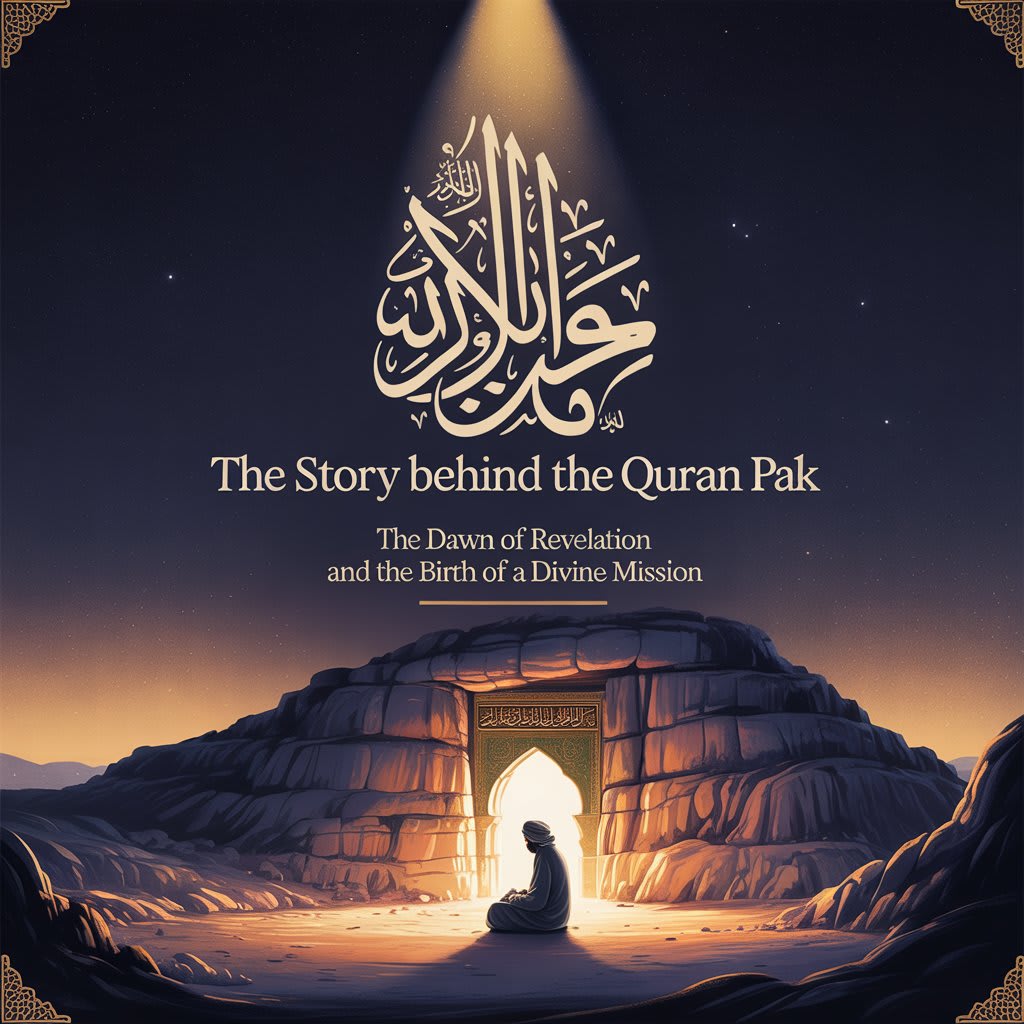
Chapter 7: Carriers of the Light — The Guardians of the Quran
In the early morning stillness of Medina, a soft breeze rustled the palm trees as golden rays of sun poured gently over the city. The scent of earth and jasmine drifted through the streets, but within the humble home of Zayd ibn Thabit, all was silent but for the scratching of a reed pen on parchment.
Zayd, only in his twenties, sat with unwavering focus. Around him lay carefully stacked parchments, leather pieces, bones, and leaves—each inscribed with verses of the Quran. He had heard them directly from the mouth of the Prophet Muhammad ﷺ. And now, as the Prophet had passed, Zayd had taken on one of the most sacred duties in history: compiling the Quran into one book.
A Mission Born in Loss
The task had not begun in peace, but in grief. Only months earlier, the Battle of Yamama had claimed the lives of over 70 huffaz—those who had memorized the Quran entirely. Umar ibn Al-Khattab, the farsighted companion of the Prophet, had approached Caliph Abu Bakr with urgency.
“Many of those who have memorized the Quran have been martyred,” Umar had said. “I fear that if more die, much of the Quran may be lost. We must compile it in written form.”
Abu Bakr had hesitated. “How can I do something the Prophet did not do?”
“But it is for the preservation of the Revelation,” urged Umar.
At last, convinced by the weight of responsibility, Abu Bakr called upon Zayd ibn Thabit.
“You are young and intelligent, Zayd. And you were the Prophet’s scribe. You must take up this duty.”
The task was not easy. Zayd would later say, “By Allah, if they had asked me to move a mountain, it would not have been more difficult than compiling the Quran.”
Yet he accepted.
Verse by Verse, Testimony by Testimony
Zayd set a strict method. Every verse had to be verified with written proof and two eyewitnesses who had heard it directly from the Prophet. Some brought pieces of bark with verses written on them. Others carried skins or bones. Many came only with their memory.
An old man named Khuzaymah brought a verse Zayd did not have written.
“Who else can confirm it?” Zayd asked.
Khuzaymah placed his hand on his heart. “I swear I heard it from the Prophet during Fajr prayer in the Masjid.”
Zayd hesitated, but Abu Bakr interjected.
“Do you not remember? The Prophet once said Khuzaymah’s testimony equals that of two men.”
And so it was accepted.
Piece by piece, the Quran took shape.
A Living Book
But the miracle of the Quran was not just in ink—it was in hearts. Children as young as seven memorized its chapters. Old men recited its verses with trembling lips. Bedouins with no formal education had every word carved in memory.
This was the divine method. The Quran would not be preserved like other scriptures—through hidden scrolls or locked temples—but through the people.
In time, the compilation completed under Abu Bakr’s caliphate was passed to Umar. After Umar’s martyrdom, it came into the trust of his daughter Hafsah, the Prophet’s widow.
But Allah’s plan was not finished.
One Ummah, One Recitation
Years later, during the caliphate of Uthman ibn Affan, disputes began arising across the growing Islamic empire. In Armenia and Azerbaijan, people argued over the correct recitation of verses. Some followed the Quraishi dialect, others followed the recitation of different companions.
Concerned, Uthman consulted his companions and made a decision that would define Islamic unity.
He summoned Zayd again—along with three other scribes—and commissioned them to prepare official copies of the Quran based on the dialect of Quraish, the dialect in which it was first revealed.
“We will make exact copies,” Uthman said. “And they will be sent to every province.”
When the copies were done, Uthman sent them across the Muslim world—to Basra, Kufa, Damascus, and beyond. He also ordered all unofficial copies to be destroyed, not out of disrespect, but to prevent confusion.
And from that moment, the Quran became one—unchanged and unified across time and space.
Guardians in Every Generation
As the centuries rolled on, the guardians of the Quran multiplied. In the deserts of Arabia, children still rocked back and forth, memorizing by candlelight. In the cities of Africa, scholars recited the Quran by heart. In the forests of Indonesia and the villages of Bosnia, the same words echoed with no variation, no loss.
In the darkest of times—during Mongol invasions, wars, colonization—the Quran was never erased.
Even in prisons, it lived. In 20th-century Soviet camps, Muslim men wrote the Quran from memory using charcoal on scraps of cloth. In modern China, Uyghur Muslims taught the Quran in secret, whispering verses under fear of persecution. In apartheid South Africa, Nelson Mandela’s prison mate memorized the Quran, taught to him verse by verse, through walls.
The guardians were not just scholars. They were mothers rocking cradles while reciting surahs. They were soldiers carrying tiny mushafs in their pockets. They were blind men with Quran in their hearts and voices.
Today, over 10 million people have memorized the Quran word for word—more than any book in human history.
And not one word has changed.
The Eternal Promise
Over 1,400 years ago, Allah made a promise in the Quran:
“Indeed, it is We who sent down the Qur'an and indeed, We will be its guardian.”
(Surah Al-Hijr, 15:9)
And that promise was kept—through men like Zayd, leaders like Abu Bakr and Uthman, and the countless unnamed souls who whispered verses into generations of hearts.
They were the carriers of the light. And their torch still burns today.
Call to Action
🕌 Become a Guardian of Light
Whether you memorize a verse a day or teach it to your children, you too can carry the light. Let the Quran live in your heart, and become part of its living miracle.
📖 Support Quran Education
Help preserve this divine legacy. Support institutions that teach, print, and share the Quran with those in need. One donation, one book, one child—can change the world.
About the Creator
Keep reading
More stories from ibrahimkhan and writers in Chapters and other communities.
Brewing Destiny
In the heart of the old quarter of Marrowick stood a tea shop that didn’t appear on any map. Locals called it The Steeping Spell, and though its wooden sign creaked in the wind and ivy curled around its cracked windows, the inside glowed with the warmth of candlelight and herbs hanging from every rafter.
By ibrahimkhan8 months ago in Chapters
Search for a Sister, Chapter Two
4-H-N heard not a word about her secret mission around Headquarters over the following days, so had to conclude either Mini-Flash Phytolith hadn’t been listening in after all, or she’d misjudged him. She hoped it was the latter, as she wanted the pair of them to get on, even if he wasn’t going out of his way to make it easy for her.
By Doc Sherwood19 days ago in Chapters
Businesswoman 359
A trail of vodka like a transparent blood line on the floor. Socialista picked up the bottle and chugged. “We’ve gotta hit them with the idea that we’re prepared to knock over their rocket. It’s against the environment and the welfare of the Earth,” Socialista swallowed and announced.
By Skyler Saunders2 days ago in Chapters




Comments (1)
This is an incredible story. Compiling the Quran must've been so tough. I can't imagine the pressure on Zayd. How did he manage to verify every verse with such strict methods? And what challenges did he face gathering all those eyewitnesses? Fascinating stuff.