
Chaos and Confusion: Trump’s Federal Spending Freeze Sparks Uncertainty
Trump's Federal Spending Freeze: Uncertainty, Legal Battles, and Economic Fallout
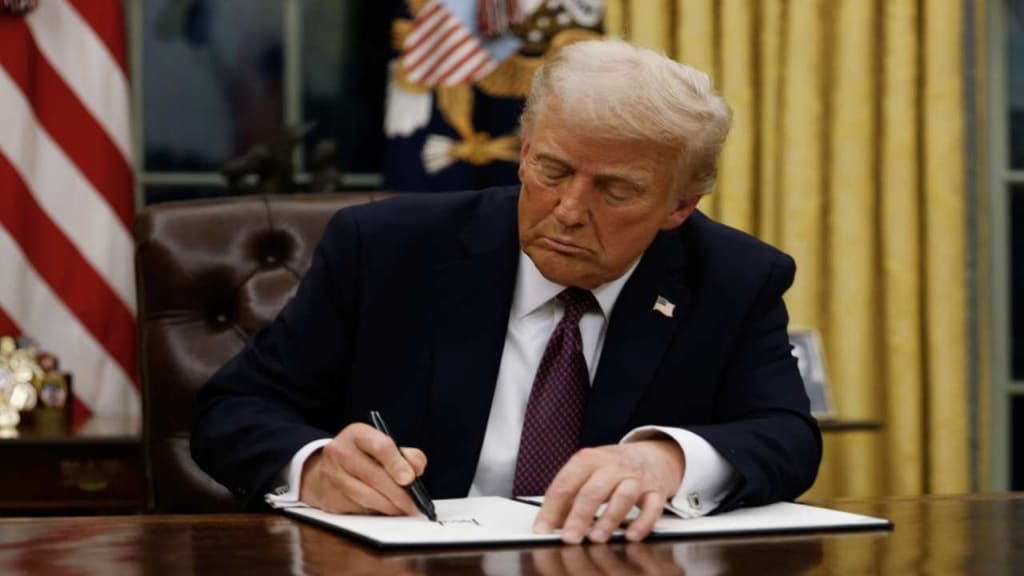
The Trump administration’s recent decision to freeze federal spending has created widespread confusion and frustration. This sudden move affects thousands of government programs, leaving states, local governments, businesses, and nonprofits uncertain about their financial future. While the White House claims the freeze targets specific programs related to diversity, climate, and other policies from the Biden administration, the lack of clarity has alarmed lawmakers, industry leaders, and everyday Americans.
The Impact on Federal Programs
The spending freeze has put billions of dollars in grants and loans at risk. Many organizations and local governments rely on these funds to operate essential programs, such as infrastructure projects, environmental protection, scientific research, and public health initiatives.
Some of the most affected projects include:
The $16 billion Gateway rail and tunnel project connecting New York and New Jersey.
Disaster prevention programs, including wildfire protection and drought relief.
Health and research programs, which help fight diseases and support hospitals.
Broadband and technology initiatives, which impact the expansion of internet services and AI research.
Small business and nonprofit funding, affecting startups, energy projects, and community organizations.
While the administration insists that essential benefits like Social Security, Medicare, and food assistance are not included in the freeze, many other critical areas remain uncertain.
Lawmakers React to the Spending Halt
The freeze has sparked reactions from both Democrats and Republicans, many of whom are demanding clearer guidance.
Concern Democratic
Democratic lawmakers argue that the freeze could cause long-term damage, especially for communities that rely on federal grants. Senator Richard Blumenthal described the situation as “chaos and confusion”, stating that many essential programs are now uncertain.
Senator Tina Smith echoed these concerns, stating, “Who the hell knows what it means right now? It’s up to them to clarify it.” Her office has been flooded with calls from doctors, farmers, and federal workers worried about their funding.
Senator John Hickenlooper expressed frustration over the freeze’s wide-ranging impact, questioning whether he should be more outraged about the potential cuts to Head Start programs for children or rural hospitals facing cash flow disruptions.
Senator Angus King warned that the move could set a dangerous precedent. “This should be a bipartisan response because this is an institutional issue, not a political issue,” he stated.
Republican Uncertainty
Even some Republicans have voiced concerns. Senator John Boozman admitted that the freeze’s broad wording has left many in the dark. “We need to understand what the memo means,” he said.
Senator Kevin Cramer acknowledged that the freeze will likely face legal challenges and said, “He’s testing his own authority.” Cramer noted that while some past presidents have used similar powers, this freeze is unusually broad.
Despite these concerns, some Republicans defend the move. Senator Tommy Tuberville argued that evaluating spending is necessary to control government expenses.
Legal and Economic Ramifications
The Trump administration claims the freeze is not a full stop on all federal aid but rather a pause for review. However, critics argue that the move could be illegal, as Congress has the power to allocate funds.
Many experts warn that blocking legally approved grants and contracts could lead to costly legal battles. Former Biden administration official Zealan Hoover called the freeze “unprecedented, illegal, and wasteful” and warned that delays would increase costs and disrupt public services.
Bill Hoagland, a former Senate Budget staffer, believes the freeze is an initial step toward possible spending cuts or requests for Congress to rescind certain programs.
Industries and Communities Feel the Pressure
The uncertainty surrounding the freeze has already impacted multiple industries, with many businesses and nonprofits scrambling to adjust.
Mortgage and Housing Market
The housing industry is particularly alarmed. One mortgage industry leader described the situation as “widespread panic”, as the freeze has raised concerns about housing assistance programs.
Small Businesses and Energy Sector
Small companies that rely on government grants are also at risk. Jennifer Szaro, CEO of the Association of Energy Services Professionals, said her organization may have to lay off staff if its $700,000 Energy Department grant is halted.
Similarly, Jeff Allen, director of the Portland-based nonprofit Forth Mobility, expressed concern about the uncertainty. His organization received $1.2 million for electric vehicle projects and cannot afford long delays in funding. “We can’t carry the federal government’s accounts payable for 90 days,” Allen said.
Health Services and Universities
Community health centers have also been affected. St. John’s Community Health in California reported that $18 million in federal funding has been frozen, raising fears of cuts to essential medical services.
Rutgers University issued a statement acknowledging federal funding makes up a substantial part of its budget. While assuring students that financial aid would not be affected, the university warned researchers to be cautious about ongoing grant-funded projects.
Federal Workers and Agencies in Limbo
The spending freeze has also put pressure on federal employees. Many agencies are uncertain about which programs to stop and which to continue.
One Energy Department official revealed that staff members are “stopping everything” to review programs. “There just hasn’t been really clear guidance,” the official explained.
At least one agency—the Department of Energy (DOE)—has already informed grant recipients that it will modify existing contracts. A DOE memo ordered an immediate halt to diversity, equity, and inclusion (DEI) programs, as well as initiatives under Biden’s Justice40 program, which directs federal investments to disadvantaged communities.
The Future of Trump’s Spending Freeze
President Trump has repeatedly suggested that he has the authority to withhold spending he considers wasteful. However, past attempts to do so—such as by President Richard Nixon—led to Congress passing a law in 1974 to limit such powers.
Senator Cramer predicted that the freeze “can’t long endure” and expects further clarifications from the administration.
“Not all spending is created equal,” Cramer said. “They’ll go through it, probably item by item.”
Meanwhile, legal experts believe this issue could ultimately be decided in court, setting a precedent for how much control the White House has over congressionally approved funds.
Final Thoughts
The federal spending freeze has created confusion, fear, and frustration across the country. With billions of dollars in projects on hold, lawmakers from both parties are demanding answers. While the Trump administration insists the freeze is temporary and targeted, its impact on essential programs, industries, and everyday Americans is already being felt.
As legal challenges mount and agencies scramble to clarify their budgets, the coming weeks will determine whether this freeze becomes a defining moment in the balance of power between the White House and Congress.



Comments
There are no comments for this story
Be the first to respond and start the conversation.