

At last, I managed to see the first few episodes of Case No. 9, and I must say that this drama really started off to a great start. It's one of those programs that quickly draws you in, both because of the sensitive subject matter and the manner it's presented. I know a lot of people are skeptical when they hear it's on Geo, but this one is worth putting those preconceptions aside for.
The plot begins with Sehar, performed excellently by Saba Qamar. She's an ambitious, self-sufficient young lady who is already dealing with the consequences of her recent divorce but is motivated to advance in her career. She works for her employer, Kamran, played by Faysal Quraishi. Kamran is powerful, arrogant, and used to having his way, both professionally and personally. When his attempts to captivate Sehar fail, his ego cannot bear the rejection. Under the influence and unable to control his instincts, he ends up crossing a boundary in the most disastrous way.
What surprised me was how fast the drama established its idea. The crime occurs in the first episode, with no extra buildup or dragging it out. By doing so, the writers demonstrated that the true tale is about the aftermath, not just what happened that night. The weight of the drama rests on Sehar's decision, society's reaction, and the judicial system's response.
Kamran's personal life complicates matters even further. His wife, Kiran (played by Rushna Khann), is pregnant and utterly oblivious of what has occurred during her absence. His best buddy Rohit (Junaid Khan) discovers the truth—he arrives practically soon after the incident—but rather than supporting Sehar, he is drawn into Kamran's web of deception. Kamran urges him to be silent, and Rohit has yet to disclose anything to his own wife, Manisha (Navin Waqar). That silence is especially odd given Manisha's work with women who have endured abuse and domestic violence. You can already see the chaos that will come when she discovers the truth.
Meanwhile, Sehar is devastated. She isolates herself for six days before summoning the confidence to go out and file a complaint. And here's where the program makes an essential point: it underlines the importance of time when reporting a crime like this. The script emphasizes that medical evidence is strongest in the first 24-48 hours. Waiting too long, destroying garments, or failing to preserve evidence simply exacerbates the fight later on. It's a painful fact, and seeing Sehar accept it intensifies her suffering.
Her family's reaction also feels terribly genuine. Her mother, Hina Khawaja Bayat, and brother Saad (Ahmed Randhawa), would want to conceal the occurrence in order to maintain their social standing. They regard it as disgraceful, something that will tarnish their family's image. Only her father (Shahnawaz Zaidi) remains at her side, silently but firmly supporting his daughter's right to pursue justice. The conflict between family honor and personal truth is one of the most compelling strands running through the drama thus far.
We also meet Inspector Shafiq, played by Mirza Gohar Rasheed. He is in charge of Sehar's case, but instead of assisting, he adds an extra layer of intimidation and prejudice. Knowing how frequently real-life victims experience this type of treatment makes it hard to watch—but it is also important. And the cast does not stop there. We're expecting Aamina Sheikh to appear shortly, which I believe will elevate the drama to new heights. If she picked this as her return, there must be more to the tale than we know.
One thing I can't get over is how well-produced the program appears. Wajahat Hussain's direction is sleek and incisive, resulting in a polished but grounded vibe. The cinematography, particularly the darker, more violent scenes, truly establishes the tone. Even the outfit selections are dead on—every character looks like they belong in their environment, whether it's the business world, the home scenes, or the police station.
However, beyond acting and depiction, it is the messaging that has an impact. Case No. 9 does not sugarcoat the truth that instances like this are difficult, not just for the victim but also for their relatives. Sehar's quest will be difficult, and the drama does not shy away from exposing the stigmas, loopholes, and power imbalances that make justice seem out of reach.
By the end of these initial episodes, I was both heartbroken and pleased. Heart broken because the issue is so challenging, and impressed because the drama is willing to confront it full on. It's engaging, crucial and off to a great start. Seriously, if you haven't seen it yet, you should. This isn't your typical drama; it's a narrative with depth, intensity, and importance.
About the Creator
Keep reading
More stories from Raviha Imran and writers in Chapters and other communities.
Jama Taqseem Ep 3 & 4
Episodes three and four of Jama Taqseem perfectly portrayed what occurs when the wedding lights go off and reality creeps in. Until recently, the plot had been around Laila and Qais selecting each other and overcoming the first unpleasantness of rishtas and family dynamics. But with these episodes, the drama transitioned to marital life, and they were some of the most fun yet.
By Raviha Imran5 months ago in Chapters
The Cave Part 6
If you have ever heard a tale about yourself that you cannot remember and doubtless think is made up, you will know how I felt when Tharkin related all that the eagle had seen of me before my memories were scattered. Of far distances and traveling companions that I did not recall, camping out under the stars and making our way to the mountains with deliberate purpose. The great bird had lost contact with my party once we entered the forests, and the seven other members were not seen again by him or his brethren since.
By Jamye Sharp13 days ago in Chapters
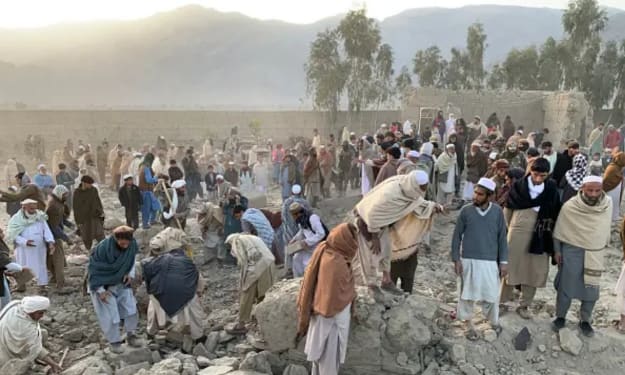
Pakistan Bombs Afghanistan: Nangarhar and Paktika Airstrikes Kill Civilians, Taliban Condemns Attack
Provincial officials in eastern Afghanistan’s Nangarhar province told the BBC that a house belonging to a man named Shahabuddin was targeted in the Gardai Kach area of Behsud district, killing and injuring around 20 people, including women and children.
By Real content6 days ago in Chapters



Comments
There are no comments for this story
Be the first to respond and start the conversation.