
AI Agents in Healthcare: Benefits, Challenges, and Future Trends
Discover how AI agents are transforming healthcare with improved efficiency, patient care, and automation. Explore key benefits, challenges, and future trends.

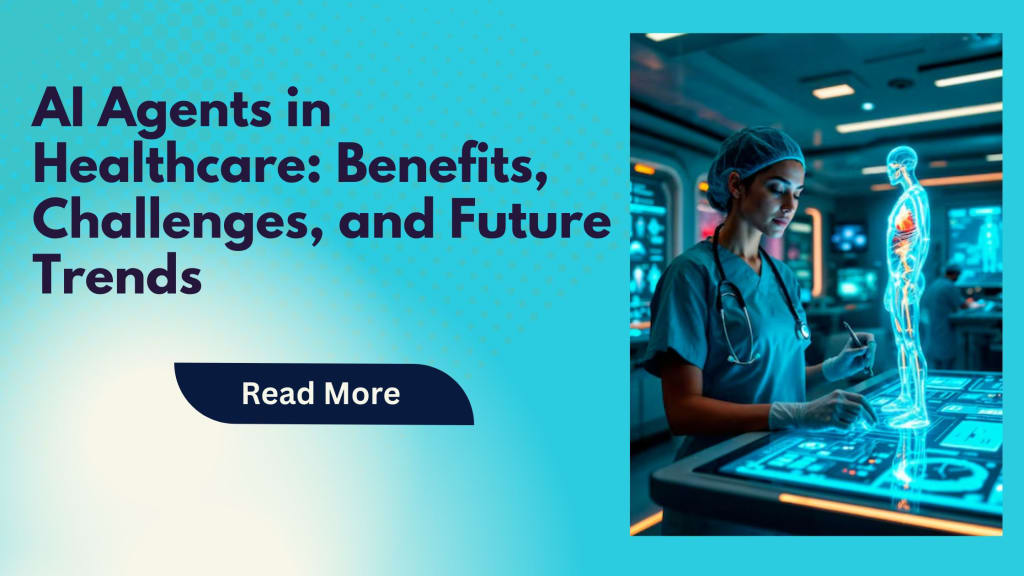
Understanding AI Agents in Healthcare: An Overview of Their Role
Introduction
Artificial Intelligence (AI) has made significant strides in various industries, with healthcare being one of the most promising fields. AI agents are transforming how healthcare providers operate, enhancing efficiency, reducing errors, and improving patient outcomes. This article explores the role of AI agents in healthcare, their applications, and their potential impact on the industry.
What Are AI Agents in Healthcare?
AI agents are intelligent software programs that use machine learning, natural language processing (NLP), and other AI technologies to perform tasks that typically require human intelligence. These agents can analyze vast amounts of data, automate processes, and provide insights to medical professionals and patients alike.
Key Roles of AI Agents in Healthcare
1. Automated Patient Assistance
AI-powered virtual assistants and chatbots provide 24/7 support for patients, answering queries, scheduling appointments, and even offering initial diagnoses based on symptoms.
2. Medical Diagnosis and Decision Support
AI Agents assist doctors by analyzing medical records, imaging data, and genetic information to provide accurate diagnoses and treatment recommendations. These systems help reduce diagnostic errors and improve patient care.
3. Personalized Treatment Plans
By leveraging patient data and predictive analytics, AI agents can suggest customized treatment plans tailored to an individual’s medical history, lifestyle, and genetic profile.
4. Healthcare Automation and Workflow Optimization
AI streamlines administrative processes such as medical billing, insurance verification, and electronic health record (EHR) management, allowing healthcare professionals to focus more on patient care.
5. Drug Discovery and Development
AI Agents accelerate pharmaceutical research by analyzing chemical compositions, predicting drug interactions, and identifying potential new treatments, significantly reducing the time and cost involved in drug development.
6. Remote Monitoring and Telemedicine
AI-driven wearable devices and telehealth platforms monitor patients' vital signs in real-time, alerting healthcare providers to potential health risks before they become critical.
Benefits of AI Agents in Healthcare
- Improved Efficiency: AI automates routine tasks, allowing medical staff to focus on critical aspects of patient care.
- Enhanced Accuracy: AI reduces human errors in diagnostics and treatment planning.
- Cost Reduction: By optimizing workflows and reducing manual interventions, AI lowers operational costs.
- Increased Accessibility: AI-powered telemedicine solutions expand healthcare access, especially in remote areas.
- Better Patient Outcomes: Personalized treatments and real-time monitoring lead to improved health outcomes.
Challenges Facing AI Agents in Healthcare: Ethical Considerations and Implementation Hurdles
The integration of AI Agents in Healthcare brings immense potential, from streamlining administrative tasks to enhancing diagnostics and patient care. However, their adoption also presents significant ethical and practical challenges that must be addressed to ensure responsible implementation.
Ethical Considerations
#1. Data Privacy & Security
AI agents rely on vast amounts of sensitive patient data, raising concerns about data breaches, unauthorized access, and misuse. Ensuring compliance with HIPAA (USA), GDPR (EU), and other regulatory frameworks is crucial.
#2. Bias and Fairness
AI models trained on biased datasets may produce skewed results, leading to disparities in care. Ensuring diverse and representative data is essential to avoid discrimination in diagnosis and treatment recommendations.
#3. Transparency & Explainability
Many AI models operate as "black boxes," making it difficult for healthcare providers to understand their decision-making processes. Developing explainable AI (XAI) is critical for trust and accountability.
#4. Patient Consent & Autonomy
AI-driven recommendations must align with patient autonomy and informed consent principles. Patients should have the right to understand AI-based decisions and opt for human oversight when necessary.
#5. Liability & Accountability
In cases of AI-related misdiagnosis or errors, determining liability becomes complex. Establishing clear legal frameworks to define responsibility among AI developers, healthcare providers, and institutions is necessary.
Implementation Hurdles
#1. Integration with Existing Systems
Many healthcare institutions use legacy systems that may not seamlessly integrate with AI solutions. Ensuring compatibility and smooth data exchange remains a significant challenge.
#2. Regulatory Compliance
AI applications in healthcare must meet stringent regulatory requirements, which vary by region. Navigating these legal landscapes can slow down adoption and innovation.
#3. High Implementation Costs
The development, deployment, and maintenance of AI-powered healthcare solutions require substantial investment. Smaller healthcare facilities may struggle to afford these technologies.
#3. Staff Training & Acceptance
Healthcare professionals may be skeptical of AI or lack the necessary training to use AI-driven tools effectively. Educating medical staff and fostering trust in AI solutions is essential for successful adoption.
#4. Interoperability & Standardization
AI systems must work across different electronic health record (EHR) platforms and medical devices. Lack of standardization can lead to fragmented implementation and inefficiencies.
Also Read: How AI Agents Help Businesses Save Time and Cut Costs
The Future Trends of AI Agents in Healthcare: What to Expect Next?
AI agents are transforming healthcare by automating administrative tasks, enhancing diagnostics, and improving patient engagement. As technology evolves, AI-powered solutions will become even more sophisticated, leading to significant advancements in healthcare delivery. Here are the key trends shaping the future of AI agents in healthcare:
1. AI-Driven Personalized Medicine
AI will enable hyper-personalized treatment plans based on a patient's genetic makeup, lifestyle, and medical history. Predictive analytics will help doctors recommend targeted therapies, reducing trial-and-error in treatment selection.
2. AI-Powered Virtual Health Assistants
Advanced AI chatbots and virtual assistants will provide 24/7 patient support, helping with medication reminders, symptom analysis, and mental health support. These AI agents will improve accessibility to healthcare, especially in remote areas.
3. Enhanced AI for Medical Imaging & Diagnostics
Artificial Intelligence will continue to advance in medical imaging, improving the accuracy of detecting diseases like cancer, heart conditions, and neurological disorders. AI-assisted diagnostics will help radiologists interpret images faster and with higher precision.
4. AI in Robotic Surgery
AI-integrated robotic systems will enhance precision in surgical procedures. These systems, powered by machine learning, will assist surgeons in performing minimally invasive surgeries with greater accuracy and efficiency.
5. AI for Predictive Healthcare & Early Disease Detection
AI will leverage big data to predict disease outbreaks and identify health risks before symptoms appear. By analyzing patient data in real time, AI can detect early warning signs of chronic illnesses like diabetes and cardiovascular diseases.
6. AI-Powered Drug Discovery & Development
AI will accelerate drug discovery by analyzing vast datasets to identify potential drug candidates. This will reduce the time and cost of bringing new medicines to market, benefiting pharmaceutical research and patient treatment options.
7. AI & Wearable Health Tech Integration
AI will enhance the capabilities of wearable health devices, such as smartwatches and biosensors, by providing real-time insights into a user's health. Continuous health monitoring will improve chronic disease management and preventive care.
8. Blockchain & AI for Healthcare Data Security
Combining AI with blockchain technology will enhance data security and interoperability in healthcare. AI will streamline patient data analysis, while blockchain will ensure secure and tamper-proof record-keeping.
9. AI-Powered Administrative Automation
AI agents will automate administrative tasks like medical billing, appointment scheduling, and insurance claim processing. This will reduce operational costs and allow healthcare providers to focus more on patient care.
10. AI & Mental Health Support
AI-driven mental health applications will use natural language processing (NLP) and sentiment analysis to provide real-time emotional support, therapy recommendations, and stress management strategies.
Real-World Applications of AI Agents in Healthcare Today: Case Studies and Success Stories
AI agents are already making a significant impact in healthcare, improving efficiency, accuracy, and patient outcomes. Here are some notable case studies and success stories demonstrating AI’s role in revolutionizing the healthcare industry.
1. AI-Powered Medical Imaging: Google’s DeepMind & NHS Partnership
Challenge: Diagnosing eye diseases early is critical, but traditional methods can be time-consuming and dependent on specialist availability.
Solution: DeepMind, a subsidiary of Google, collaborated with the UK’s National Health Service (NHS) to develop an AI model that detects eye diseases using retinal scans.
Impact:
Achieved 94% accuracy in detecting conditions like diabetic retinopathy and age-related macular degeneration.
Reduced diagnosis time, enabling faster treatment and reducing the risk of blindness.
2. AI Chatbots for Mental Health Support: Woebot Health
Challenge: Millions struggle with mental health issues, but access to human therapists is limited due to high costs and availability constraints.
Solution: Woebot, an AI-powered chatbot, provides real-time mental health support using cognitive behavioral therapy (CBT) principles.
Impact:
Over 1 million users worldwide benefit from personalized mental health assistance.
Studies show users experience significant reductions in depression and anxiety symptoms.
AI chatbots prove useful in bridging mental health service gaps.
3. AI in Drug Discovery: IBM Watson & Pfizer
Challenge: Drug discovery is expensive and time-consuming, often taking 10+ years to bring a drug to market.
Solution: Pfizer partnered with IBM Watson to use AI for accelerating immuno-oncology drug research.
Impact:
AI analyzed vast datasets to identify potential cancer treatments.
Reduced drug discovery time by filtering out ineffective compounds early.
Demonstrated AI’s potential in revolutionizing pharmaceutical research.
4. AI-Powered Virtual Nurses: Sensely’s “Molly”
Challenge: Managing chronic conditions requires frequent patient engagement, which can strain healthcare resources.
Solution: Sensely developed "Molly," an AI-driven virtual nurse that interacts with patients through a mobile app, providing symptom assessments and treatment recommendations.
Impact:
Reduced hospital readmissions by providing continuous remote patient monitoring.
Improved adherence to treatment plans through regular check-ins.
Freed up medical professionals to focus on critical cases.
5. AI for Predictive Analytics: Cleveland Clinic & IBM Watson
Challenge: Early detection of diseases like heart failure and cancer is crucial but challenging with traditional methods.
Solution: Cleveland Clinic used IBM Watson’s AI capabilities to analyze medical records and predict patient risks.
Impact:
AI identified at-risk patients earlier than traditional screening methods.
Helped doctors personalize treatment plans based on AI-driven insights.
Improved patient outcomes through data-driven decision-making.
Conclusion: Embracing the Potential of AI Agents to Revolutionize Your Healthcare Experience Now!
AI Agents are transforming the healthcare industry by enhancing efficiency, improving patient care, and streamlining operations. From automating administrative tasks to assisting in diagnostics and treatment planning, AI-driven solutions are revolutionizing how healthcare providers interact with patients.
However, alongside these benefits come challenges such as data privacy concerns, ethical considerations, and integration hurdles. Addressing these issues through regulatory compliance, robust security measures, and transparent AI models will be key to ensuring AI’s responsible deployment in healthcare.
Looking ahead, AI agents will continue to evolve, driving innovations in personalized medicine, predictive analytics, and remote patient monitoring. As technology advances, healthcare organizations that embrace AI will be better positioned to deliver high-quality, patient-centric care while optimizing operational efficiency.
By leveraging AI-driven solutions, the healthcare industry can move toward a future where precision, accessibility, and efficiency define patient care. Now is the time for healthcare providers to explore AI integration, unlocking its full potential to shape the future of medicine.
FAQs on AI Agents in Healthcare
Q: What are AI agents in healthcare?
Ans: AI agents in healthcare are intelligent systems that assist in medical tasks such as diagnostics, patient engagement, administrative automation, and treatment recommendations using machine learning, natural language processing (NLP), and predictive analytics.
Q: How do AI agents improve patient care?
Ans: AI agents enhance patient care by providing real-time health monitoring, automating appointment scheduling, offering virtual assistance, and supporting doctors with data-driven diagnoses, leading to faster and more accurate treatments.
Q: What are the key benefits of using AI in healthcare?
Ans: The benefits of AI in healthcare include improved diagnostic accuracy, reduced administrative workload, cost efficiency, enhanced patient engagement, personalized treatment plans, and predictive analytics for early disease detection.
Q: What are the biggest challenges of AI implementation in healthcare?
Ans: Challenges include data privacy concerns, ethical issues, regulatory compliance, integration with existing systems, high implementation costs, and the need for AI explainability and trust among healthcare professionals.
Q: How do AI agents assist in medical diagnosis?
Ans: AI agents analyze medical images, patient records, and genetic data to identify patterns and anomalies that may indicate diseases, helping doctors make more accurate diagnoses faster than traditional methods.
Q: Are AI agents replacing doctors in healthcare?
Ans: No, AI agents are designed to assist healthcare professionals, not replace them. They support decision-making, automate repetitive tasks, and improve efficiency, allowing doctors to focus more on patient care.
Q: How does AI ensure patient data security and privacy?
Ans: AI systems in healthcare follow strict regulations such as HIPAA and GDPR, using encryption, anonymization, and blockchain technology to protect patient data from unauthorized access and cyber threats.
Q: Can AI agents help in mental health support?
Ans: Yes, AI-powered chatbots and virtual assistants provide mental health support by offering guided therapy, mood tracking, and cognitive behavioral therapy (CBT) exercises, helping individuals manage stress and anxiety.
Q: How will AI shape the future of healthcare?
Ans: AI will drive innovations in personalized medicine, robotic surgery, remote patient monitoring, AI-assisted drug discovery, and predictive analytics, making healthcare more accessible, efficient, and cost-effective.
Q: What are some real-world applications of AI agents in healthcare today?
Ans: AI is currently used in medical imaging (Google’s DeepMind), virtual health assistants (Sensely’s Molly), mental health chatbots (Woebot), predictive analytics (IBM Watson in Cleveland Clinic), and AI-assisted drug discovery (Pfizer & IBM Watson).
About the Creator
Amora Devid
Content Writer
Keep reading
More stories from Amora Devid and writers in Chapters and other communities.
The ROI of AI in Restaurants: Why Investing in AI Agents Pays Off
What is AI in the Restaurant Industry? AI technologies are Improving the restaurant industry, bringing enhanced efficiency, cost savings, and superior customer experiences. Integrating artificial intelligence into restaurant automation isn’t just a passing trend—it’s a game-changing innovation that optimizes operations and boosts profitability.
By Amora Devid12 months ago in Chapters
Search for a Sister, Chapter Two
4-H-N heard not a word about her secret mission around Headquarters over the following days, so had to conclude either Mini-Flash Phytolith hadn’t been listening in after all, or she’d misjudged him. She hoped it was the latter, as she wanted the pair of them to get on, even if he wasn’t going out of his way to make it easy for her.
By Doc Sherwood21 days ago in Chapters
Firebug: Chapter 17 - Out
Theo didn't have time to think. He didn't even have time to scream. The sound was stuck sideways in his throat anyway, refusing to be dislodged. His body acted all on its own, launching him across the dance floor toward the pool. Not caring how many of his classmates he had to knock over or shove out of the way to get there. By the time his brain caught up to his body, Theo was diving head-first into that glittering, dark blue abyss.
By Natalie Gray7 days ago in Chapters




Comments
There are no comments for this story
Be the first to respond and start the conversation.