
A World Apart.
CHAPTER TWO- EYES AND ECHOES.


Aziza stood in the garden of her mother’s ancestral home. Humid air thick with hibiscus and frangipani clung to her skin. Gravel crunched under servants’ careful steps, baskets of laundry and trays of fruit balanced expertly in their arms. Whitewashed walls glowed in the late sun; balconies draped with bougainvillea brushing against carved stone. Bees darted through the blooms; a bird’s sharp cry cut the courtyard murmur.
Her fingers brushed the rough bark of the almond tree. Shadows stretched across the lawns, swaying with palm fronds. From the veranda, scents of wood polish and simmering stew drifted outward, mingling with the rattle of a distant cart. Every arch, every curve of carved stone drew her eye, each line a sketch she traced in her mind—light, flow, life.
Her eyes drifted to the lines of the building—the symmetry of arches, the precision of carved stone.
Courtyards opened like framed canvases, sunlight spilling across mosaic tiles, shadows of palm fronds shifting against whitewashed walls. She traced the geometry of doorways, the balance of beams and lintels, the flow of light across the floors, as though sketching in the air. In London, such precision had been her battlefield: cramped drafting rooms, men leaning over plans with skeptical eyes, the rare nod of approval that came only after insistence and demonstration. Back then, she had been among the few women allowed to draft plans, to measure, to engage directly in builders’ work. Pencil lines had trembled beneath her fingers in the glare of fluorescent lights, each correction a quiet assertion of her place in a world resistant to her presence. And now, in Ghana, the same eye measured space, proportion, and rhythm, tracing the architecture as if asserting once more her command over structure, light, and form and yet, looking now at the women bent beneath trays and basins, she wondered how much had truly changed.
They bore the same silence she had carried in London—the silence of being expected, never asked.
Their steps were careful, their laughter subdued, their strength invisible. Here, their roles were servants; there, hers had been the “exception.” Different costumes, same script.
Aziza exhaled slowly, fingers brushing the bark of the old almond tree beside her. From a distance, her life glittered: heir to a name, daughter of prestige, educated abroad, invited into the world of men’s work. But standing in the garden, watching the rhythm of duty performed without question, she felt the familiar tug of contradiction. Was she any different from these women? She wore silk instead of cotton, carried books instead of water, but hadn’t the world already written her role before she could?
And then, unbidden, came the memory of Dave—the rare, quiet way he had first seen her. Not as daughter, not as symbol, not as woman out of place. He had noticed her words, her sketches, her restless questions. It was rare, inconspicuous, almost accidental, but in that recognition lay the difference.
Aziza closed her eyes for a moment, listening to the hum of the garden beyond the veranda. Life here seemed louder, closer—children’s laughter in the distance, the thud of pestles against wooden mortars, voices rising and falling in a familiar rhythm. Yet inside, within her, everything was hushed. Her thoughts belonged not to the present bustle but to the unseen man across seas and screens who had become both anchor and horizon.
Her fingers traced the carved railing as though it were a page she longed to fill with answers.
Around her, the garden pressed on with life—servants passing in quiet diligence, shadows of palm fronds shifting against sunlit walls. The roles of women, she thought, were no different here than in London. Silent hands made visible only in their work, seldom in their worth.
Perhaps that was why Dave mattered so much. He had not overlooked her mind, her striving, her stubborn insistence to belong in places guarded by men. He had made her believe that love could be recognition—not for what she was expected to embody, but for who she dared to be.
And so, standing there in the Ghanaian morning, Aziza’s heart tilted between fear and faith.
Distance kept them apart, yes, but it also protected what they had built, a fragile brilliance not yet tested by the world’s scrutiny. For now, the promise of him—his words, his acceptance, his unflinching gaze through every screen—was enough.
Tomorrow would bring its own revelations. But tonight, and every night until the day they finally stood in the same place, she chose belief.
Though excitement filled her days with the routines of the palace and the quiet whispers of its corridors, at reflective moments reality pressed close. Ghana’s heat, the watchful eyes of servants, the ever-present weight of expectation—they all reminded her that difference was noticed first, spirit second. Her mind drifted to Dave, to the rare way he had seen her: not as heir, not as woman of status, but as Aziza, whole and uncompromised. It was a recognition so rare, so quiet, it had become the cornerstone of her courage.
In letters, in late-night notes, in shared thoughts scribbled across time zones, they had built a bond that felt unbreakable. She could feel him beside her in every challenge she faced—the scrutiny of palace guests, the whispered critiques of her family, the invisible lines drawn by tradition. He was a presence that demanded nothing but offered everything: understanding, validation, and the quiet affirmation that she was never alone.
And yet, a small, stubborn doubt lingered. Could what they had cultivated from afar survive the reality of being truly seen by the world? Would their rare, gentle recognition withstand the casual cruelty of outsiders, of assumptions, of those who measured worth by lineage, skin, or gender?
Aziza stepped into her room, the heavy wooden door closing softly behind her. She inhaled, expecting the quiet relief of solitude, but even here, the reality of her new surroundings pressed in.
Servants moved quietly outside, their muted footsteps and occasional rustle of fabric a constant presence. The closeness, the attentiveness, reminded her she was no longer in London, no longer navigating polite distances—here, service was tangible, immediate, intimate.
It astonished her still, the depth they had uncovered without a single shared room or accidental touch. What others sought in decades together, they seemed to have stumbled upon in fragments of words, scribbled lines, and fleeting hours given freely. It was as though some invisible hand had tied their lives with threads too strong to be undone by mere distance.
But even with that certainty came a gnawing unease. She had grown up knowing that bonds, no matter how sacred, were always tested—by family expectations, by society’s watchful eyes, by prejudice that slithered in where it was least welcome. Would their love endure the first real test of presence? Or would it crack under the sheer weight of what the world might demand?
Her family lounged in the adjoining salon, fatigued from the long journey, faces flushed with the warmth of the sun and travel. Laughter was subdued, conversations low, as if the collective exhaustion had wrapped them in a fragile cocoon. And yet, the servants lingered nearby, ready to anticipate needs before they were spoken. The room hummed with an invisible tension—a reminder that in Ghana, the lines between personal space and duty were drawn differently.
Aziza perched on the edge of the carved bed, her fingers brushing the silk of the sheets, trying to steady her thoughts. The presence of someone constantly watching, ready to serve, brought a rush of unfamiliar awareness. She was grateful for the care, yet uneasy with its intensity. In London, privacy had been an unspoken right; here, attention came with expectation, and she felt the weight of both admiration and scrutiny.
Her eyes drifted toward the open window, sunlight spilling over patterned tiles, and the bustling palace grounds beyond. Children darted across courtyards, women bent in quiet labor, men moving with measured purpose. It was a world alive, vibrant—but she was acutely conscious of her own place within it. The servants’ eyes, respectful but unflinching, reminded her she had stepped fully into another life, one that demanded adaptation, patience, and a recalibration of familiar freedoms.
Aziza exhaled slowly, leaning back against the cool wall. This closeness, this constant readiness of service, was more than novelty—it was reality. And in that awareness, she felt both the weight of distance from her life in London and the fragile thrill of immersion in a world entirely her own.
Aziza sank into the low armchair by the window, the sunlight catching the edges of her letters from Dave. She unfolded one carefully, reading the familiar scrawl as though it could bridge the miles between them. His words, patient and steadfast, reminded her that even oceans apart, they navigated life together.
She smiled faintly, tracing the ink with her finger. “I know the world feels heavy and unfamiliar, my love, but you are stronger than the weight you carry. Take each moment as it comes—I’ll be with you in every thought.”
The servant paused at the door, awaiting instruction, and Aziza’s chest tightened slightly. The closeness that had seemed alien at first now felt like a mirror for her own careful attentiveness— just as she relied on Dave’s presence through letters, others relied on her awareness and guidance, even from afar. She had learned, in London and in her work, to hold space for others while maintaining her own centre ; here, she applied the same lesson, balancing privacy with courtesy, independence with awareness.
She thought of Dave again, the quiet way he had first recognized her mind and heart. If she faltered, his words steadied her. If fear crept in, his faith reminded her of her own strength. Though no hand held hers, no shared gaze comforted her, she felt tethered to him in the invisible rhythm of shared understanding.
Outside, a distant laugh or the shuffle of a sandal across polished tiles brought her back to the palace’s present reality. She inhaled deeply, letting the scents of hibiscus and polished wood mingle with the memory of his voice. The world around her was new, challenging, sometimes overwhelming—but the knowledge that Dave awaited her, that he believed in her without hesitation, made the unfamiliar feel navigable.
Alone in her room, Aziza allowed herself a quiet sigh. The closeness of servants, the gaze of family, the hum of the palace—they were all reminders of her position and privilege, yes, but also of the responsibilities she carried, and of the rare bond that distance had not diminished. In letters, in thoughts, in dreams of eventual meeting, Dave was her anchor. And in that anchoring, she found courage to face the day’s long hours, the palace’s whispers, and the new life awaiting her in Accra.
She smiled faintly, tracing the ink with her finger. “I know the world feels heavy and unfamiliar, my love, but you are stronger than the weight you carry. Take each moment as it comes—I’ll be with you in every thought.”
The servant paused at the door, awaiting instruction, and Aziza’s chest tightened slightly. The closeness that had seemed alien at first now felt like a mirror for her own careful attentiveness— just as she relied on Dave’s presence through letters, others relied on her awareness and guidance, even from afar. She had learned, in London and in her work, to hold space for others while maintaining her own centre; here, she applied the same lesson, balancing privacy with courtesy, independence with awareness.
She thought of Dave again, the quiet way he had first recognized her mind and heart. If she faltered, his words steadied her. If fear crept in, his faith reminded her of her own strength. Though no hand held hers, no shared gaze comforted her, she felt tethered to him in the invisible rhythm of shared understanding.
Outside, a distant laugh or the shuffle of a sandal across polished tiles brought her back to the palace’s present reality. She inhaled deeply, letting the scents of hibiscus and polished wood mingle with the memory of his voice. The world around her was new, challenging, sometimes overwhelming—but the knowledge that Dave awaited her, that he believed in her without hesitation, made the unfamiliar feel navigable.
Alone in her room, Aziza allowed herself a quiet sigh. The closeness of servants, the gaze of family, the hum of the palace—they were all reminders of her position and privilege, yes, but also of the responsibilities she carried, and of the rare bond that distance had not diminished. In letters, in thoughts, in dreams of eventual meeting, Dave was her anchor. And in that anchoring, she found courage to face the day’s long hours, the palace’s whispers, and the new life awaiting her in Accra.
About the Creator
Gladys Kay Sidorenko
A dreamer and a writer who finds meaning in stories grounded in truth and centuries of history.
Writing is my world. Tales born from the soul. I’m simply a storyteller.
Keep reading
More stories from Gladys Kay Sidorenko and writers in Chapters and other communities.
A World Apart
Aziza leaned against the doorway, watching the familiar chaos unfold around her like a favourite play rehearsed a hundred times. Her mother, Helen, glided through the hall with the elegance of a queen, her silk scarf trailing behind her like a banner. “Samuel, the passports—where are they? I won’t have us stranded at Heathrow because you think jokes are luggage,” she scolded, though her lips curved with affection.
By Gladys Kay Sidorenko4 months ago in Chapters
A Historic Declaration
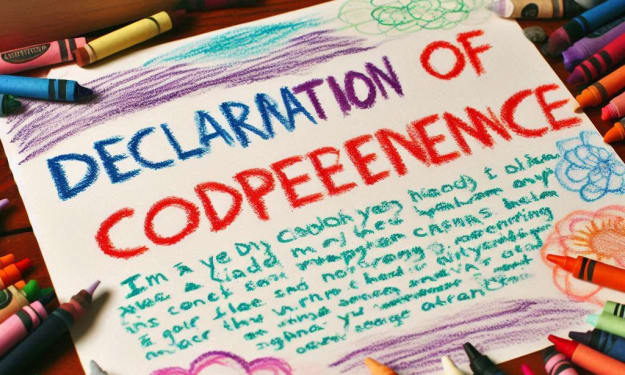
We the People of the Husbands of the United States of America, in Order to form a more perfect Union, and I mean you...with me...establish Justice, insure domestic Tranquility, provide for the common defence, promote the general Welfare, and secure the Blessings of Liberty to ourselves, after Puberty, do ordain and establish this Declaration of Co-Dependence.
By Gerard DiLeo6 days ago in Humans


Comments
There are no comments for this story
Be the first to respond and start the conversation.