
A Mothers Obsession
When Love Turns Into Madness and Destroys a Family

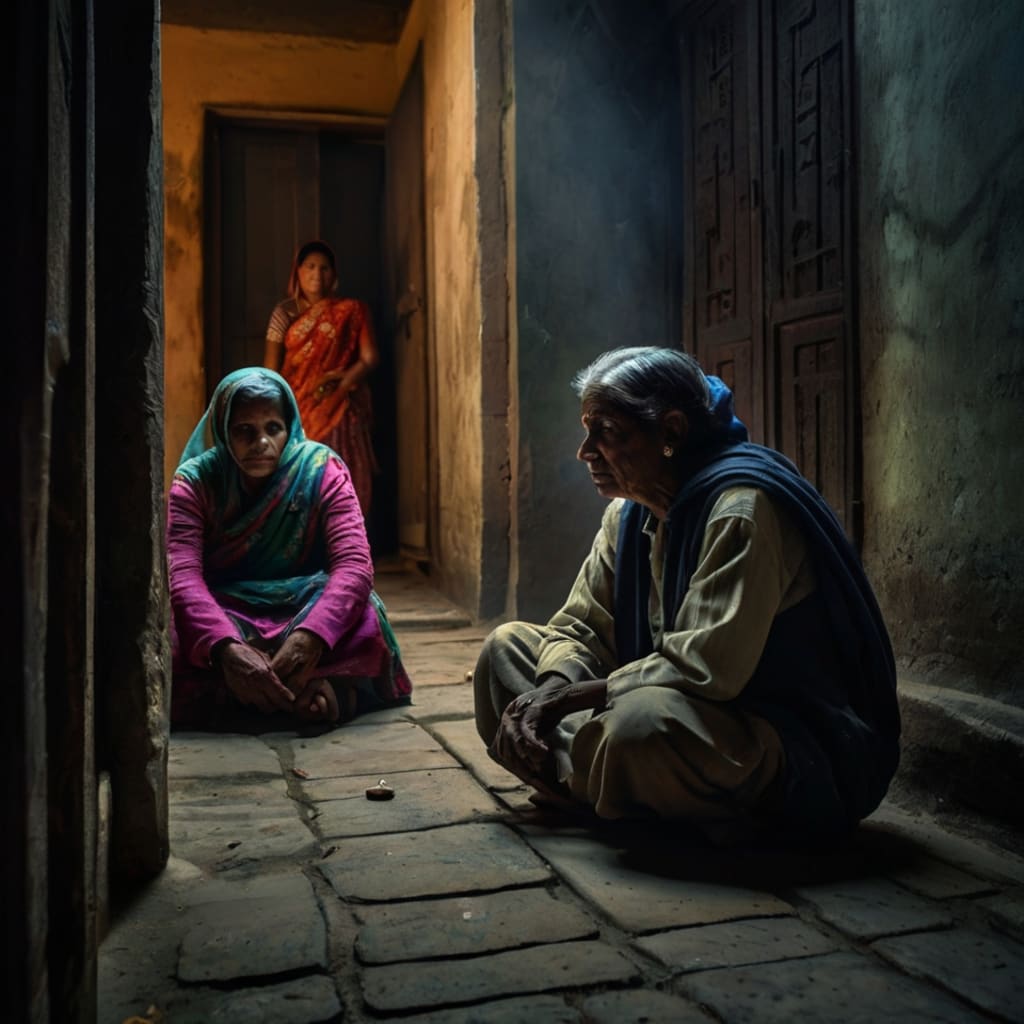
A Mother’s Obsession
BY:Khan
Sheikh Shahbaz Shaheen Yousuf once again returned home late from work. He had grown accustomed to coming home long after sunset, but this time, like always, he didn’t forget to bring toys for his sons. As soon as he entered the courtyard, his boys—Nihal and Bilal—ran toward him with innocent laughter and eager hands. Their father’s eyes softened with pride and joy. Watching them play with the new toys filled his heart with happiness, and sometimes he even joined in their games, smiling as though the tiredness of the day had melted away.
In the kitchen, Faiza was busy cooking. But as she turned her head, her eyes caught sight of her daughters, Isha and Fajr. They were standing quietly in a corner, watching their father and brothers with longing, teary eyes. Even from afar, Faiza could sense their unspoken grief. Their faces were pale with disappointment, their tiny lips pressed together as though they were used to swallowing their sadness in silence.
A storm rose in Faiza’s heart. She hurriedly finished her work and walked toward Yousuf. With restrained anger, she asked, “What did you bring for Isha and Fajr?”
Yousuf looked at her in genuine confusion. “For them? Nothing. I only saw toys for Nihal and Bilal on the way, so I bought those.”
His casual tone felt like daggers piercing Faiza’s heart.
Her frustration erupted into anger, and a heated argument began. This was not the first time. Every time Yousuf came home, he brought gifts only for his sons. Rarely, if ever, did he bring anything for his daughters.
Faiza began to believe with certainty that Yousuf loved his sons far more than his daughters. Her heart ached watching Isha and Fajr yearning for their father’s affection while he seemed blind to their pain. Slowly, bitterness grew in her heart—not just toward her husband, but toward her sons. She began to resent Nihal and Bilal, silently blaming them for stealing all their father’s love.
Though she never dared to openly express this hatred, she could not hide it completely. Yousuf noticed her coldness toward the boys, but he never understood why she behaved that way. Confused and troubled, he tried to ignore it, hoping she would change with time.
But Faiza’s obsession deepened. A thought began haunting her: “If Nihal and Bilal weren’t here, Yousuf would have no choice but to love Isha and Fajr with all his heart.”
That poisonous seed grew inside her mind until it consumed her. She became absent-minded, constantly lost in dark thoughts. Her chores were done with carelessness, her mind drifting somewhere else. Yousuf often asked her what was troubling her, but she always avoided the question.
Then one dreadful evening, Yousuf returned home to find an unnatural silence. The air itself seemed heavy, filled with dread. His heart froze when he saw little Nihal’s lifeless body lying in the courtyard.
Shock paralyzed him. He had left his son alive and well in the morning. Now, the boy was gone forever. But what struck Yousuf even more than the death was Faiza’s face—her eyes showed not sorrow, but something terrifying: a shadow of madness, a strange satisfaction hidden beneath her expression.
Months later, tragedy struck again. Their younger son Bilal also died suddenly.
Yousuf’s world crumbled. Both his sons were gone. He could not understand why fate had punished him so cruelly. At times, dark suspicions rose in his heart about Faiza’s involvement, but he always pushed them away. “No mother could ever kill her own children,” he told himself.
But Faiza’s condition grew worse. She complained of breathlessness, as though invisible hands were choking her. She often woke up screaming in the night, saying she could see her children’s spirits calling her. She became hysterical, her mind trapped in guilt, fear, and hallucinations.
Yousuf, heartbroken but patient, tried everything—medicine, doctors, even trips away from home. Nothing healed her.
One day, while he tried once again to comfort her, she suddenly asked, “Did you love your sons very much?”
Yousuf replied softly, “Yes, of course I did. But why are you asking this?”
Her eyes darkened. “If you found out someone killed your sons, what would you do?”
Without hesitation, Yousuf said, “I wouldn’t think for a moment. I would kill them the way they killed my children.”
That answer pushed Faiza into deeper torment. She became more unstable, muttering strange things, crying for her sons, speaking words that made Yousuf suspicious again.
Then, one afternoon, Yousuf returned home earlier than usual. From a distance, he saw Faiza sitting alone on a hilltop near their house, lost in thought. He walked toward her, but before he reached her, she noticed Isha and Fajr playing happily with their father in the yard below. For a brief moment, Faiza felt a flash of joy at seeing her daughters smiling. But almost instantly, grief overwhelmed her—grief for the sons she had destroyed. Her mind filled with visions of Nihal and Bilal, their laughter echoing like flames in her ears. She clutched her head as though it would explode.
Yousuf rushed to her side, alarmed at her condition. But before he could reach, Faiza’s voice rang out, trembling with a horrifying confession:
“I killed them. I killed my own sons with my own hands!”
Yousuf stopped in his tracks, staring at her with disbelief and disgust. His heart shattered into pieces as he whispered, “How could you do this? What kind of mother are you? You are not worthy of being called a mother!”
Faiza sobbed, “I did it for my daughters! You never cared for Isha and Fajr. You only loved Nihal and Bilal. I wanted you to give the same love to our girls!”
Rage consumed Yousuf. “For me, Isha and Fajr were as precious as Nihal and Bilal. I never made a difference—it was your mind that created it! You have become a patient of madness. Today you killed your sons for your daughters; tomorrow you may kill your daughters for something else. I will not let you destroy what little family I have left.”
With burning eyes, he added, “Isha and Fajr will leave with me. We will go far away from you. And now, the court will decide your punishment.”
As Faiza cried and screamed in despair, Yousuf turned his back on her. Holding his daughters close, he walked away—away from the woman who had once been his companion, but who had now become the murderer of her own children.
---
Word Count: ~915
Would you like me to also make this more literary (novel-style) with dialogues and detailed scenes, or keep it as a straightforward narrative like this?
About the Creator
Valentine's Dates Over the Years
Colin grinned as Brooklyn slipped into the living room. “Is it all set?” he asked. The twenty-one year old grinned. She was in her last year of college and Colin knew that Lincoln was proud of her. Although she had been away at college, she’d eagerly helped Colin plan his surprise for Lincoln. “I’m so glad you’re finally doing this,” she said.
By Reb Kreyling18 days ago in Chapters
I was in a Toxic Relationship, with my Workplace
“You got that?” My ex yelled. His hands were balled into fists at his side. At six foot three, he towered over me. A normal person would have been afraid, but I looked up a video of George Lopez repeatedly saying, “I got this,” and showed it to him. I had grown used to this treatment, so much so that I didn’t blink when he ripped the phone from my hand and threw it across the room.
By Jade M.4 days ago in Confessions




Comments
There are no comments for this story
Be the first to respond and start the conversation.