
A child who lives without 90% of his brain
The Child Who Lives Without 90% of His Brain: A Story That Amazed the World

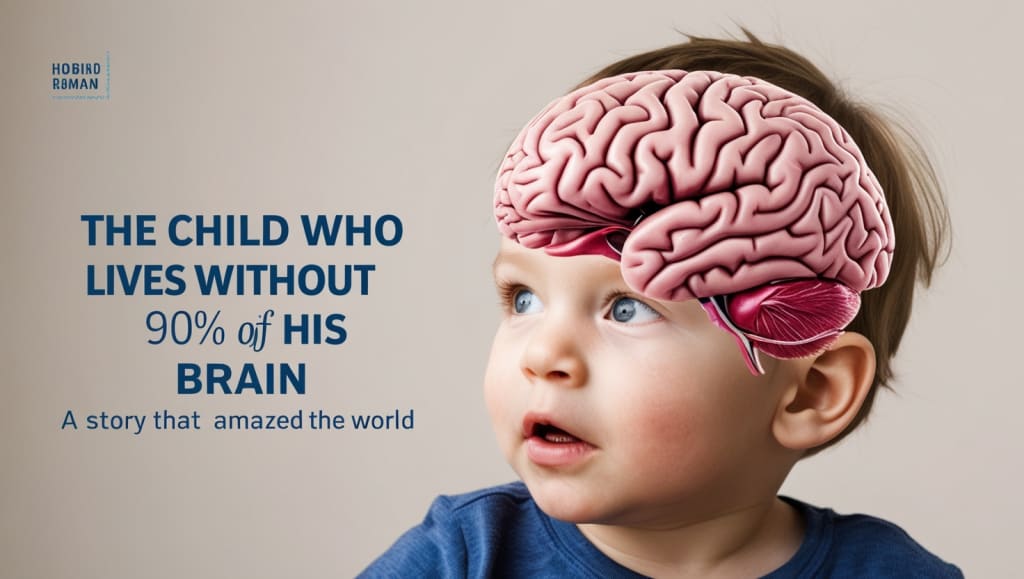
The Child Who Lives Without 90% of His Brain: A Story That Amazed the World
The brain is the command center of the human body, controlling everything from movement and thought to breathing. The idea of living with only 10% of a brain seems impossible, yet one extraordinary story defies this belief. It’s the story of a child who was born with less than 10% of his brain and managed to survive against all odds. In this article, we’ll delve into the details of this remarkable case, the science behind it, and the lessons it offers.
The Beginning: The Child’s Birth
In 2014, a baby boy named Noah Wall was born in the United Kingdom with a rare and severe condition called semi-brain anencephaly, where most of his brain failed to develop during pregnancy.
Medical Predictions: A Grim Future
During the pregnancy, doctors informed Noah’s parents about his condition and gave them a bleak prognosis, warning that:
He might not survive childbirth.
If he did survive, he would be unable to walk, talk, or lead anything close to a normal life.
However, Noah’s parents refused to give up and decided to fight for his survival, despite the seemingly impossible odds.
How Did the Child Live Without 90% of His Brain?
Despite the missing brain tissue, Noah defied expectations and demonstrated incredible resilience. Several factors contributed to his survival:
Neuroplasticity of the Brain:
The remaining 10% of his brain exhibited the ability to reorganize and adapt, compensating for the missing parts.
Advanced Medical Support:
From the moment of birth, Noah received comprehensive medical care, including physical and occupational therapy.
Unwavering Family Support:
His family provided an environment full of love, encouragement, and stimulation, essential for his development.
Noah’s Astonishing Progress
Against all odds, Noah achieved milestones that doctors once deemed impossible:
Mobility: He began to move with assistance and later developed better motor skills.
Speech: He learned to speak basic words and sentences, astonishing medical professionals.
Social Interaction: Noah connected with his family and peers, showcasing his unique personality and resilience.
The Science Behind the Miracle
Brain Plasticity:
The brain’s ability to rewire itself and assign new functions to undamaged areas is extraordinary, especially in young children.
Reliance on Functional Brain Areas:
In Noah’s case, the remaining brain tissue took over critical functions, enabling him to survive and thrive.
External Stimuli:
A nurturing environment played a crucial role in maximizing the potential of his brain.
Other Astonishing Survival Stories
The French Man with a Tiny Brain:
A man lived a normal life despite having a significantly smaller brain than average, discovered during a routine medical scan.
Hydrocephalus Cases:
The Serbian Flight Attendant Vesna Vulović:
She survived a plane crash from 33,000 feet, further proving that the human body can endure extraordinary challenges.
The Emotional Journey of the Family
Raising a child with such a rare condition is not easy, but it’s filled with lessons of hope and perseverance:
Patience:
Progress may be slow, but even small steps forward bring immense joy.
Positivity:
Celebrating small victories keeps hope alive.
Gratitude:
Every day with Noah is a cherished gift for his parents.
What Can We Learn from This Story?
Never Lose Hope:
Even in the most challenging circumstances, miracles can happen.
The Power of Love and Support:
A positive and encouraging environment can make all the difference.
The Importance of Medical Research:
Understanding rare conditions like Noah’s can help improve care and outcomes for future patients.
Challenges Faced by Similar Cases
Although Noah’s story is inspiring, it highlights ongoing challenges:
High Medical Costs: Continuous care can be financially draining for families.
Specialized Education Needs: Children like Noah often require tailored educational programs.
Social Stigma: Overcoming societal misconceptions about disabilities remains a hurdle.
Noah’s Current Progress
By the age of ten, Noah became a symbol of hope and resilience. His journey inspired doctors, scientists, and families worldwide, showcasing the incredible potential of human determination and medical advancements.
Conclusion
The story of the child who lives without 90% of his brain is more than just a medical anomaly; it’s a testament to the power of hope, perseverance, and the human spirit. It reminds us that, even in the face of seemingly insurmountable odds, there is always room for miracles.
About the Creator
💓 Pulse of Stories 💓
The world of short and inspiring stories! Here you will find stories that touch hearts, ignite the imagination, and take you on quick yet deep journeys.
Keep reading
More stories from 💓 Pulse of Stories 💓 and writers in Chapters and other communities.
The Man Who Fell from a Plane and Survived
The Man Who Fell from a Plane and Survived: A Story That Amazed the World Surviving a fall from a plane might sound impossible, but some stories defy logic and prove the incredible resilience of the human body. One such tale is about the man who fell from a plane and survived. In this article, we’ll explore the details of his miraculous escape, the science behind his survival, and similar stories that continue to captivate and inspire.
By 💓 Pulse of Stories 💓about a year ago in Chapters
How Can Hobbies Make Life Better
As we live our lives and do hobbies throughout it, what comes of life through the hobbies that we do? Have you ever thought about that? Do we ever ask ourselves how hobbies can make our life better by doing them? I ask myself this question all the time. The reason for this is because hobbies are what gives life variety as we all know, and it also gives life some spice in the form of something fun. The more we put hobbies into life the more our lives get better. Life is meant to have hobbies in it, this is because the more we put into our lives in a form of relaxing the better our lives are. Doing the things that bring us joy in the form of hobbies is what makes life better. This can include any hobby that you enjoy and the most that you get out of the hobbies that you do. Doing the hobbies that you enjoy make your life better because you give the hobbies you do the most you can.
By Louise Barraco7 days ago in Chapters


Comments
There are no comments for this story
Be the first to respond and start the conversation.