

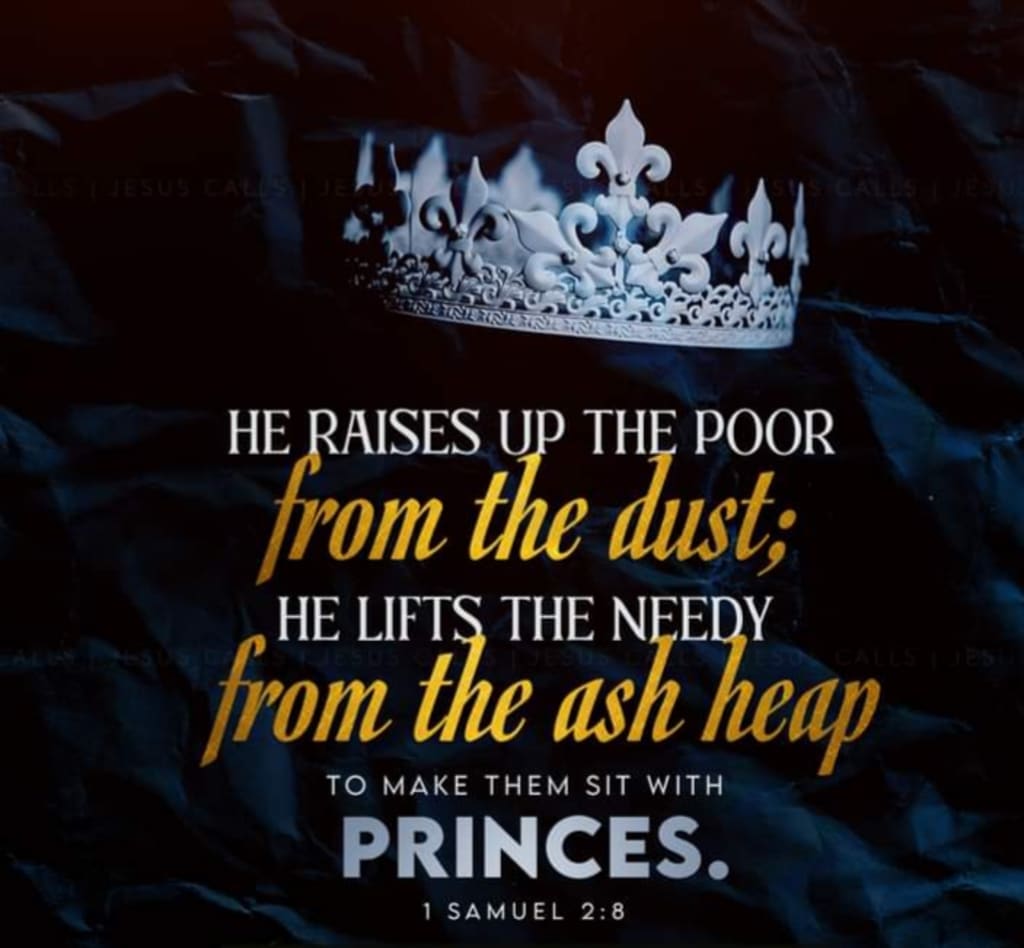
1 Samuel Chapter 2 is a multifaceted chapter that covers several key themes and events in the early history of Israel, focusing on the life of the prophet Samuel and his family, as well as the corruption of Eli's priestly sons. Here's an overview of the chapter.
**1 Samuel Chapter 2: An Overview**
**Verses 1-10: Hannah’s Prayer of Praise**
The chapter begins with Hannah’s prayer of praise, known as Hannah’s Song. After dedicating her son Samuel to the Lord, Hannah offers a heartfelt and triumphant hymn that reflects her deep gratitude and joy. Her song is both a personal expression of her faith and a prophetic declaration of God’s sovereignty.
Hannah’s prayer is rich in theological themes:
- **Exultation in God**: Hannah’s joy is centered in God’s greatness. She rejoices in the Lord, who has lifted her from a state of barrenness and shame.
- **God’s Power and Holiness**: She acknowledges God as the source of her strength and the only one deserving of praise. She celebrates God’s holiness and might.
- **Reversal of Fortunes**: The song emphasizes a recurring biblical theme: God’s power to reverse human fortunes. The proud are brought low, while the humble are exalted. The song contrasts the fate of the righteous with that of the wicked, asserting that God intervenes in human affairs to uphold justice.
- **Divine Sovereignty**: Hannah praises God’s control over all creation, asserting that He is the judge who gives strength to His king and exalts the humble.
**Verses 11: Samuel’s Service**
Following Hannah’s prayer, the narrative shifts to the daily life of Samuel and his family. Samuel’s father, Elkanah, returns to his home in Ramah, but Samuel remains at Shiloh to serve in the temple under the care of Eli the priest. This brief verse highlights the ongoing commitment of Samuel’s family to the service of God and the temple.
**Verses 12-17: The Corruption of Eli’s Sons**
The focus then shifts to the corruption of Eli’s sons, Hophni and Phinehas. They are described as "worthless" men who do not know the Lord, despite their role as priests. Their misconduct is severe and multifaceted:
- **Exploitation of Offerings**: They abuse their priestly position by taking more than their rightful share of the offerings brought by the people. Instead of adhering to the laws of sacrifice, they demand the best portions for themselves, showing a blatant disregard for God’s commands.
- **Sexual Immorality**: They also engage in immoral behavior with women who serve at the entrance to the Tent of Meeting. Their actions are a grave violation of the sacredness of their role and the sanctity of the temple.
The narrator emphasizes that these actions are not just personal failings but a scandal that corrupts the worship of God and causes the people to despise the offerings made to the Lord. This corruption contrasts sharply with the purity and dedication of Samuel.
**Verses 18-21: Samuel’s Growth and Dedication**
In contrast to Eli’s sons, Samuel is portrayed as a young boy who faithfully ministers before the Lord, wearing a linen ephod—a garment worn by priests. His mother, Hannah, visits him annually, bringing him a robe. God blesses Hannah for her dedication, and she is given more children, highlighting the fulfillment of her earlier prayer. Samuel continues to grow in favor with both God and people, demonstrating his exemplary character and dedication.
**Verses 22-26: Eli’s Reprimand and Samuel’s Favor**
Eli is old and hears about the corrupt practices of his sons. He admonishes them, but his rebuke is ineffective because the sons do not heed his words. Eli’s failure to restrain his sons results in a prophecy about judgment upon his family. Despite his own shortcomings, Eli acknowledges that Samuel is growing in stature and favor, contrasting sharply with the failings of his own sons.
**Verses 27-36: A Prophetic Judgment**
A prophet delivers a stern message to Eli, revealing that because of the corruption of his sons and his failure to correct them, God will bring judgment upon his family. The prophecy outlines a dire future for Eli’s lineage:
- **Judgment upon Eli’s House**: God declares that Eli’s family will face a severe judgment, including the loss of their priestly role. This is a consequence of their disregard for God’s commandments and the resulting scandalous behavior.
- **A Faithful Priest**: The prophecy includes a promise that God will raise up a faithful priest who will act according to God’s heart and mind. This faithful priest will serve faithfully and establish a new order, signaling a transition from Eli’s corrupt line to a more righteous leadership.
In summary, 1 Samuel Chapter 2 is a complex narrative that juxtaposes Hannah’s joyful praise with the serious corruption of Eli’s sons and the consequences for Eli’s family. It illustrates themes of divine justice, the reversal of human fortunes, and the contrast between faithful service and corrupt leadership. The chapter sets the stage for the future roles of Samuel and the transition in Israel’s leadership, emphasizing the importance of integrity and faithfulness in serving God.
About the Creator
Danny Prem kumar
A vision is our long-term goals and aspirations for the future in terms of its long-term growth and impact on this world. My mission defines what we do and what we stand for, while our vision speaks to our goals and ideals for the future.
Keep reading
More stories from Danny Prem kumar and writers in Chapters and other communities.
Psalm Chapter 91
Psalm 91 is one of the most cherished chapters in the Book of Psalms, celebrated for its themes of divine protection and trust in God. This psalm is often viewed as a hymn of assurance, providing comfort and security through vivid imagery and profound promises. Here’s a summary of its contents.
By Danny Prem kumar2 years ago in Chapters
Valentine's Dates Over the Years
Colin grinned as Brooklyn slipped into the living room. “Is it all set?” he asked. The twenty-one year old grinned. She was in her last year of college and Colin knew that Lincoln was proud of her. Although she had been away at college, she’d eagerly helped Colin plan his surprise for Lincoln. “I’m so glad you’re finally doing this,” she said.
By Reb Kreyling19 days ago in Chapters
Has World War III Started?
Has World War III Started? The question “Has World War III started?” is no longer limited to academic debate or fictional movies. It is now openly discussed in newsrooms, policy circles, and online platforms around the world. While the simple answer remains no, the conditions shaping today’s global environment are deeply alarming. The world is experiencing an unprecedented convergence of regional wars, technological disruption, and power competition that closely resembles the early stages of past global conflicts.
By Wings of Time about 8 hours ago in Chapters


Comments
There are no comments for this story
Be the first to respond and start the conversation.