


The Famous History of the Life of King Henry VIII (also known as All is True) was written in 1613, possibly to celebrate the Royal Wedding of one of King James’s daughters which took place that year. The play does not seem to have been published until 1623, when it appeared in the First Folio. It is the last of Shakespeare’s English history plays, and may also be the very last play he ever wrote, as he died just three years later. The Tempest, written around 1611, was the final work Shakespeare authored alone, but we know that after that he produced a few others collaboratively.
John Fletcher was Shakespeare’s most frequent partner of this period, and besides Henry VIII they also worked together on The Two Noble Kinsmen and the lost play Cardenio. This makes Henry VIII’s appearance in the 1623 collected edition a little surprising, since all of Shakespeare’s other late co-authored works were omitted. Fletcher however is nowhere credited for Henry VIII, and it was not until around 1850 that scholars detected the part he had played. This may account for Henry VIII’s inclusion in the Folio.
One of the main reasons we remember Henry VIII is that during one of the play’s first performances in June 1613, a cannon discharged in Scene Four for dramatic effect set the Globe Theatre on fire. The damage was repaired and the theatre re-opened a year later, but even so, that was the end of William Shakespeare’s original stage on which some of his greatest plays were performed for the first time. For his audience, who also knew Shakespeare was growing old, it must have felt like the end of an era.

Henry VIII opens with a chorus informing the audience in plain terms that there will be no comedy or action in what they are about to watch. This is a serious and moving intellectual piece, asserts the chorus, not a popular entertainment for commoners. For this very reason the play is no friend to the modern director, and remains one of the least performed or filmed of all Shakespeare’s works. We can also only wonder how audiences received this surprising introduction at the first performances, especially considering Shakespeare’s priority was usually to make his plays appealing to all.
Fletcher may bear some responsibility here, as his own sole-authored plays were typically aimed at the upper classes only. It is however just as possible that Shakespeare, semi-retired and living comfortably on his accumulated wealth, had lost the common touch that made his early comedies so successful. At any event, Henry VIII is indeed weightier than average, and more closely resembles a political drama than anything else Shakespeare wrote. The intricate plot is based around the rises and falls in fortune of a number of key members of King Henry’s court, and how these turns of fate impact on each other.

Henry himself was the father of Queen Elizabeth the First, and it was his own father Henry VII who put the Tudor Dynasty on the throne. Later history has concluded correctly that Henry VIII was a brutal tyrant, but Shakespeare had been Queen Elizabeth’s subject and was now writing for the Stuart Dynasty, who were the Tudors’ legitimate heirs. Here, as in all his previous history plays, Shakespeare knew full well it was most advisable to present his rulers’ ancestors in a positive light.
Consequently Shakespeare’s Henry, though he retains the short temper for which he was notorious, emerges one of the most charismatic portrayals of this historical figure. Nor does Shakespeare dwell on the greater political or religious questions surrounding certain decisions on Henry’s part which motivate the narrative, for these were still delicate subjects even by the time he and Fletcher were writing the play.
Central to the same was King Henry’s marriage to Katherine of Aragon, the Spanish princess he had married when he was only seventeen and she was twenty-three. Legend has it that Katherine was the one true love of Henry’s life. However, the King badly wanted a son, and although Katherine was pregnant six times, her only child who lived to adulthood was a girl. When Shakespeare’s play opens it is twenty years since the King and Queen married, by which time Katherine is too old to have any more children.
Then appears Anne Boleyn, one of Queen Katharine’s ladies-in-waiting, who in Shakespeare’s play King Henry meets at a masquerade ball held by his Lord Chancellor Cardinal Wolsey. Henry would fall in love with Anne, and this, along with his desire for a son, would lead him to seek a divorce from Katherine. When the Roman Catholic Church refused him permission, Henry rejected their authority and established a native English Christian faith, freeing himself to divorce Katherine and marry Anne. This chapter in history is now known as The King’s Great Matter.
Wolsey however, though Henry’s most trusted advisor, was in secret a corrupt schemer and embezzler seeking personal advancement. When he opposes Henry’s marriage to Anne, his crimes are discovered and Wolsey’s fall from grace is inevitable. Accusations fly, not to mention sparks, in one of the play’s most dramatic scenes as Henry’s lords arrive to serve out Wolsey’s arrest.

Wolsey would almost certainly have been executed, had he not died in his sleep before sentence was passed. Meanwhile Queen Katherine, though she fought her hardest, could not prevent the divorce. Shakespeare’s play gives her a divine visitation in her final moments, followed by a beautiful and saintly death.
King Henry marries Anne, who bears him a child – but once again, a daughter not a son. Meanwhile Thomas Cranmer, Henry’s faithful Archbishop of Canterbury, has troubles of his own. The play’s dramatic climax comes about when Stephen Gardiner, the envious Bishop of Winchester, sets out to have Cranmer tried and convicted for supporting the King during his split with the Catholic Church. Summoning Cranmer to court, Gardiner and his followers first humiliate him by making him wait outside the gate alongside servants and messengers, before calling him before them to face his punishment.
What they don’t know, however, is that the King knows all about their plans and is on Cranmer’s side. He’s already given him his ring as a guarantee of royal protection, and sure enough, Henry himself at the pivotal moment descends on the inquisition to shame Gardiner for his foul play. With the characteristic artfulness that served him well to the very end, Shakespeare nimbly sidesteps questions of who’s right or wrong on the grander scale, closing instead on a universal appeal for decent conduct and treating others with dignity. In this respect, at least, the play has aged very well.
Crisis past, King Henry then enjoys the happy privilege of reminding loyal Cranmer he still has a christening to officiate...
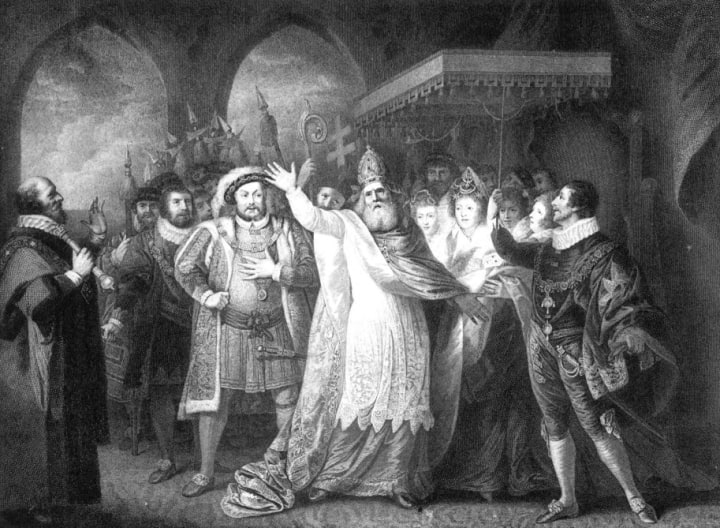
Even after a total of six wives, Henry VIII never had a son who lived to be a man. His daughter by Katherine grew up to be Queen Mary the First of England, whilst Anne’s daughter was none other than Elizabeth the First, Shakespeare’s Queen and one of the greatest rulers England knew.
The final sequence of Henry VIII depicts the christening of that same monarch. Although she was probably represented by a doll onstage, this remains the only actual appearance of the great lady alluded to and praised so frequently throughout Shakespeare’s prior works, as the playwright pays final tribute to she who had supported him. Cranmer, in a moment of prophecy, foretells during the service the illustrious life Henry’s child shall lead, with an accuracy that would have spoken to contemporary audiences as much as it awes King Henry and the cast. On a note of peace and patriotism ends William Shakespeare’s final play.
About the Creator
Reader insights
Outstanding
Excellent work. Looking forward to reading more!
Top insights
Easy to read and follow
Well-structured & engaging content
Excellent storytelling
Original narrative & well developed characters
Expert insights and opinions
Arguments were carefully researched and presented
Eye opening
Niche topic & fresh perspectives
On-point and relevant
Writing reflected the title & theme
Keep reading
More stories from Doc Sherwood and writers in BookClub and other communities.
William Shakespeare's Coriolanus
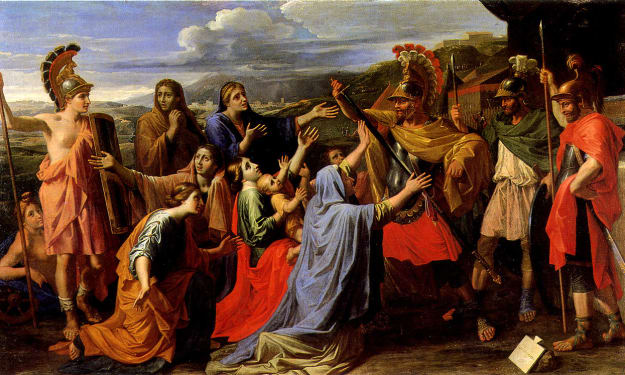
Written around 1608, Coriolanus was possibly William Shakespeare’s last tragedy. He wrote four such plays set in Ancient Rome, and coincidentally his first tragedy, Titus Andronicus, is also one of these. However, while Titus is not very accurate historically, for Coriolanus (as well as Julius Caesar and Antony and Cleopatra) Shakespeare made extensive use of Plutarch’s Lives of the Most Noble Grecians and Romans which had been translated into English by Thomas North in 1579. Coriolanus does not appear to have seen print in Shakespeare’s lifetime, and the earliest text is from the posthumously-published First Folio of 1623.
By Doc Sherwood2 years ago in BookClub
7 Books You Must Read To Change Your Life In 2026
There are moments in life when we feel stuck—professionally, emotionally, or spiritually. In those moments, the right book can act like a mentor, offering clarity when the path feels blurred and courage when motivation runs dry.
By Diana Meresca day ago in BookClub


Comments (2)
This provides valuable insights into the play's creation, its inclusion in the First Folio, and its collaborative nature with John Fletcher. It also delves into the thematic elements of the play, including the portrayal of King Henry VIII, the political and religious dynamics of the time, and the historical significance of the characters and events depicted in the play. You have expertly analyzed the play's structure, its introduction by the chorus, and the weightier and more serious nature of the work compared to Shakespeare's other plays. It also discusses the relevance of historical context, such as the Tudor Dynasty and the Stuart Dynasty, in shaping Shakespeare's portrayal of characters and events.
💙