
“Why Hydrants Fail:”
Robert Simpson Breaks Down the Science and Systemic Flaws

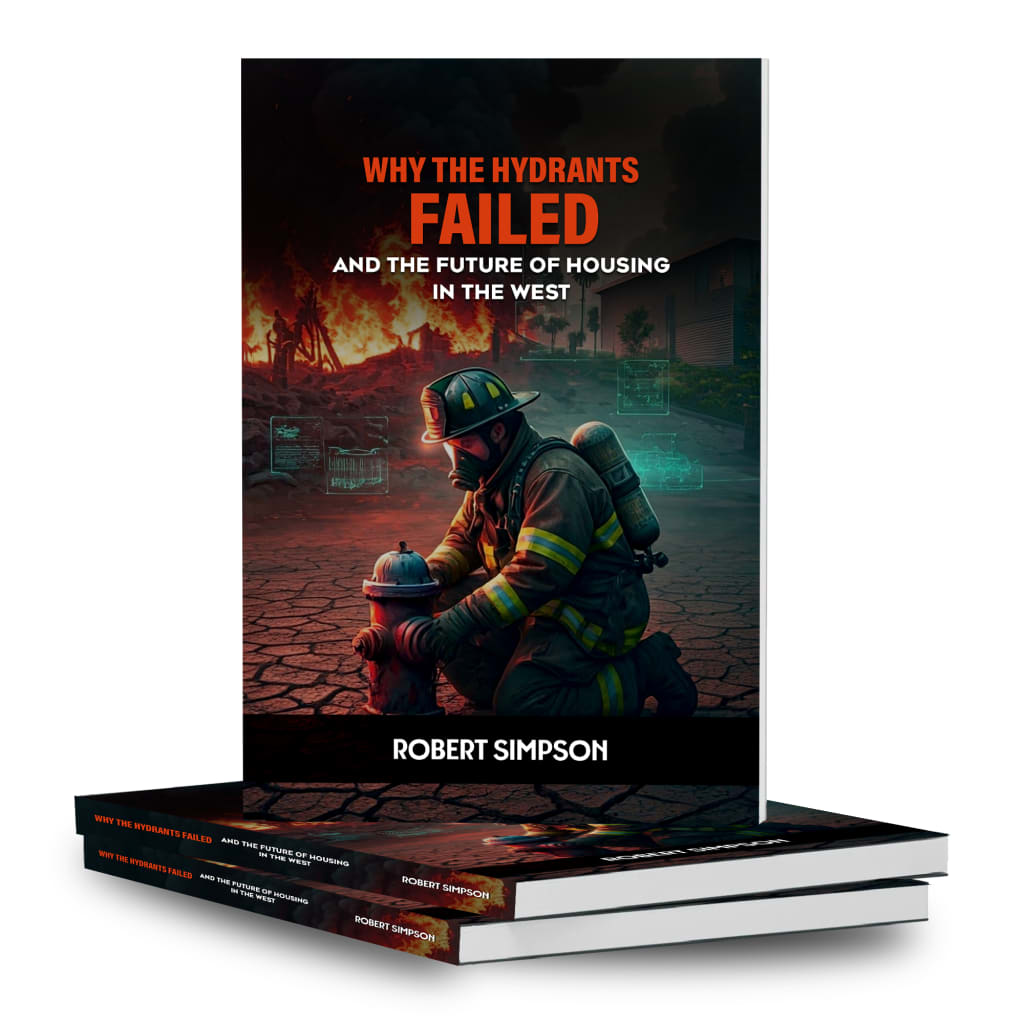
We see hydrants on nearly every street corner, painted bright red or yellow, standing as silent guardians of our neighborhoods. But in Why Hydrants Fail, author Robert Simpson reveals a sobering truth: these iconic fixtures of public safety often don’t work when we need them most.
One key reason hydrants fail is that government-run water agencies in California often prioritize revenue over public safety. The Santa Ynez reservoir, originally built as an emergency supply, was kept dry under the guise of conservation because dry reservoirs don’t evaporate water, and unused water doesn't generate revenue.
Unlike private companies, which face legal consequences for negligence, public agencies lack clear accountability. This structural ambiguity makes it difficult to assign blame or demand reform.
The Santa Ynez Reservoir, built in 1972 as a critical fire safety resource for Pacific Palisades, was quietly taken out of service 14 years ago with no clear explanation from city or state officials. Despite its vital role during events like the 2025 Palisades Fire, the reservoir remains dry. Questions about structural issues or public disclosure remain unanswered. Many believe the decision was politically driven, possibly tied to efforts to centralise water control or reduce evaporation, raising serious concerns about transparency and public safety.
The author of the book, Robert Simpson, aims to educate readers, particularly city officials, planners, and first responders, that this is not a mystery of engineering. It’s a management failure. We have the tools to fix it. We just need the will to act before the next fire proves us wrong.
The book features real-world examples from cities like Oakland, New York, and Philadelphia, where broken hydrants directly contributed to delayed responses, greater property damage, and tragic loss of life. These stories aren’t meant to provoke fear. They’re intended to provoke change.
A Call for Common-Sense Reform
Simpson’s strength lies not just in diagnosing the problem but in offering clear, practical solutions:
• Mandatory inspection and flow testing
• Improved coordination between fire and water departments
• Real-time monitoring technologies
• Public transparency about hydrant status
Why It Matters Now?
Thousands of hydrants across the country are out of service at any given time. As climate-related disasters grow more frequent and severe, the margin for error shrinks.
“California’s state-controlled water monopolies have failed. If we do not change course, these failures will repeat year after year. The time for radical reform is now,” says Simpson in his book.
This book is intended to spark a national conversation about the future of our cities, how they should be designed, where they should be located, and how they can best serve the people who live in them.
It’s a call to remember the resilience and ingenuity of the American people. The author believes that we have a choice: collaborate with the Trump administration to shape that future or leave it in the hands of unelected bureaucrats whose track record speaks for itself.
About the Author:
Robert Simpson is a builder, consultant, and civic thinker with decades of experience in construction and housing development. Raised in Southern California and a graduate of Cal State Fullerton, he now focuses on affordable infrastructure solutions and advocates for ethics, self-reliance, and practical innovation in public policy.
About the Creator
Elisa B.Bull
I craft innovative marketing strategies to connect readers with captivating stories and drive our authors' success, fostering a vibrant literary community and expanding our reach.
Keep reading
More stories from Elisa B.Bull and writers in BookClub and other communities.
A Bold New Vision for America’s Future
In a time of firestorms and failing infrastructure, political paralysis, and rising housing costs, Robert Simpson’s Why the Hydrants Failed and The Future of Housing in The West delivers a commanding wake-up call and blueprint for change.
By Elisa B.Bull9 months ago in BookClub
Rachel Reviews: Lakefront Wolves by Joseph Deegan
Meet Finn. He's an 18 year old kid who has potential. He's bright with great school scores and he's also an athlete, a footballer of some prowess. He has it all going for him, it would seem, and yet, he's determined to send what could be a well-planned, stable existence firmly off the rails. He drinks, he smokes, he takes drugs, he has violent tendencies and he's in danger of losing not only his mind but all that he holds dear.
By Rachel Deeming14 days ago in BookClub
7 Humorous Books That Are Deeper Than You Expect
Humor has a remarkable way of sneaking profound truths into our lives. While a good laugh can lift our spirits, the best humorous books do far more—they make us reflect, question, and even transform our perspectives on life, society, and ourselves. Often, beneath the witty dialogue and absurd situations lies a rich tapestry of philosophy, social commentary, and emotional insight.
By Diana Meresc6 days ago in BookClub


Comments
There are no comments for this story
Be the first to respond and start the conversation.