
What Would Happen if Antarctica Completely Melted?
???????
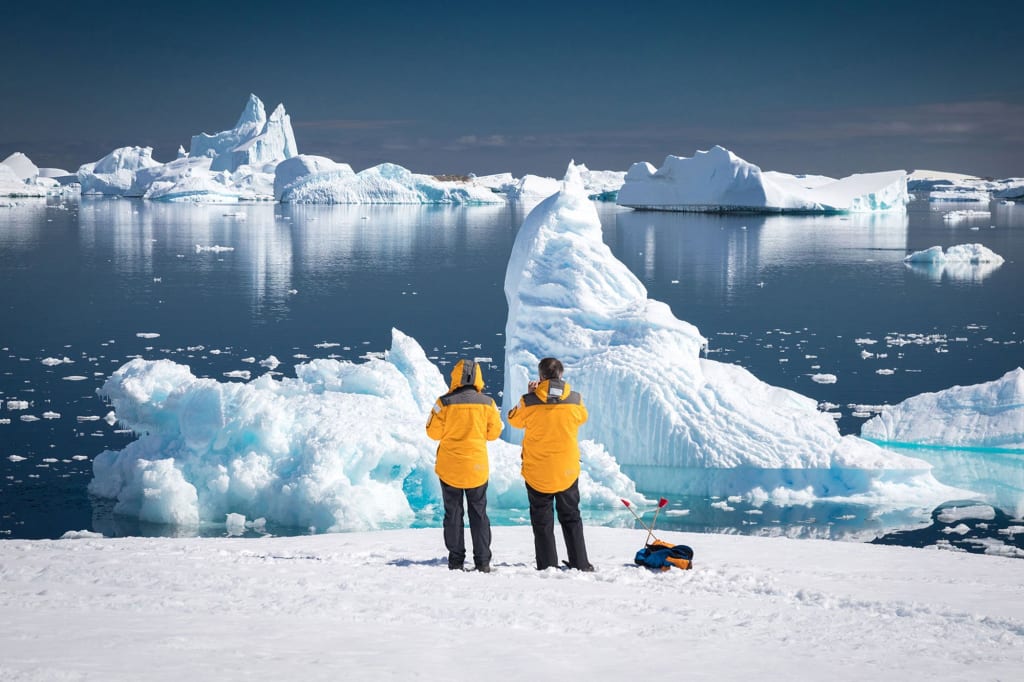
What Would Happen if Antarctica Completely Melted?
The rising ocean levels would lead to a complete reshaping of the coastlines across all continents on Earth. This would result in the formation of inland seas and the flooding of rivers, creating new bodies of water in areas where major cities once stood. The devastating consequences would be evident as entire nations would be engulfed by the swelling oceans. The melting of Antarctica, in particular, would have a catastrophic impact. To fully comprehend the extent of this impact and the survival prospects of certain populations, it is crucial to understand the consequences of a total meltdown of the ice surrounding Antarctica. Although Antarctica is not entirely frozen, a significant portion of its mass consists of snow and ice. The Western Antarctic Ice Sheet and the Eastern Antarctic Ice Sheet are the two main ice sheets in Antarctica. The Western Antarctic Ice Sheet alone holds enough frozen water to cause a substantial rise in sea levels worldwide if it were to completely melt. It is estimated that the sea levels would increase by approximately 3.2 meters or 10.5 feet if the entire Western Antarctic Ice Sheet were to melt and the resulting waters flowed into the ocean.
The rising ocean levels would lead to a complete reshaping of the coastlines across all continents on Earth. This would result in the formation of inland seas and the flooding of rivers, creating new bodies of water in areas where major cities once stood. The devastating consequences would be evident as entire nations would be engulfed by the swelling oceans. The melting of Antarctica, in particular, would have a catastrophic impact. To fully comprehend the extent of this impact and the survival prospects of certain populations, it is crucial to understand the consequences of a total meltdown of the ice surrounding Antarctica. Although Antarctica is not entirely frozen, a significant portion of its mass consists of snow and ice. The Western Antarctic Ice Sheet and the Eastern Antarctic Ice Sheet are the two main ice sheets in Antarctica. The Western Antarctic Ice Sheet alone holds enough frozen water to cause a substantial rise in sea levels worldwide if it were to completely melt. It is estimated that the sea levels would increase by approximately 3.2 meters or 10.5 feet if the entire Western Antarctic Ice Sheet were to melt and the resulting waters flowed into the ocean.
The rising ocean levels would lead to a complete reshaping of the coastlines across all continents on Earth. This would result in the formation of inland seas and the flooding of rivers, creating new bodies of water in areas where major cities once stood. The devastating consequences would be evident as entire nations would be engulfed by the swelling oceans. The melting of Antarctica, in particular, would have a catastrophic impact. To fully comprehend the extent of this impact and the survival prospects of certain populations, it is crucial to understand the consequences of a total meltdown of the ice surrounding Antarctica. Although Antarctica is not entirely frozen, a significant portion of its mass consists of snow and ice. The Western Antarctic Ice Sheet and the Eastern Antarctic Ice Sheet are the two main ice sheets in Antarctica. The Western Antarctic Ice Sheet alone holds enough frozen water to cause a substantial rise in sea levels worldwide if it were to completely melt. It is estimated that the sea levels would increase by approximately 3.2 meters or 10.5 feet if the entire Western Antarctic Ice Sheet were to melt and the resulting waters flowed into the ocean.
Scientists have developed models that predict a potential rise in sea levels by 60 millimeters or 2.36 inches by the year 2100. Although this may not appear significant, it is important to consider the numerous coastal areas where people reside at sea level. Even a slight increase in millimeters or inches could result in flooding and the displacement of millions of inhabitants.
Now, let us explore the vast amount of water contained within the ice and snow of Antarctica. It is estimated that Antarctica encompasses approximately 18,000,000 square kilometers or 6,950,000 square miles of ice and snow. The average thickness of the ice in Antarctica is around 1.9 kilometers or 1.18 miles. Consequently, the volume of water stored in the snow and ice of Antarctica amounts to approximately 34,000,000 km³ or 8,157,000 miles cubed.
Based on these calculations, if all the ice and snow from Antarctica were to melt and flow into the ocean, sea levels could potentially rise by 88.6 meters or 291 feet. This would have a profound impact on coastal regions worldwide.
It is evident that the complete melting of Antarctica's ice and snow would result in a substantial release of water and a significant rise in sea levels. Before delving into the specific areas that would be submerged in such a scenario, let us first discuss some fundamental facts about Antarctica and the implications of a total meltdown for the continent itself.
Antarctica is the fifth largest continent on Earth, surpassing both Europe and Australia in size. To emphasize the extent of Antarctica's ice sheets, they cover approximately 20% of the Southern Hemisphere. Consequently, it is unsurprising that the Antarctic Ice Sheet is the largest single mass of ice on our planet. Interestingly, the size of Antarctica's ice sheets varies throughout the year, with the sea ice around Antarctica measuring approximately 3 million square kilometers or 1.2 million square miles during the summer season.
However, at the conclusion of winter, the sea ice in Antarctica can expand to a staggering 19 million square kilometers or 7.3 million square miles. The growth and contraction of the sea ice primarily occur in the vicinity of the Ross Ice Shelf and the Ronne Ice Shelf. These areas witness the movement of glacial ice from the continent's interior towards lower elevation regions, spanning a distance of approximately 10 to 1,000 meters or 33 to 32,800 feet per year.
This natural shifting of the ice exerts an influence on sea levels, but it is a gradual process unlike the hypothetical scenario of a sudden melting of all the ice and snow in Antarctica. The continent itself is divided by the Transantarctic Mountains, which reach elevations of 4,500 meters or 14,764 feet. The Antarctic Ice Sheet, with an average elevation of around 2,000 meters or 6,562 feet, can rise as high as 4,000 meters or 13,123 feet in the central region.
Interestingly, Antarctica is not a solid landmass. If all the ice were to melt, it would transform into a series of archipelagos with frigid water flowing between them. The consequences of such a melting event would extend beyond the land, impacting the composition of the oceans as well. The waters surrounding Antarctica, part of the Southern Ocean, have depths ranging from 4,000 to 5,000 meters or 13,100 to 16,400 feet and consist entirely of saltwater. On the other hand, the ice and snow in Antarctica are predominantly freshwater.
If all this freshwater were to melt and enter the ocean, it would alter the salinity of the surrounding waters. This, in turn, would have significant implications for the density of the water in the region, potentially disrupting the ocean conveyor belt. The ocean conveyor belt, scientifically referred to as the "thermohaline circulation," is a vast system of global ocean currents driven by variations in temperature and salinity. It plays a crucial role not only in the distribution of nutrients and water around the globe but also in the planet's weather systems.
Therefore, the melting of Antarctica would not only impact the land but also trigger substantial changes in the oceans, affecting both the composition of the water and the intricate workings of the ocean conveyor belt.
Antarctica is technically considered a desert, despite the common misconception that deserts are hot and sandy. Its classification as a desert is due to its harsh climate and minimal precipitation. Over millions of years, massive amounts of snow and ice have accumulated on the continent, resulting in its icy landscape. The interior regions of Antarctica receive very little snow, with an estimated annual average of 50 to 100 millimeters or 2 to 4 inches, making it one of the driest places on Earth.
The waters surrounding Antarctica can reach extremely cold temperatures, ranging from -10°C to -30°C or 14°F to -22°F. However, in certain regions, water temperatures can rise as high as 9°C or 48°F. On land, the temperatures in Antarctica vary significantly depending on the location. In the interior regions where mountains rise above the landscape, winter temperatures can drop below -60°C or -76°F, while summer temperatures can reach -20°C or -4°F. In 1983, the coldest temperature ever recorded on Earth was measured by Russian scientists at Vostok Research Station, reaching -89.2°C or -128.6°F.
Antarctica also plays a crucial role in regulating the planet's temperature by reflecting a significant amount of the sun's radiation back into space. This helps maintain moderate temperatures across much of the world. However, the melting of ice and snow due to climate change has led to a reduction in the amount of radiation reflected back into space. This, in turn, causes global temperatures to rise, resulting in further melting of snow and ice. This dangerous cycle, known as a negative feedback loop, poses a real threat to the future, potentially leading to the complete melting of all ice in Antarctica over time.
Despite being one of the harshest environments on Earth, Antarctica still supports life. Lichens, mosses, and various other forms of vegetation can be found on the continent.
Now let us shift our focus to South America. Similar to the Mississippi, the Amazon River would experience a significant increase in water volume, resulting in the formation of a vast inlet sea in the heart of the continent. The State of the Amazon in Brazil would be almost entirely submerged, and cities such as Georgetown, Rio de Janeiro, Montevideo, and Buenos Aires would be underwater due to rising sea levels. In the southern part of the continent, the Paraguay River Basin would flood, creating another massive Atlantic inlet that would cover parts of Argentina and Uruguay.
While a substantial portion of the eastern coast of South America would face devastation, the impact on the western coast would be significantly less severe. This is because the presence of the Andes Mountains along the western coast means that many cities are situated at higher elevations. However, small coastal towns across the continent would still be affected as the new shoreline moves further inland. It is important to note that Central America would also lose a significant portion of its coastlines. The Panama Canal and its surrounding area would suffer catastrophic flooding, resulting in the creation of a wider and larger passage between the Atlantic and Pacific Oceans where the canal once existed. This would enable large ocean liners to pass through with ease.
Now, let us turn our attention to Africa, where a considerable portion of the continent would remain unaffected. Unfortunately, Senegal, The Gambia, Guinea-Bissau, and Guinea would not fall into this category. These countries would experience extensive flooding and become submerged in the Atlantic Ocean due to their low-lying lands. Cities like Dakar, Bissau, Freetown, and Monrovia would cease to exist. Additionally, Abidjan, Accra, and Lagos would be underwater. Southern Africa would witness some minor flooding that would pose a threat to Cape Town, but the rest of the region would experience minimal changes.
In East Africa, cities such as Maputo in Mozambique, Dar es Salaam in Tanzania, and Mogadishu in Somalia would be engulfed by the Indian Ocean. The Red Sea and the Gulf of Aden would expand, flooding any towns and cities along their coasts. Lastly, there is the south.
The extent of ice melting in the Arctic and Greenland Ice Sheet, which covers approximately 80% of the island, is not even taken into consideration. As these ice sheets and glaciers worldwide continue to melt, the sea levels will progressively rise. In the near future, the cities and lands mentioned in this video could potentially be submerged underwater. Islands like the Maldives will sink beneath the ocean's surface, forever lost. At this stage, it is too late to prevent the flooding and destruction caused by the rising sea levels resulting from the melting ice in Antarctica and other parts of the world.
The melting of Antarctica and other ice sheets will not only lead to rising sea levels but also bring about significant changes in global weather patterns. In a hypothetical scenario where all the ice in Antarctica melts, global temperatures would skyrocket. This would cause an increase in the intensity of storms as more of the sun's radiation would be trapped in the atmosphere. Enormous hurricanes would ravage the expanded oceans, while tornadoes would tear through continents that were spared from flooding. It would essentially become a worldwide doomsday scenario.
Ultimately, if all the ice in Antarctica were to melt, sea levels would rise significantly, eroding coastlines across every continent and creating new bays, inlets, and inland seas that would devastate major cities. Even individuals residing in areas unaffected by flooding would experience drastic climatic changes, including higher temperatures and more severe storms. Therefore, although over 40% of the global population would face immediate devastation if all the ice and snow in Antarctica melted, the remaining population would still be threatened by other global transformations.
About the Creator
Keep reading
More stories from writers in BookClub and other communities.
My New Book is Finally Here
My poetry collection Beautiful and Brutal Things is done. It's actually done and finally published over 270 pages. Over a year of my life went into this book. More than a year, really. Long days at my computer, sometimes seven days a week because I couldn't stop even when I probably should have. Then two months of editing that felt harder than the writing itself. But it's finished, and I'm still standing, and the book is real.
By Tim Carmichael3 days ago in BookClub
Valentine in Montréal
Don't be fooled by the title. The story is actually very interesting: My name is Valentine. I am twenty-three years old and I work at a little store at Berri-UQAM métro. I am very ordinary-looking and Barney, who works the same shift as me at the store, says I do not know how to dress. I have been working there for four years, and I have never missed a day. This is why sometimes I seem familiar to people, even though they can't place me.
By Kendall Defoe 6 days ago in BookClub
Wild Card Weekend Recap: What Happens Now?
I think I figured out why I love Wild Card Weekend so much. It's because it's the first playoff anything of the calendar year. The NFL season starts in the fall, and once upon a time, the champion was crowned either on or slightly before New Year's. The evolution of the NFL schedule has resulted in the playoffs starting just into the New Year, and currently, the final week of the season falls on the first weekend of the New Year, with Wild Card Weekend coming a week after that. So yes, chronologically, the NFL's Wild Card Weekend serves as the first playoff anything of the calendar year.
By Clyde E. Dawkins7 days ago in Unbalanced




Comments (1)
Hey, just wanna let you know that this is more suitable to be posted in the Earth community 😊