
What is Dramatic Irony in Literature? Definition, Examples and Tips
Dramatic Irony
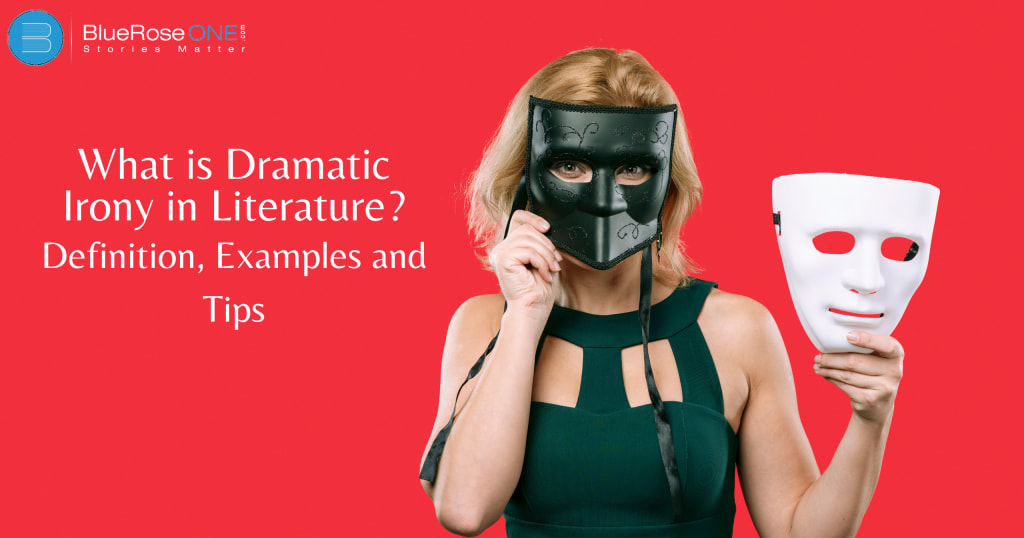
Have you ever seen a movie or read a book where you knew something that the characters didn’t? That is dramatic irony in action! It’s a great literary device that keeps readers engaged, waiting to see how the characters react when they ultimately discover the truth. Dramatic irony not only adds dimension to storytelling, but it also fosters emotional connections with the audience.
What is Dramatic Irony?
Dramatic irony is a literary device in which the audience understands something crucial but the characters in the story do not. This adds tension or humor because readers predict how the characters will respond when they find the truth. For example, in Shakespeare’s Romeo and Juliet, the audience knows Juliet is still alive while Romeo believes she is dead. Dramatic irony is frequently employed to enhance emotional impact and keep readers interested in the story’s progression.
How Dramatic Irony Differs from Other Types of Irony
Dramatic irony differs from other varieties of irony, such as verbal and situational irony, in that it assumes the audience knows something the characters do not. Verbal irony occurs when a speaker says one thing but intends another, usually to communicate sarcasm. Situational irony occurs when there is a significant difference between what is expected and what actually happens. Dramatic irony, on the other hand, heightens tension or emotional engagement by providing the audience with exclusive information. For example, in Romeo and Juliet, the audience knows Juliet is alive while Romeo believes she is dead. This distinguishing feature makes dramatic irony an effective storytelling tool....Continue reading
About the Creator
Keep reading
More stories from Blueroseone and writers in BookClub and other communities.
Query Letter vs. Cover Letter: What’s the Difference?
Have you ever felt like you’re drowning in a sea of letters, trying to figure out which ones go where? If you’ve ever wondered what the difference is between a query letter and a cover letter, you’re not alone. These two sorts of letters have separate functions, and understanding how to write them can make or break your possibilities. Let us break it down.
By Blueroseoneabout a year ago in BookClub
Rachel Reviews: Lakefront Wolves by Joseph Deegan
Meet Finn. He's an 18 year old kid who has potential. He's bright with great school scores and he's also an athlete, a footballer of some prowess. He has it all going for him, it would seem, and yet, he's determined to send what could be a well-planned, stable existence firmly off the rails. He drinks, he smokes, he takes drugs, he has violent tendencies and he's in danger of losing not only his mind but all that he holds dear.
By Rachel Deeming10 days ago in BookClub
Julius Evola
The Enigmatic Mind of Julius Evola Twentieth century intellectual history contains a number of figures whose writings continue to provoke debate long after the surrounding political and cultural conditions have faded into the past. Among the most unusual and controversial of these figures stands Julius Evola, an Italian thinker whose work moves across an extraordinary range of intellectual territory. Philosophical reflection, esoteric speculation, cultural criticism, political theory, and comparative religion appear side by side throughout a body of work that resists easy classification.
By Marcus Hedare5 days ago in BookClub


Comments
There are no comments for this story
Be the first to respond and start the conversation.