
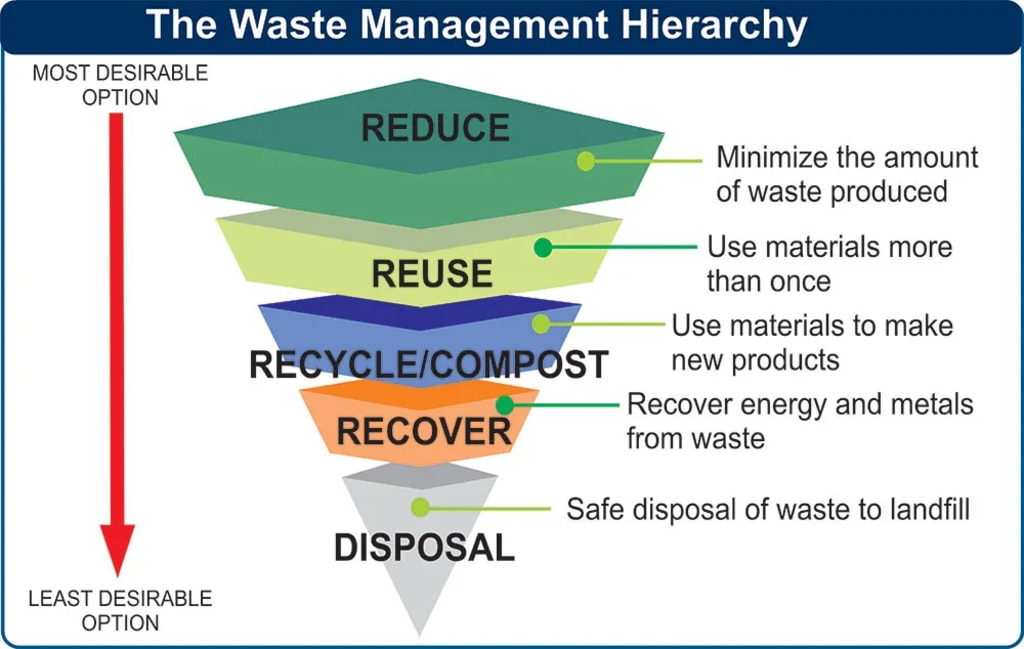
Waste diversion is an essential component of sustainable waste management practices, aiming to reduce the amount of waste that ends up in landfills or incinerators. By implementing various strategies and practices, waste diversion helps minimize the environmental impact of waste while promoting resource conservation and a circular economy.
Recycling is one of the most widely recognized waste diversion strategies. It involves collecting and processing materials such as paper, plastic, glass, and metal to manufacture new products. Recycling helps conserve valuable resources and reduces the need for extracting and processing virgin materials. The recycling process typically involves sorting, cleaning, and transforming recyclable materials into raw materials that can be used in the production of new goods. Recycling not only diverts waste from landfills but also saves energy and reduces greenhouse gas emissions associated with the production of virgin materials.
Composting is another effective waste diversion practice, particularly for organic waste materials. Instead of sending food scraps, yard trimmings, and other organic waste to landfills, composting allows for their natural decomposition into nutrient-rich compost. Composting can be done on a small scale, such as backyard composting, or on a larger scale in municipal composting facilities. The resulting compost can be used to enrich soil in gardening, landscaping, and agricultural applications. By diverting organic waste from landfills through composting, methane emissions (a potent greenhouse gas) are reduced, and valuable organic matter is returned to the soil, promoting soil health and fertility.
Waste reduction and source separation are fundamental waste diversion practices that focus on minimizing waste generation at its source. Waste reduction involves adopting practices that prevent waste generation in the first place. This can include using reusable products, avoiding single-use items, and implementing efficient packaging designs. By reducing waste at its source, the need for waste disposal and management is diminished. Source separation, on the other hand, involves sorting waste at the point of generation to separate recyclable materials from non-recyclable ones. This practice facilitates the diversion of recyclable materials to appropriate recycling facilities, ensuring that they are properly processed and used as feedstock for new products.
Waste-to-energy technologies play a role in waste diversion by converting non-recyclable waste materials into energy. These technologies include incineration and anaerobic digestion. Incineration involves the combustion of waste materials at high temperatures, generating heat or electricity. Anaerobic digestion, on the other hand, is a biological process that decomposes organic waste in the absence of oxygen, producing biogas that can be used for energy generation. Waste-to-energy technologies help recover energy from waste that cannot be recycled while reducing the volume of waste sent to landfills. However, it is important to ensure that these technologies are properly regulated to minimize potential environmental and health impacts.
Donation and reuse are valuable waste diversion practices that focus on extending the lifespan of products. Instead of discarding items that are still functional, they can be donated to charities, thrift stores, or other organizations that can redistribute them to those in need. This practice not only prevents usable items from becoming waste but also promotes a circular economy by keeping goods in circulation for as long as possible. Donation and reuse can apply to various items, including clothing, furniture, appliances, electronics, and more.
Education and awareness play a crucial role in waste diversion efforts. Public education campaigns can inform individuals and communities about proper waste management practices, recycling guidelines, and the importance of waste reduction. By raising awareness about the environmental impacts of waste and the benefits of waste diversion, individuals are encouraged to adopt more sustainable behaviors. Educational initiatives can target schools, workplaces, community centers, and other public spaces to ensure broad outreach and engagement.
Waste diversion initiatives are implemented at various levels, involving individuals, households, businesses, and governments. At the individual and household level, individuals can actively participate in waste diversion by practicing recycling, composting, waste reduction, and source separation. They can also support donation and reuse efforts by donating usable items and purchasing second-hand goods. Businesses can implement waste diversion strategies within their operations, such as establishing recycling programs, optimizing packaging designs, and adopting sustainable procurement practices. Governments play a critical role in waste diversion through the development and enforcement of waste management regulations, the establishment of recycling infrastructure, and the implementation of public education campaigns. They can also support waste diversion initiatives through financial incentives, grants, and public-private partnerships.
In conclusion, waste diversion is a multifaceted approach to waste management that aims to minimize waste sent to landfills or incinerators. By implementing strategies such as recycling, composting, waste reduction, waste-to-energy, donation and reuse, and promoting education and awareness, waste diversion helps conserve resources, reduce pollution, and move towards a more sustainable and circular economy. It requires collaboration and participation from individuals, households, businesses, and governments to achieve significant waste reduction and create a more environmentally responsible future.
About the Creator
IN Seyha
I am the one who love to learn news things and love reading. I want to share what I have read with you too.
Rachel Reviews: Lakefront Wolves by Joseph Deegan
Meet Finn. He's an 18 year old kid who has potential. He's bright with great school scores and he's also an athlete, a footballer of some prowess. He has it all going for him, it would seem, and yet, he's determined to send what could be a well-planned, stable existence firmly off the rails. He drinks, he smokes, he takes drugs, he has violent tendencies and he's in danger of losing not only his mind but all that he holds dear.
By Rachel Deeming9 days ago in BookClub
6 Books to Remind You Why Life Is Beautiful
Life can often feel overwhelming, chaotic, or even unfair. In those moments, a powerful book can serve as a gentle reminder of the beauty, resilience, and wonder that exists in the world. Literature has a unique ability to transport us, inspire reflection, and offer solace. Whether through storytelling, philosophy, or memoir, the right book can reignite our appreciation for life and deepen our understanding of the human experience.
By Diana Meresc4 days ago in BookClub



Comments
There are no comments for this story
Be the first to respond and start the conversation.