
Was Othello Meant to Be Black?
In William Shakespeare's play Othello, is the lead character was supposed to be black or brown character?


William Shakespeare's play, Othello, or the Tragedy of Othello the Moor of Venice, tells a tragic tale of betrayal, affairs, lies, and racism. Decades since the play, the play Othello, the main protagonist, is portrayed by an African American actor. But was Othello meant to be a black character?
The Story of Othello
The play Othello is about a powerful North African general who is believing that his wife Desdemona has been unfaithful. His so-called friend Iago insinuates that Desdemona has been messing around while he away from war however it was a trick all because of jealousy and racism.

The play was first performed on November 1, 1604. Othello has been one of Shakespeare's most popular plays, both among playgoers and literary critics, since its first performance, spawning numerous stage, screen, and operatic adaptations.
Was Othello meant to be Black?
In William Shakespeare's play Othello, the main protagonist is portrayed by Black/African American actor. It got me thinking:
Was Othello Meant to Black?
According to what I’ve researched, Shakespeare’s writing mostly predates the transatlantic slave trade and the more modern obsession with biological classification, both of which gave rise to our contemporary ideas of race. When Shakespeare used the word “black” he was not exactly describing a race the way we would. He meant instead someone with darker skin than an Englishman at a time when Englishmen were very, very pale. Although Othello is a Moor, and although we often assume he is from Africa, he never names his birthplace in the play. In Shakespeare’s time, Moors could be from Africa, but they could also be from the Middle East, or even Spain.
The language directed at Othello leaves little room for ambiguity. Shakespeare’s characters describe him as “sooty,” mock his “thick lips,” and refer to him as “black Othello” in moments of heightened tension. These phrases were recognizable racial markers in Shakespeare’s time, used to signal dark skin and African identity. The stark contrast between Othello and Desdemona, a white Venetian noblewoman reinforces that race is not incidental but central to the drama.
Shakespeare was no stranger to the cultural climate of his time. London in the late 1500s and early 1600s had a small but visible population of African people, often brought to the city through maritime trade. Travel accounts, popular stories, and royal edicts of the era reveal that English society viewed Africans through the lens of exoticism, religious difference, and, at times, outright prejudice. Such attitudes appear throughout Othello, especially through the character of Iago, who weaponizes racist stereotypes to manipulate Othello’s insecurities and stoke his jealousy.
On the stage, the question of Othello’s Blackness has evolved dramatically. During Shakespeare’s lifetime, theatrical conventions prevented actors of color from performing, so white actors portrayed Othello in dark makeup. Despite this problematic practice, audiences would have clearly understood the intention. Othello was meant to be visually marked as a Black man, separate from the Venetian world that both embraces and fears him. The tragedy hinges on this identity: his status as a respected general is constantly challenged by the racialized suspicion of those around him.
In the centuries that followed, portrayals of Othello became battlegrounds for cultural interpretation. In the 19th century, actor Ira Aldridge, one of the first Black performers to play Othello on a major stage, faced both acclaim and racist backlash. His performances highlighted how deeply race and representation were embedded in the play. By the 20th century, actors like Paul Robeson and Laurence Olivier presented radically different interpretations—Robeson as a dignified, fully realized Black protagonist, Olivier controversially using heavy blackface to emphasize exoticism and “otherness.”
Today, most modern productions cast Othello with a Black actors. For instance, Oscar nominee Laurence Fishburne as Othello. In the 1995 film, it sticks with Shakespeare material. Fishburne play as the Moor general, Irène Jacob as Desdemona, wife of Othello, Kenneth Branagh as Iago, Nathaniel Parker as Cassio, and Michael Maloney as Roderigo.

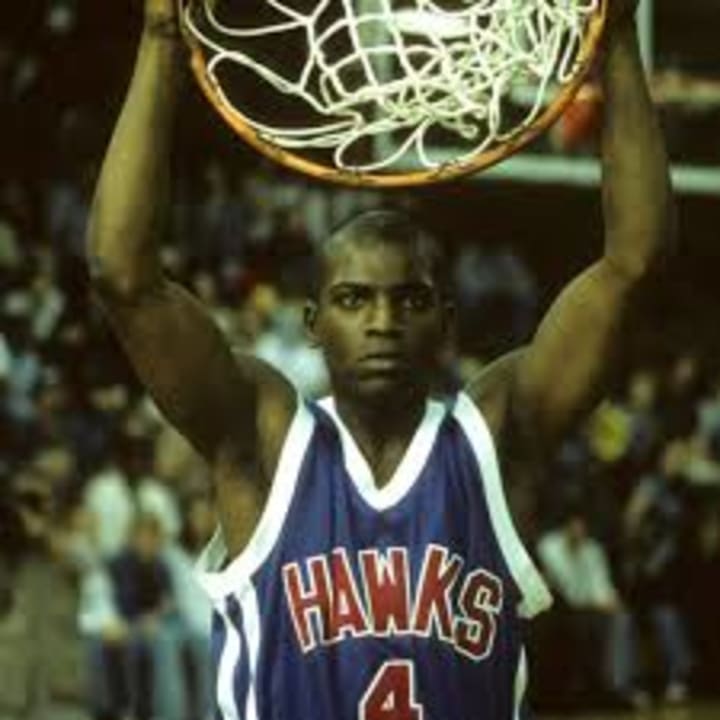
Mehki Phifer portray Odin James in O, the modernized version of Othello. In the 2001 film, James is popular all star high school basketball star, his girlfriend Desi Brable (based on Desdemona) portray by Julia Stiles, Hugo Goulding (based on Iago) Odin's teammate and the instigator behind the lie to destroy Odin's basketball career and relationship.
Directors often lean into the story’s exploration of prejudice, systemic bias, and the psychological toll of being an outsider in a predominantly white society. Othello’s downfall becomes not just a personal tragedy but a commentary on how racism shapes and distorts relationships, institutions, and self-perception.
Ultimately, the evidence from language, history, and theatrical tradition converges on a clear conclusion: Shakespeare created Othello as a Black man, and his Blackness is essential to the play’s emotional power and social critique. Othello remains one of literature’s most enduring examinations of identity, race, and the destructive force of prejudice issues that continue to resonate in today’s world.
So, to answer your question,
Yes, Othello was meant to be black!
About the Creator
Keep reading
More stories from Gladys W. Muturi and writers in BookClub and other communities.
Scrooge: The Story Behind A Christmas Carol
Before the Grinch hated Christmas and stole all the gifts, there was Ebenezer Scrooge except he didn't steal any Christmas gifts like the Grinch but took away all the Christmas joy. Scrooge is a grumpy elderly who hates Christmas until he receives a surprise visit from ghosts to show him his past, present, and future. The story has made films, plays, musicals, and several adaptations. Here's the story behind Scrooge.
By Gladys W. Muturi2 years ago in BookClub
Rachel Reviews: Lakefront Wolves by Joseph Deegan
Meet Finn. He's an 18 year old kid who has potential. He's bright with great school scores and he's also an athlete, a footballer of some prowess. He has it all going for him, it would seem, and yet, he's determined to send what could be a well-planned, stable existence firmly off the rails. He drinks, he smokes, he takes drugs, he has violent tendencies and he's in danger of losing not only his mind but all that he holds dear.
By Rachel Deeming11 days ago in BookClub
7 Best Books to Transform Your Life in 2026
In a world overflowing with information, finding guidance, clarity, and motivation can feel overwhelming. Yet, throughout history, books have served as beacons—transforming mindsets, igniting purpose, and guiding individuals toward a more meaningful life. Whether you’re seeking personal growth, emotional resilience, or professional success, the right book can spark a profound transformation.
By Diana Meresc6 days ago in BookClub


Comments (1)
You got it! I read the play outside of any courses at school, and some of the history behind it, and Shakey knew what he was doing!