
Unlocking Effective Communication: A Detailed Review of "How to Talk So Kids Will Listen & Listen So Kids Will Talk"
Exploring Timeless Strategies For Building Stronger Parent-Child Connections!!!

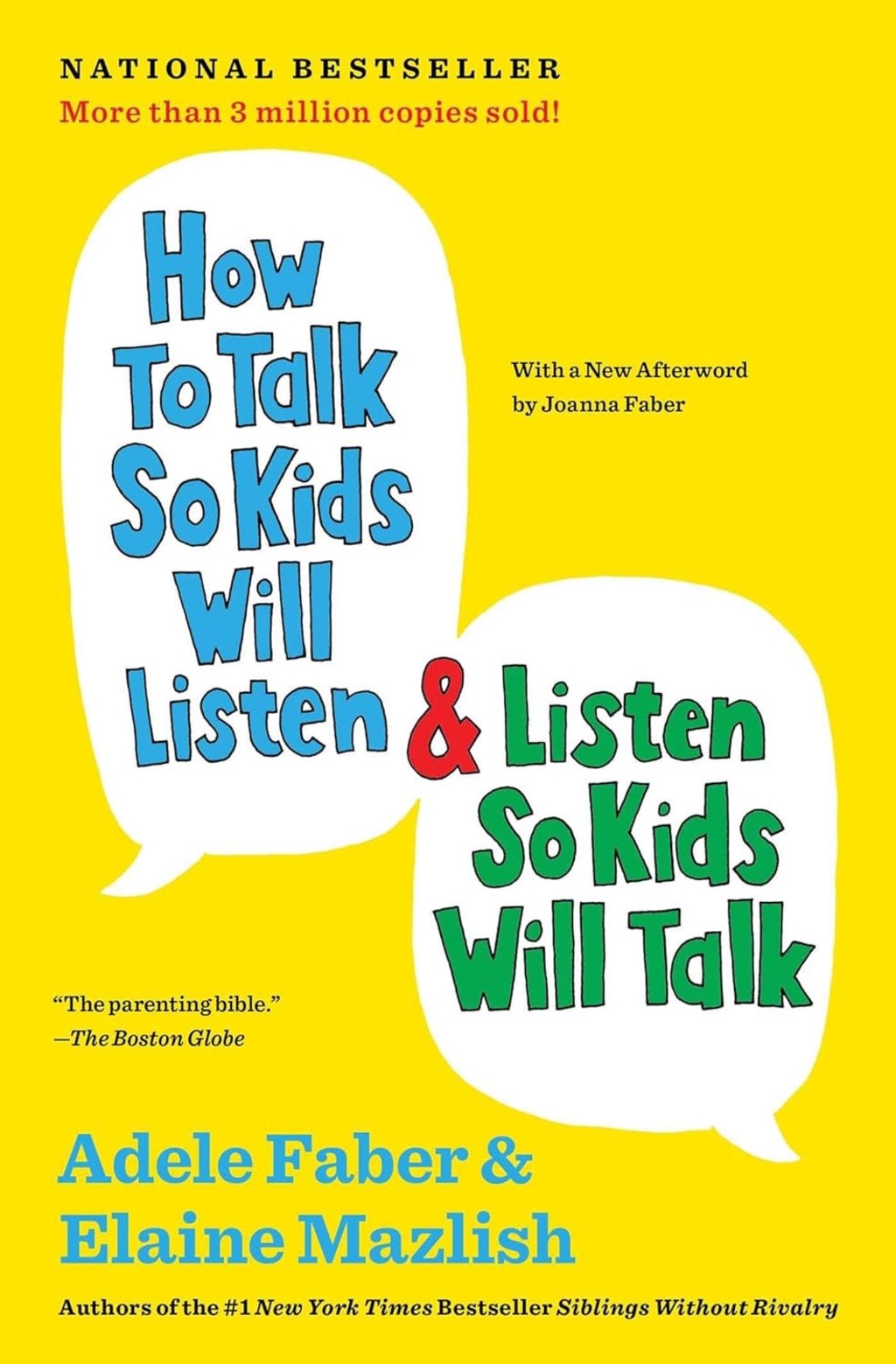
In the realm of parenting and effective communication with children, Adele Faber and Elaine Mazlish’s classic, How to Talk So Kids Will Listen & Listen So Kids Will Talk, stands out as an essential read. First published in 1980 and continuously relevant, this book provides practical strategies to foster a healthier, more communicative relationship between parents and children. Here’s an in-depth review highlighting the seven key aspects that make this book a valuable resource.
1. Timeless Techniques for Effective Communication
Faber and Mazlish’s book is renowned for its timeless techniques that remain applicable regardless of evolving parenting styles or generational changes. The authors focus on practical communication strategies that emphasize empathy, respect, and understanding. Techniques such as “active listening,” “validating feelings,” and “offering choices” are fundamental tools that parents can use to address various issues, from daily conflicts to deeper emotional needs. These strategies are rooted in a respectful dialogue that acknowledges and honors a child’s perspective, fostering a cooperative atmosphere.
2. Real-Life Examples and Practical Solutions
One of the book’s strengths is its use of real-life examples and practical solutions. The authors present numerous scenarios that parents commonly face—such as dealing with tantrums, sibling rivalry, or resistance to chores—and demonstrate how their techniques can be applied. By illustrating these strategies through relatable stories, Faber and Mazlish provide readers with concrete methods that can be immediately implemented in everyday situations. This approach not only makes the advice more accessible but also helps parents envision how to use these techniques in their own lives.
3. Interactive Exercises and Role-Playing
To help readers internalize and practice the communication strategies, the book includes interactive exercises and role-playing scenarios. These activities encourage parents to engage with the material actively, enhancing their understanding and skill in using the techniques. By practicing these exercises, parents can refine their communication approach, making it easier to implement the strategies effectively when interacting with their children.
4. Focus on Emotional Validation
A crucial aspect of Faber and Mazlish’s approach is the emphasis on emotional validation. The authors highlight the importance of acknowledging and validating a child’s feelings, which helps in building a trusting and supportive relationship. This practice involves listening without judgment, reflecting feelings back to the child, and showing empathy. By validating a child’s emotions, parents can foster a sense of security and openness, encouraging more honest and constructive communication.
5. Encouraging Autonomy and Responsibility
The book advocates for methods that promote a child’s autonomy and responsibility. Strategies such as offering choices, involving children in problem-solving, and using natural consequences are designed to empower children and help them learn from their actions. This approach encourages children to take ownership of their behavior and decisions, leading to increased self-confidence and independence. Faber and Mazlish’s techniques help parents guide their children towards becoming responsible and self-reliant individuals.
6. Addressing Common Misconceptions
Faber and Mazlish address several common misconceptions about effective parenting and communication. For example, they challenge the notion that authoritative or punitive methods are the most effective ways to discipline children. Instead, they advocate for a more empathetic and collaborative approach that prioritizes understanding and problem-solving over control and punishment. By addressing these misconceptions, the book encourages parents to reconsider traditional practices and adopt more constructive methods.
7. User-Friendly Layout and Structure
The book is well-organized and user-friendly, making it accessible for busy parents. Each chapter is focused on a specific aspect of communication and provides clear, actionable advice. The use of headings, bullet points, and summary sections allows readers to easily locate and reference key information. Additionally, the conversational tone of the writing makes the content engaging and relatable, ensuring that readers stay interested and motivated to apply the techniques.
Conclusion
How to Talk So Kids Will Listen & Listen So Kids Will Talk by Adele Faber and Elaine Mazlish remains a cornerstone in the literature of effective parenting. Its blend of practical strategies, real-life examples, and interactive exercises provides a comprehensive toolkit for improving communication with children. The book’s emphasis on emotional validation, autonomy, and responsibility aligns with modern parenting values, making it a timeless resource for parents seeking to build more meaningful and respectful relationships with their children.
By integrating these techniques into daily interactions, parents can foster a positive and cooperative family dynamic. Faber and Mazlish’s insightful and empathetic approach continues to offer valuable guidance for anyone looking to enhance their parenting skills and communicate more effectively with their children.
Thank you 🙏
Future of Resilience
About the Creator
Future of Resilience
I enjoy writing book and product review, relationship and parenting blogs. I hope you enjoy my writing. Happy Reading!
Reader insights
Nice work
Very well written. Keep up the good work!
Top insight
Expert insights and opinions
Arguments were carefully researched and presented
Keep reading
More stories from Future of Resilience and writers in BookClub and other communities.
Embracing the Beautiful and the Terrible: Kate Bowler's Journey Through Life's Dualities
Kate Bowler’s latest work, Have a Beautiful, Terrible Day, is a profound and compelling exploration of the dualities inherent in human experience. With her signature blend of wit, empathy, and introspection, Bowler offers readers a refreshing perspective on the coexistence of beauty and suffering in our lives. Here’s a six-point review delving into the heart of this remarkable book:
By Future of Resilience 2 years ago in BookClub
Rachel Reviews: Lakefront Wolves by Joseph Deegan
Meet Finn. He's an 18 year old kid who has potential. He's bright with great school scores and he's also an athlete, a footballer of some prowess. He has it all going for him, it would seem, and yet, he's determined to send what could be a well-planned, stable existence firmly off the rails. He drinks, he smokes, he takes drugs, he has violent tendencies and he's in danger of losing not only his mind but all that he holds dear.
By Rachel Deeming15 days ago in BookClub
8 Peaceful Books to Read When Life Gets Overwhelming
Life has a way of piling stress, anxiety, and endless responsibilities onto our shoulders. Sometimes, all we need is a pause—a quiet moment to breathe, reflect, and reconnect with ourselves. One of the most effective ways to find solace in chaotic times is through reading peaceful books that soothe the mind, inspire calm, and provide gentle wisdom. These are not just books—they are companions that guide us toward tranquility and perspective when the world feels overwhelming.
By Diana Meresc7 days ago in BookClub



Comments (3)
This would be a good book to give to parents to teach their children some thiings.
Fantastic one.
Awesome content