
Theurgy & Thaumaturgy
Paths of Divine Magic and Earthly Wonder

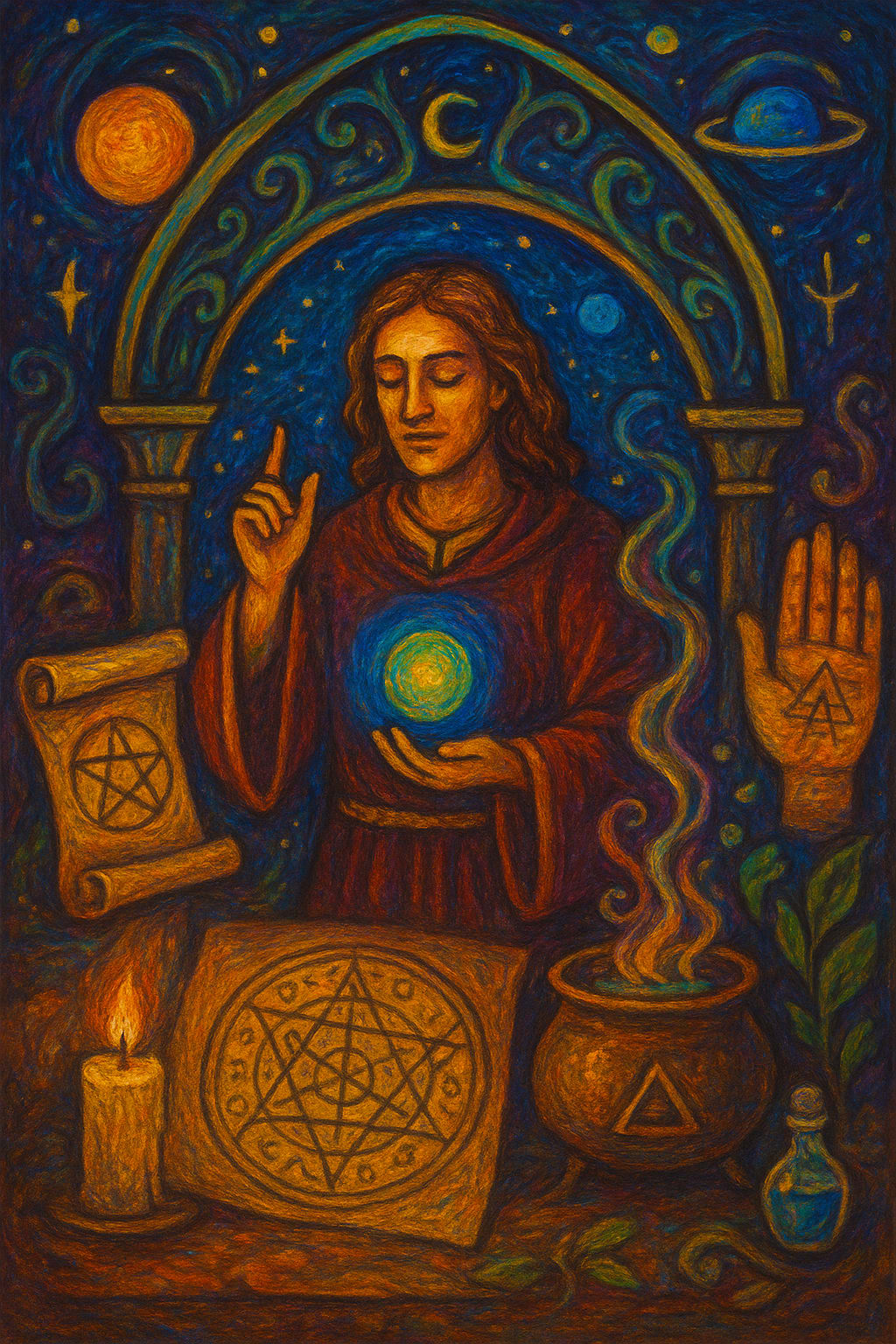
Unlocking the Ancient Arts: Magic as a Bridge Between Worlds
Magic represents one of the oldest forms of human inquiry and practice, an enduring attempt to interact with forces beyond ordinary perception. In the ancient world, magic was not mere superstition. Temples, sanctuaries, and sacred rites across Egypt, Mesopotamia, Greece, and Rome were designed to align human action with the rhythms of the cosmos. Objects, symbols, and words carried meaning beyond the material, serving as conduits to influence both spiritual and earthly realities. Practitioners observed patterns in nature, celestial movements, and human experience, creating structured systems of operation capable of producing both inner and outer transformation.
Philosophical schools of the ancient Mediterranean framed magic as a serious, disciplined art. Neoplatonism, emerging in the third century CE, posited that the universe is structured in hierarchical layers, with the One or the Divine at its apex. Human souls occupy intermediary levels, connected to material reality but capable of ascent toward higher spiritual intelligences. Within this framework, ritual, meditation, and symbolic manipulation were seen as tools to align consciousness with the divine order, fostering spiritual illumination and personal transformation.
In parallel, practices aimed at producing tangible effects in the world developed across cultures. From healing rituals in Egyptian temples to talismanic magic in Babylon, practical methods existed to influence health, protection, fertility, and other aspects of daily life. These operations were often based on principles such as correspondence and sympathetic influence: objects or actions in one domain could affect another when a symbolic or energetic link existed. Such practices were observed, refined, and codified over centuries, creating traditions capable of precise application.
Magic in this sense is neither arbitrary nor purely mystical. It operates through structured principles, careful observation, and disciplined technique. Rituals employ specific words, gestures, and objects chosen for their symbolic resonance. Even the simplest spells, when constructed according to established principles, function as an applied system of cause and effect, linking human intention with spiritual or natural energies. The result can be transformative experiences in perception, understanding, and, in practical contexts, material outcomes.
The enduring appeal of these magical arts lies in their dual capacity: to cultivate the inner life of the practitioner and to create measurable influence in the external world. This intersection of the spiritual and practical laid the foundation for two of the most influential streams in Western esotericism: theurgy, focused on union with divine intelligences, and thaumaturgy, centered on wonder-working and practical results. Both traditions represent centuries of observation, philosophical reflection, and ritual refinement, demonstrating that magic, properly understood, is a disciplined and deeply human art.
The Origins and Early Development of Magical Practice
Theurgy, or “divine working,” emerged in late antiquity as a structured approach to spiritual ascent, deeply rooted in Neoplatonic philosophy. Neoplatonism presented a hierarchical cosmos originating from a singular source, known as the One. From this origin emanated Nous, or Divine Mind, followed by Soul, and finally the material world. Human existence occupied an intermediary position, capable of rising toward the divine through disciplined practice. Theurgy developed as a practical system designed to restore harmony between the human soul and higher intelligences, providing ritual methods for alignment with the cosmic order.
Philosophical foundations emphasized contemplation, meditation, and moral discipline as essential components of spiritual elevation. Plotinus, a central figure in Neoplatonism, articulated the concept of henosis, a mystical union in which the soul reunites with the One. Intellectual insight alone could not accomplish complete ascent; structured ritual and symbolic interaction with spiritual forces became necessary to achieve profound transformation.
Iamblichus, active in the third and fourth centuries CE, formalized these principles into systematic practice. The treatise On the Mysteries of the Egyptians, Chaldeans, and Assyrians outlined methods of ritual, consecrated objects, prayers, and invocation of divine names, creating a framework for direct interaction with spiritual intelligences. These practices were intended to elevate the soul, restore cosmic balance, and facilitate communion with higher realms. Ritual elements functioned as precise tools, linking material actions to spiritual consequences, transforming everyday gestures into acts of sacred significance.
Thaumaturgy, meaning “wonder-working,” developed as a parallel tradition focused on practical outcomes within the material world. Early thaumaturgists employed methods designed to produce observable results, such as healing, protection, and influence over natural phenomena. Techniques relied on symbolic correspondences, sympathetic principles, and the concept of contagion, in which objects with previous contact maintained energetic links. Thaumaturgical practice persisted even during the spread of Christianity, often integrating with folk healing traditions, narratives of saintly miracles, and early grimoire magic. Its emphasis on tangible effects ensured continuity across centuries, maintaining relevance alongside philosophical and spiritual systems.
The Renaissance marked a period of revival for both traditions. Rediscovery of classical texts, including those of Iamblichus and other Neoplatonists, inspired renewed exploration of ritual, symbolism, and philosophical reasoning. Theurgy reemerged within Hermetic philosophy, mystical branches of Christianity, and ceremonial magic, emphasizing hierarchical structures of divinity and inner transformation. Thaumaturgy persisted through grimoires, folk practices, and early occult manuals, preserving methods for talismans, charms, and ritual techniques aimed at practical results.
Over time, integration of theurgical and thaumaturgical approaches produced complex systems in which spiritual elevation and practical influence complemented one another. Ritual practice became a means of harmonizing inner development with external outcomes, reflecting a dual focus on consciousness and material reality. These developments laid the foundation for modern ceremonial magic and contemporary witchcraft, where symbolic ritual, ethical discipline, and practical operation coexist as interdependent elements of a coherent magical tradition.
Key Figures and Their Contributions
Iamblichus, a philosopher and mystic of the third and fourth centuries CE, remains the central architect of theurgical practice. His work systematized ritual techniques that enabled direct interaction with divine intelligences, transforming abstract Neoplatonic ideas into actionable spiritual practice. The treatise On the Mysteries of the Egyptians, Chaldeans, and Assyrians presents detailed methodologies for invoking higher powers, employing sacred symbols, and conducting rituals in precise sequence to harmonize human and divine energies. Iamblichus emphasized the necessity of ritual as a conduit for spiritual ascent, asserting that intellect alone was insufficient to achieve union with the divine. His approach integrated philosophical reasoning, ethical discipline, and material symbolism, creating a holistic system that influenced centuries of Western esotericism. Ritual implements, consecrated objects, and sacred words were not ornamental but functioned as vehicles for the transmission of divine energy.
Plotinus, active during the third century CE, provided the metaphysical framework underpinning theurgical practice. His conception of a hierarchical cosmos, beginning with the One, followed by Nous and Soul, established the philosophical justification for ritual ascent. Plotinus described the soul as capable of returning to its source through contemplation, ethical refinement, and disciplined thought. His vision of henosis, or mystical union with the divine, offered a theoretical structure for theurgy, situating ritual action within a broader cosmological order. Later Neoplatonists, including Porphyry and Proclus, expanded these teachings, emphasizing the correspondence between material symbols, celestial forces, and spiritual realities, thus bridging philosophical theory and practical operation.
Renaissance scholars and Hermetic philosophers revived theurgical principles in the fifteenth and sixteenth centuries. Figures such as Marsilio Ficino, Giovanni Pico della Mirandola, and Cornelius Agrippa integrated Neoplatonic cosmology with Hermetic and Christian mysticism. Their writings emphasized the transformative potential of the human soul, the correspondence between macrocosm and microcosm, and the structured application of ritual for spiritual elevation. This revival adapted ancient systems to contemporary intellectual climates while preserving the integrity of symbolic and metaphysical principles. Rituals, invocations, and contemplative exercises were designed to cultivate ethical refinement, spiritual insight, and alignment with higher intelligences.
Thaumaturgy developed largely without attribution to singular historical figures, thriving in the work of anonymous magicians, healers, and folk practitioners. Manuscripts, grimoires, and oral traditions preserved techniques for producing observable effects, such as protection, healing, divination, and influence over natural processes. Key methods relied on principles of sympathetic magic, where likeness or correspondence created energetic links, and the law of contagion, in which objects once in contact remained spiritually connected. The cumulative wisdom of generations of thaumaturgists demonstrates systematic observation, experimentation, and symbolic reasoning. This body of practice reflects an empirical approach to the magical arts, emphasizing efficacy, precision, and adaptability within everyday contexts.
Together, these figures and traditions established a lineage that continues to shape modern occultism and contemporary witchcraft. Iamblichus and the Neoplatonists codified the relationship between material ritual and spiritual ascent, providing enduring frameworks for ceremonial magic and mystical practice. Renaissance thinkers reinterpreted these teachings for new audiences, integrating intellectual rigor, ethical philosophy, and practical ritual. Anonymous thaumaturgists contributed methods for tangible influence over the natural and human worlds, preserving techniques that remain central to modern spellcraft and folk magic. The convergence of these lineages produced a complex and resilient magical heritage, capable of addressing both inner development and practical outcomes, reflecting a tradition that balances philosophy, ethics, ritual discipline, and material operation.
Techniques of Divine and Practical Magic
Theurgy, known as divine working, is centered on aligning human consciousness with higher intelligences through structured ritual and symbolic action. Rituals involve invocation and evocation of divine beings, angels, or cosmic forces. Sacred symbols, ritual implements, and correspondences between material objects and spiritual realities form the core of practice. Each element within a ritual — from the placement of objects to the recitation of specific names — functions as a bridge connecting human activity with transcendent realms. Preparation is essential. Purification rituals, meditation, ethical discipline, and mental focus create a vessel capable of receiving divine influence. The goal of theurgical practice is henosis, the mystical union with higher powers, in which the soul experiences alignment with the cosmic order. Theurgical rituals often employ repeated sequences of gestures, chants, and visualizations designed to harmonize the practitioner’s inner state with divine energies. These practices require patience, discipline, and careful attention to correspondences, emphasizing inner transformation and spiritual elevation over material results.
Thaumaturgy, or wonder-working, is oriented toward observable effects in the physical world. Techniques include ritual manipulation, spellwork, creation of talismans, and directed energy operations. Principles of sympathetic magic guide these practices: objects resembling specific people, conditions, or outcomes serve as symbolic conduits for magical influence. The law of contagion also plays a central role, holding that items previously in contact retain energetic links that can be activated during ritual. Thaumaturgical operations often employ herbs, stones, inscriptions, or personal objects, combined with focused intention and structured ritual sequences. Unlike theurgy, thaumaturgy generally requires minimal moral or spiritual preparation, as emphasis lies on efficacy and practical results. Common applications include protection against harm, healing, divination, and influencing circumstances in measurable ways.
Both theurgy and thaumaturgy rely on careful attention to correspondences between the material and spiritual realms. Ritual implements, symbols, and words are not arbitrary; each carries energetic and symbolic significance. The sequence, timing, and focus of ritual action directly influence outcomes, whether spiritual, psychological, or material. Modern magical systems frequently blend these approaches. Ceremonial practices may include elements designed to elevate the practitioner spiritually while simultaneously producing practical effects. For example, a ritual to invoke a protective spirit may also incorporate talismanic preparation to ensure tangible protection in daily life. Such integration reflects a holistic understanding of magic, in which inner alignment and external operation coexist, reinforcing one another.
Educationally, these practices illustrate a structured approach to cause and effect. Ritual acts operate within symbolic frameworks that translate intention into perceivable outcomes. Even a simple thaumaturgical spell, such as creating a protective charm, follows precise steps: selection of an appropriate material, consecration through visualization or spoken formula, and placement within a meaningful context. In theurgical practice, similar principles apply, though the focus shifts from observable effects to transformation of consciousness and attunement to higher intelligences. Study of these methods demonstrates the careful balance between symbolism, discipline, and energetic principles that defines both branches of Western magical tradition.
Influence on Modern Occultism and Witchcraft
The influence of theurgy and thaumaturgy remains evident across modern occult and witchcraft practices, providing both philosophical depth and practical methodology. Theurgical principles underpin spiritual or “high magic” traditions, forming the foundation of ceremonial magic, angelic invocations, and Hermetic rituals. These practices emphasize hierarchical structures of divinity, disciplined ritual, and the cultivation of inner states that align consciousness with higher intelligences. In such contexts, rituals function as structured pathways to spiritual insight, ethical refinement, and personal transformation. Techniques derived from ancient Neoplatonic sources continue to guide contemporary ceremonial practitioners in harmonizing inner consciousness with perceived cosmic order.
Thaumaturgical influences appear prominently in practical witchcraft, spellcraft, and folk magic. Methods derived from wonder-working traditions focus on producing tangible effects, such as protection, healing, or the manifestation of desired outcomes. Techniques often rely on symbolic correspondences, talismanic operations, and the use of natural materials, including herbs, crystals, and personal objects. The principle of sympathetic connection ensures that ritual actions resonate with intended results, while the law of contagion allows practitioners to extend influence through objects previously in contact with people or circumstances. These methods provide accessible avenues for engagement, demonstrating the empirical dimension of magic alongside its symbolic or spiritual aspects.
Many contemporary magical systems integrate both theurgical and thaumaturgical approaches. Rituals may combine spiritual elevation and communion with higher intelligences alongside tangible operations aimed at protection, health, or guidance. For example, a ceremonial ritual may invoke angelic or divine entities for guidance while simultaneously employing talismans or charms to influence immediate circumstances. This dual approach reflects a holistic understanding of magical practice, recognizing the interdependence of inner transformation and practical effect. Such integration allows modern occultism to remain adaptable, blending philosophical sophistication with functional methodology.
The legacy of these traditions extends into modern neopaganism, Wicca, ceremonial orders, and Hermetic or Thelemic systems. Contemporary practitioners often draw upon Neoplatonic metaphysics, ritual structure, and symbolic correspondences inherited from theurgy, while employing thaumaturgical techniques to create observable outcomes. This combination preserves the balance between spiritual aspiration and practical application, demonstrating continuity with centuries of magical knowledge. Rituals, meditative practices, and talismanic operations function as living expressions of ancient principles, adapted for contemporary understanding and practice.
The enduring impact of theurgy and thaumaturgy on modern magical systems illustrates a fusion of philosophy, discipline, and action. Spiritual depth informs practical technique, while tangible results reinforce symbolic and psychological understanding. The dual legacy ensures that contemporary magical practice retains both intellectual rigor and functional efficacy, offering structured methods for exploring consciousness, interacting with unseen forces, and influencing reality in meaningful ways.
Controversies and Debates
The practice of theurgy and thaumaturgy has long generated debate concerning purpose, authenticity, and ethical boundaries. Central controversy involves the intended outcome of magical operation. Thaumaturgy, with its focus on practical results, has drawn criticism from philosophical and spiritual authorities who argue that seeking material gain can diminish the sacred and transformative potential of magical practice. Critics contend that reliance on thaumaturgical techniques for personal advantage risks reducing ritual to a form of manipulation, detaching it from ethical or spiritual context.
Theurgy has also faced scrutiny, particularly from purists who assert that magical practice should prioritize communion with divine intelligences rather than producing worldly effects. Rituals aimed at spiritual ascent emphasize ethical refinement, meditation, and alignment with higher powers, and any deviation toward practical gain can be seen as compromising the integrity of the discipline. The distinction between spiritual elevation and material influence has been a recurring theme in philosophical debate, reflecting broader concerns regarding intention, discipline, and the role of human agency in ritual.
Ethical and psychological considerations form another dimension of controversy. The invocation of spiritual entities, whether divine, angelic, or other intelligences, carries inherent responsibility. Misapplication, insufficient preparation, or misunderstanding of ritual can produce unintended psychological or emotional consequences. Historical accounts and modern case studies suggest that improper engagement with such practices may lead to disorientation, confusion, or distorted perception of reality. These concerns underscore the necessity of preparation, guidance, and respect for symbolic and energetic frameworks embedded within both theurgical and thaumaturgical traditions.
The historical record itself presents challenges for assessing authenticity. Primary sources on theurgy and thaumaturgy are limited, and surviving texts often reflect reinterpretation or adaptation by later practitioners. Many ritual manuals, treatises, and grimoires were copied, translated, or annotated across centuries, introducing variations in methodology, philosophical interpretation, and symbolic meaning. This raises questions about fidelity to ancient traditions and the degree to which contemporary practice reflects original intention. Discrepancies between sources, combined with evolving cultural contexts, make it difficult to define a single “authentic” form of practice, leaving scholars and practitioners to navigate a complex interplay of history, interpretation, and experiential knowledge.
Despite these debates, the enduring presence of theurgy and thaumaturgy in spiritual and magical traditions demonstrates resilience and adaptability. Discourse regarding ethics, purpose, and authenticity continues to inform contemporary practice, ensuring that ritual and spellcraft remain connected to both philosophical depth and practical application. The tensions between spiritual ascent and material influence, intellectual rigor and empirical experimentation, create a dynamic environment in which study, ethical reflection, and careful application remain essential for meaningful engagement with these ancient arts.
Recommended Reading: #commissionearned
Living Theurgy: A Course in Iamblichus' Philosophy, Theology and Theurgy by Jeffrey S. Kupperman
Kupperman provides a clear and steady introduction to the thought of Iamblichus, offering readers a structured walkthrough of Neoplatonic spirituality. The book examines the soul’s architecture, the purpose of sacred symbols, and the role of ritual as a bridge between the human and divine realms. The material explains how purification, contemplation, and ethical discipline prepare the soul for ascent, presenting ancient concepts in accessible language without losing philosophical depth. Kupperman also explores the relationship between cosmic order and ritual structure, giving readers a vivid picture of how late antique thinkers approached divine communion. This work serves as a reliable foundation for anyone seeking to understand the inner workings of classical theurgy.
Theurgy, or the Hermetic Practice: A Treatise on Spiritual Alchemy by E. J. Langford Garstin
Garstin offers an exploration of Hermetic theurgy through the lens of spiritual alchemy. The text outlines contemplative exercises, visualizations, and symbolic rituals intended to refine the soul and cultivate alignment with divine forces. Sacred imagery and cosmological patterns receive careful attention, providing insight into the multi-layered structure of Hermetic ascent. Garstin draws from historical sources while presenting practical steps that illuminate the transformative nature of theurgical work. This treatise shows how symbolic action, disciplined meditation, and philosophical understanding create a unified path toward spiritual elevation.
De Biasi examines theurgical practices rooted in ancient Mediterranean traditions, focusing on divine names, ritual invocation, and cosmic hierarchy. The material presents historical context, philosophical interpretation, and practical exercises that guide readers through the structure of ritual ascent. Attention is given to the role of devotion, sacred utterance, and ritual precision in establishing communion with higher intelligences. De Biasi also addresses long-standing misconceptions about theurgy, using ancient sources to clarify origins and methods. This work provides a bridge between classical temple traditions and contemporary esoteric practice.
Mac Aodha introduces a modern form of thaumaturgy that draws on narrative theory, symbolic psychology, and conscious storytelling. The text explores the idea that myths and narrative structures can function as engines for magical influence. Rituals and exercises show how story patterns can shape probability, guide intention, and anchor symbolic action in emotional and psychological reality. The book offers a fresh approach to practical magic, blending ancient principles with contemporary insights into imagination, symbolism, and outcome-focused ritual. This innovative perspective reveals how narrative can serve as a potent tool for effective wonder working.
Thaumaturgy: Part I of the Thaumaturgy Trilogy by C. L. McReynolds
McReynolds presents a detailed approach to practical magic with an emphasis on clarity, method, and measurable effect. The material includes techniques for intention formation, symbolic alignment, and energetic direction. Ritual examples demonstrate how focused action can influence real-world conditions through disciplined practice. The book balances historical awareness with contemporary technique, offering readers a grounded understanding of how thaumaturgic principles function in daily life. The content encourages steady development, careful observation, and thoughtful experimentation, qualities central to effective practical magic.
The Chaldean Oracles: Text, Translation, and Commentary by Ruth Majercik
Majercik provides a scholarly edition of the Chaldean Oracles, one of the most significant sources for late antique theurgy. The Oracles describe a detailed cosmology of divine emanations and spiritual hierarchies, forming the backbone of many theurgical systems. This edition includes translation and commentary that clarify symbolic language, ritual imagery, and philosophical themes. Readers gain access to foundational material that shaped Neoplatonic ritual thought, including methods for ascent, purification, and divine contact. Majercik’s work offers essential insight into the metaphysical architecture that guided ancient theurgists.
Three Books of Occult Philosophy by Heinrich Cornelius Agrippa
Agrippa’s work remains a cornerstone of Western occult literature. The three volumes guide readers through natural magic, celestial magic, and ceremonial practice. Topics include herbal correspondences, planetary influences, angelic intelligences, sacred geometry, talismanic construction, and ritual invocation. Agrippa’s synthesis of classical philosophy, magical theory, and Renaissance science reveals how early modern thinkers integrated theurgical contemplation with practical thaumaturgic method. The text offers both theoretical depth and practical instruction, making it a valuable resource for understanding the foundations of modern occultism.
Two Paths That Shaped the Magic of the West
Theurgy and thaumaturgy reflect two distinct yet closely connected approaches that shaped the development of Western magical thought. One approach centers on spiritual refinement, devotion, and an upward path toward contact with higher forces. The other concerns the immediate world, working through symbols, materials, and intention to influence conditions and support everyday needs. Both emerged from long chains of philosophical discussion, ritual practice, and lived experience stretching from late antiquity to the present.
Study of these traditions reveals how earlier cultures understood the layers of the cosmos and the roles played by gods, spirits, and intermediaries. Surviving sources show that ritual ascent, moral discipline, talismanic craft, and symbolic action often existed side by side rather than in competition. These early currents later shaped Renaissance magic, Hermetic philosophy, folk practices, and eventually large portions of modern occultism and witchcraft.
Anyone exploring these subjects benefits from patient reading and steady research. Primary texts, historical commentaries, and careful comparison of sources offer a clearer picture than relying on summaries alone. Each reader brings personal insight to the material, and thoughtful study encourages a more grounded understanding of how these ancient arts developed and why they continue to matter. Independent research remains the strongest tool for gaining a well-rounded view of theurgy, thaumaturgy, and their lasting influence on the magical traditions of the West.
About the Creator
Marcus Hedare
Hello, I am Marcus Hedare, host of The Metaphysical Emporium, a YouTube channel that talks about metaphysical, occult and esoteric topics.
https://linktr.ee/metaphysicalemporium
Keep reading
More stories from Marcus Hedare and writers in BookClub and other communities.
Living Thoughtforms: An Exploration of Egregores
Currents Born from Collective Imagination Egregores hold an influential place within the study of esoteric philosophy, serving as a bridge between mystical ideas, psychological interpretation, and the lived experience of collective belief. The concept traces its earliest roots to ancient Mediterranean thought, where discussion surrounding group influence, shared symbols, and communal intention formed a foundation for later occult speculation. Over centuries, this idea evolved into a refined model describing how repeated focus and emotional investment can generate distinct energetic patterns within the unseen layers of existence.
By Marcus Hedare4 months ago in BookClub
Rachel Reviews: Lakefront Wolves by Joseph Deegan
Meet Finn. He's an 18 year old kid who has potential. He's bright with great school scores and he's also an athlete, a footballer of some prowess. He has it all going for him, it would seem, and yet, he's determined to send what could be a well-planned, stable existence firmly off the rails. He drinks, he smokes, he takes drugs, he has violent tendencies and he's in danger of losing not only his mind but all that he holds dear.
By Rachel Deeming13 days ago in BookClub
8 Chess Books You Need To Read In 2026
Chess is more than just a game—it is a battle of minds, strategy, and creativity that has fascinated players for centuries. Whether you are a beginner eager to learn the basics, an intermediate player striving to climb the rating ladder, or an advanced competitor preparing for tournaments, the right books can accelerate your growth in ways that videos and engines alone cannot.
By Diana Meresc3 days ago in BookClub
Hottest in the Office
Dear Rafi, You’re very distracting to work around. For the first second I saw you the other day, I thought you were some type of executive. It took a moment to realize no, you were just the new guy, dressed up for the job he wants. Be still, my heart.
By Gabriel Shames3 days ago in Pride



Comments
There are no comments for this story
Be the first to respond and start the conversation.