
The Stolen Queen: A Journey Through Time and Secrets
Fiona Davis's latest novel intertwines the mysteries of ancient Egypt with the vibrant energy of 1970s New York.

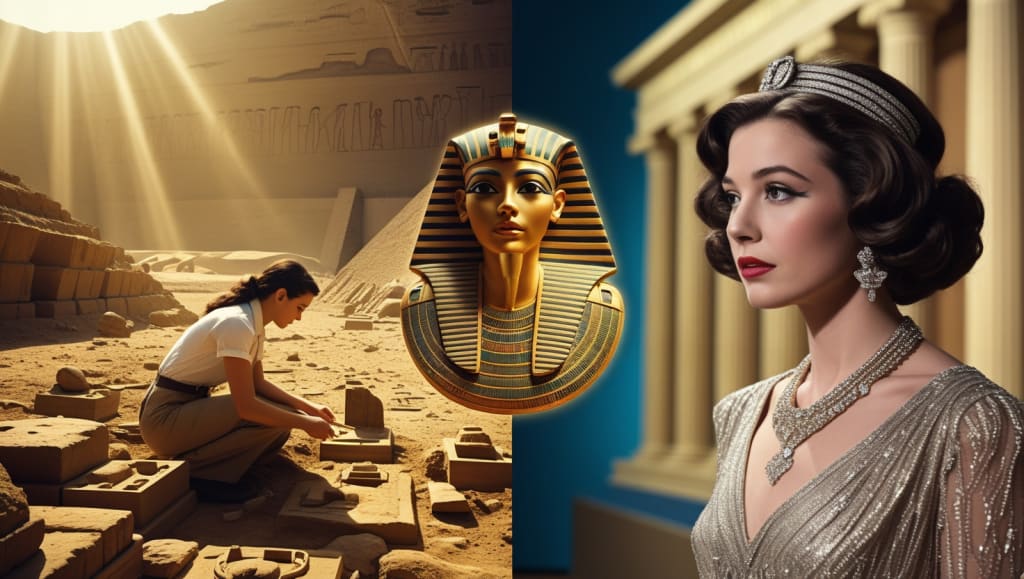
The Stolen Queen by Fiona Davis: A Complete Review
Fiona Davis’ "The Stolen Queen" is a masterful work of historical fiction that intertwines two compelling narratives set in different eras. Known for her ability to transport readers to vivid historical settings, Davis once again proves her prowess as a storyteller with this intricate and deeply moving novel. This review delves into every aspect of "The Stolen Queen", exploring its plot, characters, themes, and writing style to provide a comprehensive understanding of why this book has captivated readers worldwide.
Overview of the Plot
The Stolen Queen is a dual-timeline narrative that alternates between 1936 Egypt and 1978 New York City, weaving a rich tapestry of mystery, history, and personal discovery. The story begins in 1936 with Charlotte Cross, a bright and ambitious anthropology student, who lands a dream opportunity to join an archaeological dig in Egypt’s Valley of the Kings. However, her journey takes a tragic turn, forcing her to leave Egypt and re-evaluate her life’s trajectory.
Fast forward to 1978, Charlotte has become the associate curator of the Metropolitan Museum of Art’s Egyptian Art Department in New York City. Now a mature and seasoned academic, Charlotte is consumed by her research on Hathorkare, a little-known female pharaoh whose existence has been overshadowed by more famous Egyptian rulers. Her focus on Hathorkare’s legacy is not just professional but deeply personal, as it ties back to her own experiences in Egypt.
Parallel to Charlotte’s storyline is the journey of eighteen-year-old Annie Jenkins. Annie, a recent high school graduate with a passion for art and fashion, secures a coveted position working under the legendary Diana Vreeland, former Vogue fashion editor. Vreeland is organizing the Met Gala, a grand event showcasing Egyptian artifacts, and Annie finds herself navigating the demands of this high-pressure environment while striving to prove her worth.
The two storylines converge when a priceless artifact from the museum’s Egyptian collection goes missing during the Met Gala. Amidst rumors of Hathorkare’s curse, Charlotte and Annie form an unlikely alliance to solve the mystery. Their journey takes them back to Egypt, forcing Charlotte to confront her past and uncover secrets that have been buried for decades.
Character Development
Fiona Davis excels at creating layered, relatable characters, and *The Stolen Queen* is no exception. The two protagonists, Charlotte and Annie, are distinct yet connected by their shared love for art and history. Their personal growth is one of the highlights of the novel.
Charlotte Cross
Charlotte is a character defined by resilience and intellect. As a young woman in the 1930s, she faces the challenges of being a woman in a male-dominated field. Her passion for archaeology and her determination to succeed make her an inspiring figure. However, her experiences in Egypt—both professional and personal—leave her with scars that she carries into her later years. As a curator in the 1970s, Charlotte is a more guarded and introspective figure, but her passion for uncovering the truth about Hathorkare reignites her adventurous spirit. Her journey in *The Stolen Queen* is as much about solving a mystery as it is about healing and reclaiming her identity.
Annie Jenkins
Annie’s character brings a youthful vibrancy to the narrative. At the start of the story, she is wide-eyed and eager to prove herself, but she quickly realizes that working with Diana Vreeland is no easy feat. Through her experiences at the Met Gala and her partnership with Charlotte, Annie matures, learning the value of persistence and the importance of standing up for herself. Her growth from an inexperienced assistant to a confident young woman is both realistic and inspiring.
Supporting Characters
The supporting cast includes Diana Vreeland, whose larger-than-life personality adds flair and tension to the story. Other notable characters include Charlotte’s colleagues, Annie’s family, and the enigmatic figures tied to Hathorkare’s legacy. Each character plays a vital role in driving the narrative forward, and their interactions with Charlotte and Annie reveal new facets of the protagonists’ personalities.
Themes and Symbolism
"The Stolen Queen" is rich with themes that resonate deeply with readers. Davis weaves these themes seamlessly into the narrative, using symbolism to enhance their impact.
The Pursuit of Knowledge
Both Charlotte and Annie are driven by a desire to learn and grow. For Charlotte, this pursuit takes the form of academic research and archaeological discovery, while for Annie, it manifests as a passion for art and fashion. Their journeys highlight the joys and challenges of seeking knowledge, as well as the sacrifices it often entails.
Legacy and Memory
The story’s focus on Hathorkare’s legacy mirrors Charlotte’s own struggles with how she will be remembered. The novel explores how history often overlooks the contributions of women, drawing parallels between Hathorkare’s forgotten reign and Charlotte’s underappreciated work. This theme is further reinforced by the missing artifact, which symbolizes the fragility and importance of preserving the past.
Resilience and Healing
Both protagonists face personal and professional setbacks that test their resilience. Charlotte’s journey back to Egypt is a powerful metaphor for confronting one’s past and finding closure. Similarly, Annie’s struggles with self-doubt and workplace challenges underscore the importance of perseverance and self-belief.
Symbolism
The curse of Hathorkare serves as a symbolic thread that ties the storylines together. It represents the idea of unfinished business, both for the ancient queen and for the characters in the present day. The recurring imagery of Egyptian artifacts, particularly the missing piece, reinforces the novel’s themes of loss, recovery, and the enduring power of history.
Setting and World-Building
Davis’ ability to bring historical settings to life is one of her greatest strengths. In *The Stolen Queen*, she captures the grandeur of 1930s Egypt and the vibrant energy of 1970s New York with equal finesse.
1936 Egypt
The archaeological dig in the Valley of the Kings is depicted with vivid detail, immersing readers in the heat, dust, and excitement of unearthing ancient treasures. Davis’ descriptions of the dig site, the local culture, and the camaraderie among the team members create an authentic and engaging backdrop for Charlotte’s story.
1978 New York City
The Met Gala serves as a glamorous and chaotic setting for the modern-day storyline. Davis captures the opulence and pressure of the event, from the intricate planning to the dramatic unveilings. The juxtaposition of the Met’s glittering halls with the quiet intensity of the museum’s Egyptian Art Department adds depth to the narrative.
Writing Style and Structure
Fiona Davis’ writing is elegant and evocative, striking a balance between descriptive richness and narrative momentum. Her use of dual timelines is seamless, with each era complementing the other to create a cohesive and engaging story.
Pacing
The novel’s pacing is well-balanced, alternating between moments of tension and introspection. The mystery of the missing artifact and the whispers of Hathorkare’s curse keep readers invested, while the character-driven scenes provide emotional depth.
Dialogue
Davis’ dialogue is sharp and authentic, capturing the personalities and dynamics of her characters. The exchanges between Charlotte and Annie are particularly compelling, showcasing their evolving relationship and mutual respect.
Historical Accuracy
Davis’ meticulous research is evident throughout the novel. From the archaeological practices of the 1930s to the fashion and culture of the 1970s, every detail feels authentic and thoughtfully crafted. This commitment to accuracy enhances the story’s credibility and immerses readers in its world.
Critical Reception
"The Stolen Queen" has been widely praised by readers and critics alike. On platforms like Goodreads, the novel has garnered high ratings, with readers highlighting its engaging plot, well-developed characters, and immersive settings. Many have applauded Davis’ ability to blend historical fact with fiction, creating a narrative that is both educational and entertaining.
While the book has received overwhelmingly positive feedback, some readers have noted that certain plot points feel slightly predictable. However, these critiques are minor compared to the novel’s overall strengths.
Conclusion
Fiona Davis’ "The Stolen Queen" is a triumph of historical fiction, offering a captivating blend of mystery, drama, and emotional resonance. Through its dual timelines and richly developed characters, the novel explores themes of ambition, resilience, and the enduring power of history. Davis’ evocative writing and meticulous research bring the world of the story to life, making it a must-read for fans of the genre.
Whether you are a longtime admirer of Fiona Davis or a newcomer to her work, "The Stolen Queen" is a novel that will leave a lasting impression. Its exploration of the intersections between the past and the present, the personal and the universal, ensures that it will resonate with readers on multiple levels. As Charlotte and Annie’s journeys unfold, they remind us of the importance of facing our fears, embracing our passions, and preserving the stories that shape our world.
About the Creator
Dinesh Maurya
I'm a passionate writer, creative storyteller, and motivational enthusiast who has carved out engaging narratives to inspire and educate. I can offer linguistic expertise combined with richness in culture in my work.
Keep reading
More stories from Dinesh Maurya and writers in BookClub and other communities.
Book Review: "The Starlight Heir" by Amalie Howard
Book Review: "The Starlight Heir" by Amalie Howard Amalie Howard’s "The Starlight Heir" is a masterful blend of intrigue, romance, and fantasy that will captivate readers from the first page to the last. Known for her ability to craft immersive worlds and multi-faceted characters, Howard doesn’t disappoint in this latest offering, which combines the allure of courtly drama with a touch of cosmic wonder.
By Dinesh Mauryaabout a year ago in BookClub
Rachel Reviews: Lakefront Wolves by Joseph Deegan
Meet Finn. He's an 18 year old kid who has potential. He's bright with great school scores and he's also an athlete, a footballer of some prowess. He has it all going for him, it would seem, and yet, he's determined to send what could be a well-planned, stable existence firmly off the rails. He drinks, he smokes, he takes drugs, he has violent tendencies and he's in danger of losing not only his mind but all that he holds dear.
By Rachel Deeming12 days ago in BookClub
7 Books That Will Push You Further Than You Thought Possible
Every so often, we encounter a book that doesn’t merely inform us—it reshapes how we think, act, and approach our limits. These are the books that challenge our comfort zones, ignite ambition, and force us to confront the gap between who we are and who we could become.
By Diana Meresc4 days ago in BookClub


Comments
There are no comments for this story
Be the first to respond and start the conversation.