
The riddle of the chime
The carillon of the Saint-Étienne church had stopped ringing. A heavy silence had fallen over the village, a silence which does not bode well. Detective Émile Dubois, a man with a bushy mustache and a piercing gaze, stood in front of the bell tower, his eyebrows furrowed. “It’s strange,” he whispered to his assistant, the young and enthusiastic Antoine. “This chime has always sounded on the hour, for centuries. »

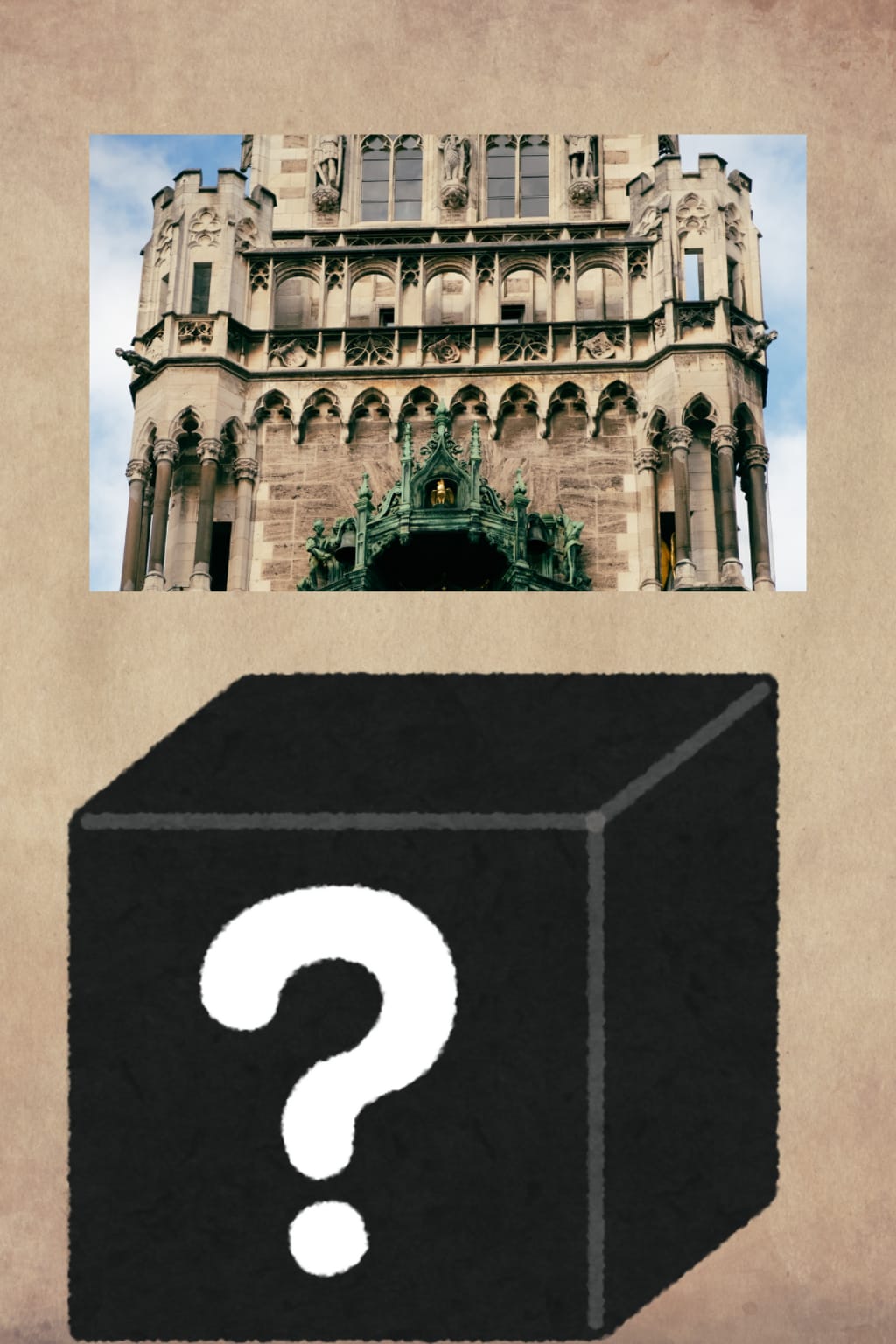
The carillon of the Saint-Étienne church had stopped ringing. A heavy silence had fallen over the village, a silence which does not bode well. Detective Émile Dubois, a man with a bushy mustache and a piercing gaze, stood in front of the bell tower, his eyebrows furrowed.
“It’s strange,” he whispered to his assistant, the young and enthusiastic Antoine. “This chime has always sounded on the hour, for centuries. »
The villagers, gathered around the church, were worried. The carillon was more than just a clock, it was the beating heart of the village, the symbol of its stability and tradition.
“There’s something fishy about it,” declared Madame Dupont, the baker, a legendary outspoken woman. “Last night I heard strange noises coming from the bell tower. »
Émile and Antoine climbed the steps of the bell tower, lighting their way with flashlights. The bell room was plunged into darkness, the strings of the bells dangling inert.
“Look at this,” Antoine said, pointing to a small backdoor, hidden behind the chime mechanism. “She wasn't here yesterday. »
They opened the door, revealing a spiral staircase that descended into the depths of the church. They proceeded cautiously, following the stairs to a dark and damp crypt.
In the center of the crypt, they discovered an open coffin. Inside, a skeleton lay, clutching a yellowed parchment.
“It’s the skeleton of Gaspard de Montaigne,” said Émile, recognizing the name written on the parchment. “He was the lord of the village in the 17th century. »
They unfolded the parchment, revealing cryptic text, written in an ancient language.
“It’s a code,” Antoine said, his eyes bright with excitement. “I'll try to decipher it. »
While Antoine worked on the code, Émile examined the crypt. He noticed an inscription engraved on the wall, just above the coffin: "The carillon will ring again when Montaigne's secret is revealed." »
Émile then understood. The carillon had stopped ringing because Gaspard de Montaigne's secret had been discovered. The code on the scroll was the key to unlocking this secret.
After hours of hard work, Antoine manages to decipher the code. He revealed the location of a hidden treasure, a treasure that Gaspard de Montaigne had stolen from the French crown.
Émile and Antoine followed the directions on the parchment, finding the treasure hidden in an underground cave beneath the church. They brought the treasure back to the village, returning it to its rightful owners.
The carillon of Saint-Étienne's church begins to ring again, striking the hour sharp again. The village had found its beating heart, and the secret of Gaspard de Montaigne had been revealed.
A few weeks after solving the riddle of the carillon, a new case presented itself to them. A strange phenomenon was occurring in the surrounding fields: crop circles appeared, complex, geometric patterns that seemed to defy rational explanation.
The villagers were in uproar, some speaking of extraterrestrial signs, others of supernatural forces. Émile, faithful to his method, decided to investigate with his Cartesian mind.
“Aliens?” » he said to Antoine, examining the cultivation circles. “Come on, Antoine, let’s stay serious. There must be a logical explanation for all this. »
They began by questioning local farmers, looking for witnesses or clues. They examined the crop circles closely, taking measurements, analyzing patterns.
“Look at that,” said Antoine, pointing to a strange mark in the earth. “It looks like a print, but not a human print. »
They followed the trail, which led them to an old abandoned barn. Inside, they discovered a strange device, a complex device made of metal and crystals.
“What is that?” » asked Antoine, his eyes wide.
“I have no idea,” replied Émile, examining the device curiously. “But I'm sure it has to do with crop circles. »
They took the device to the police laboratory, where they examined it with the help of scientific experts. They discovered that the device was a sound wave generator, capable of creating complex patterns in fields.
“So that’s it,” said Émile, frowning. “Someone is using this device to create the crop circles. But why? »
They continued their investigation, following leads, questioning suspects. They discovered that a group of fringe scientists, the "Harmonists", were seeking to use sound waves to communicate with extraterrestrial entities.
The Harmonists believed that the cultivation circles were messages sent by extraterrestrials, and they used the device to respond to these messages. They did not realize the consequences of their actions, the disruption they were causing in the local ecosystem.
Émile and Antoine confront the Harmonists, explaining to them the dangers of their experiments. They managed to convince them to stop their activities, and the cultivation circles stopped appearing.
The village regained its tranquility, and Émile and Antoine had solved a new enigma, proving once again that reason and logic could triumph over the strangest mysteries.
A few months later, a wave of mysterious disappearances shook the village. People, for no apparent reason, disappeared in the night, leaving no trace. The villagers, terrified, barricaded themselves in their homes, fearing the worst.
Émile and Antoine, determined to solve this mystery, began their investigation. They questioned the families of the missing, examined the places of disappearance, looking for the slightest clue.
“It’s strange,” said Émile, frowning. “There is no trace of a struggle, no evidence of kidnapping. It's as if these people had vanished into thin air. »
They discovered one thing in common between the missing: they were all regulars at the old municipal library. They decided to carry out their investigation there.
The library, a dark and dusty building, was plunged into an eerie silence. They examined the shelves, the books, the archives, looking for a link with the disappearances.
“Look at this,” Antoine said, pointing to an old leather-bound book. “It speaks of a local legend, of a being who feeds on the souls of the living. »
“A legend? » said Émile, skeptical. “Come on, Antoine, we are police officers, not ghost hunters. »
However, the deeper they investigate, the more disturbing elements they discover. Testimonies from villagers speaking of strange visions, invisible presences, whispers in the night.
They discovered that the legend spoke of an ancient ritual, a ritual that allowed one to open a portal to another world, a world where the being that fed on souls resided.
“It’s absurd,” said Émile, shaking his head. “But if this legend is true, then the disappearances could be linked to this ritual. »
They set out to find the place where the ritual had been performed, following the instructions in the ancient book. They discovered an underground cave, hidden under the old library.
Inside the cave, they discovered an altar, strange symbols carved into the walls, and a dark portal, an opening to another world.
“It’s there,” said Antoine, his voice trembling. “This is where the being feeds on souls. »
They heard whispers, distant voices, cries for help. They understood that the souls of the deceased were trapped in this other world.
Émile, despite his skepticism, understood that he had to act. He made a bold decision: he crossed the portal, followed by Antoine.
They found themselves in a dark and desolate world, populated by shadows and strange creatures. They found the souls of the missing, trapped in cages of light.
They confronted the being that fed on souls, a shapeless and powerful monster. They used their courage, their intelligence, their friendship, to defeat the monster and free the souls.
They returned to their world, bringing with them the souls of the deceased. The village was restored to peace, and Émile and Antoine had solved a new enigma, proving once again that even the darkest legends could hide a terrifying truth.
A few weeks after solving the case of the missing souls, a series of mysterious thefts shook the village. Valuable objects, works of art, jewelry, disappeared without a trace, without a break-in, as if they had vanished into thin air.
The villagers, already shaken by recent events, were once again plunged into fear and suspicion. Émile and Antoine, determined to restore order, began their investigation.
“It’s strange,” said Émile, examining the scene of the thefts. “There are no signs of a break-in, no fingerprints, no clues. It's as if the thief is invisible. »
They questioned the victims, the witnesses, the suspects, but no one had seen anything, heard anything. They examined the stolen items, looking for a connection, a motive, but they found nothing.
“It’s as if the thief had the power to make himself invisible,” said Antoine, perplexed.
“Come on, Antoine, let’s stay rational,” said Émile. “There must be a logical explanation for all of this. »
They turned to local legends, ancient tales, in search of a clue. They discovered a story that spoke of a being capable of making himself invisible, a prankster spirit who stole valuable objects for fun.
“A prankster spirit? » said Émile, skeptical. “It’s ridiculous. »
However, the deeper they investigate, the more disturbing elements they discover. Testimonies from villagers talking about strange phenomena, inexplicable noises, invisible presences.
They discovered that the stolen objects all had one thing in common: they were all linked to memories, to emotions, to moments of life. They understood that the thief was not stealing the objects, but the memories they represented.
“So that’s it,” said Émile, frowning. “The thief is a being who feeds on memories and emotions. »
They set out in search of this being, following the leads, the clues, the testimonies. They discovered that he was hiding in the old abandoned house in the village, a place full of memories and emotions.
They entered the house, exploring the dark and dusty rooms. They discovered a strange device, a device that allowed memories and emotions to be captured.
“So that’s it,” said Antoine, pointing at the device. “That’s how the thief captures memories.” »
They heard a mocking laugh, a voice that echoed in the house. The invisible being revealed itself, a mischievous and mischievous spirit.
“You’re too curious,” he said, in a mocking voice. “You should never have come here. »
He used his power to create illusions, hallucinations, nightmares. He tries to trap them in their own memories, to make them lose their minds.
Émile and Antoine, despite their fear, kept their cool. They used their intelligence, their cunning, their friendship, to counter the illusions, to foil the traps.
They manage to destroy the device, releasing memories and emotions. The prankster spirit, deprived of its power, disappeared in a cloud of smoke.
The stolen objects reappeared, the souvenirs were returned to their owners. The village regained its tranquility, and Émile and Antoine had solved a new riddle, proving once again that even the most mischievous spirits could not resist reason and friendship.
About the Creator
Christine Hochet
uojno
Keep reading
More stories from Christine Hochet and writers in BookClub and other communities.
Through the seasons of the heart
Spring Awakening The first rays of sunlight heralded the arrival of spring. After a cold and isolating winter, Emma felt invigorated by the warm air. The buds on the trees and the flowers that were tentatively emerging from the ground brought her a sense of renewal. It was a time of promise, of new beginnings, and she was ready to take advantage of it.
By Christine HochetExclusive • about a year ago
Rachel Reviews: Lakefront Wolves by Joseph Deegan
Meet Finn. He's an 18 year old kid who has potential. He's bright with great school scores and he's also an athlete, a footballer of some prowess. He has it all going for him, it would seem, and yet, he's determined to send what could be a well-planned, stable existence firmly off the rails. He drinks, he smokes, he takes drugs, he has violent tendencies and he's in danger of losing not only his mind but all that he holds dear.
By Rachel Deeming13 days ago in BookClub
7 Must-Read Books for Those Looking to Start Reading Again
Rediscovering the joy of reading can feel a bit like returning to an old friend. Many of us once devoured books but gradually drifted away due to busy schedules, digital distractions, or simply losing the habit. The good news? It’s never too late to rebuild a reading routine—and the right books can make the journey exciting again.
By Diana Meresca day ago in BookClub


Comments
There are no comments for this story
Be the first to respond and start the conversation.