
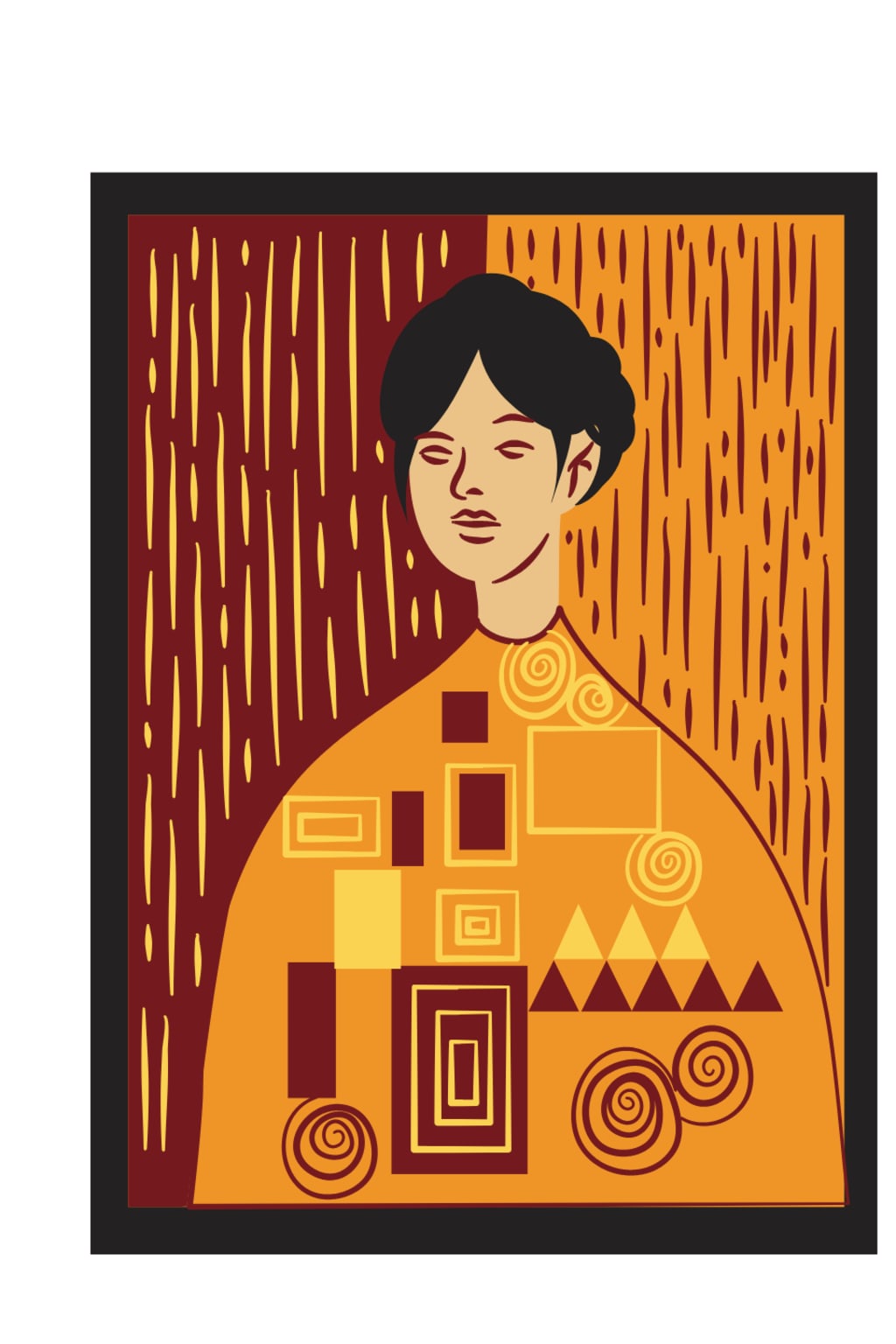
The portrait
Claire's Workshop Claire Lefèvre was a renowned painter in the small town of Montmartre. Her studio, nestled among the cobblestone streets, was a true sanctuary of creativity. The walls were lined with canvases of all sizes, depicting vibrant landscapes, striking portraits, and colorful abstractions. But deep down, Claire felt a void. She had the talent and the technique, but she lacked the inspiration.

Claire's Workshop
Claire Lefèvre was a renowned painter in the small town of Montmartre. Her studio, nestled among the cobblestone streets, was a true sanctuary of creativity. The walls were lined with canvases of all sizes, depicting vibrant landscapes, striking portraits, and colorful abstractions. But deep down, Claire felt a void. She had the talent and the technique, but she lacked the inspiration.
One day, while she was cleaning her brushes, an old notebook fell off a shelf. It was her sketchbook, filled with drawings she had made during her travels. As she flipped through the pages, she came across an unfinished portrait of a man she had met during a trip to Italy. He had that intense, mysterious gaze, an enigmatic charm that had fascinated her. She remembered the conversation they had had, his stories about life and art, and decided it was time to finish this portrait.
Claire set to work immediately. Every brushstroke was filled with passion and emotion. She immersed herself in the process, forgetting the outside world. Within days, the portrait took shape, and she began to feel a deep connection with her model, even though she had only seen them once.
However, as she progressed, something strange began to happen. Claire no longer felt just inspired; she felt as if the portrait were speaking to her, revealing secrets she had never imagined. Every time she looked up from her work, she felt as if the model's eyes were staring back at her, trying to convey a message.
One night, while painting late, she fell asleep in front of the canvas. In her dream, the man from the portrait appeared. “Finish me, Claire. I am more than just a face on a canvas. I will show you the world as I see it.”
When she awoke, she was still haunted by the dream. She stood up, determined to finish the portrait, but her mind was in turmoil. Who was this man? Why did she have this feeling he had something to teach her?
As she continued to paint, Claire decided to delve into her memories of their conversation in Italy. She remembered his name: Luca. An artist too, who had chosen to live a wandering life rather than conform to society's expectations. Perhaps this portrait would be a way to pay homage to him, to capture not only his appearance, but also his essence.
As she painted, Claire began to imagine a narrative around Luca. She wrote words to accompany her work, reflections on art, freedom, and self-expression. The alchemy between paint and words created a new depth to her work. She realized that this portrait was not just the image of a man, but a symbol of her own quest for authenticity.
Days passed, and Claire finally finished the portrait. She stared at it, amazed by what she had created. It seemed alive, almost ready to speak. She felt ready to share her work with the world. Claire decided to organize an exhibition in her studio, inviting friends, colleagues, and art lovers.
On the day of the exhibition, Claire was nervous. She had carefully decorated her studio, displaying Luca's portrait in the center. Visitors arrived, admiring her work. The comments were glowing, but Claire wasn't entirely satisfied. She knew the portrait carried a story beyond art, a story waiting to be told.
At the end of the evening, a woman approached the portrait. She was a respected art critic, known for her insightful analyses. She looked at the painting carefully, then turned to Claire. “This is a remarkable work. There is a soul here, a story that transcends the canvas. Who is this man?”
Claire felt her heart race. This was the moment she'd been waiting for. She told him about her trip to Italy, the meeting with Luca, and the inspiration he had inspired her. Listening to her own story, she realized that this portrait represented not only a man, but also the freedom to be yourself, to pursue your dreams without compromise.
The critic nodded, impressed. “You have captured the essence of the man and, by extension, your own. This portrait is a call for authenticity. I advise you to submit it to a larger gallery.”
The critic's words reached Claire with a flame of hope. She knew then that this portrait was only the beginning of a journey. She was ready to explore further, to tell stories through her art, to capture souls, and to inspire others to embrace their own light.
Thus began a new era for Claire Lefevre, a quest for authenticity through her paintings, a promise to always listen to the whispers of the souls she encountered along the way. Luca's portrait is the first chapter of a much larger story, a celebration of life, passion, and art.
The Quest for Authenticity
Inspired by Luca's portrait, Claire Lefevre embarked on a new series of artistic creations. She wanted to capture not only faces, but also stories, emotions, and the voices of those around her. Her quest for authenticity became the guiding principle of her work.
In the weeks that followed, Claire hosted free portrait sessions in her studio. She invited friends, neighbors, and even strangers off the street. The concept was simple: each person had to share a story or a defining moment in their life as she painted them. Claire firmly believed that every face carried a unique story, and she wanted to immortalize that essence on canvas.
One day, a young woman entered her studio. Her name was Emma, and she had eyes that sparkled with energy, but her smile betrayed a certain sadness. Claire invited her to sit down and talk to her. “What brings you here, Emma?”
“I need to find myself again,” she replied. “The last year has been difficult. I lost someone very dear to my heart, and I feel a little lost. I would like you to paint my portrait, but I want it to be more than just a painting. I want it to tell my story.”
Touched by Emma's vulnerability, Claire suggested they meet several times to discuss her life. Over the course of the meetings, Emma spoke of her lost friend, their dreams, and the promises they had made to each other. Claire listened attentively, taking notes and sketching as Emma shared her emotions.
Finally, the day of the painting session arrived. Claire set to work, each brushstroke imbued with Emma's stories. She painted not only her features, but also symbolic elements that represented her connection to her late friend—a bracelet the friend had given her, flowers they had picked together, and colors that evoked their shared memories.
When Claire finished the portrait, she invited Emma to discover it. Seeing her reflection in the canvas, with tears in her eyes, Emma whispered, "It's beautiful. It looks like me, but it's also so much more... It's our story."
The painting became a pivotal work for Claire, a symbol of the power of art to heal and unite. Encouraged by this experience, she decided to create an exhibition dedicated to these portraits and the stories that accompanied them. She titled it "Faces of Life: Stories Through Color."
The exhibition attracted local media attention, and on the opening day, Claire's studio was packed with visitors, curious onlookers, and art lovers. Each portrait was accompanied by a text written by the sitters themselves, sharing their stories, struggles, and triumphs. The connections between visitors and artists were palpable, and the stories resonated deeply with people.
During the evening, Claire was approached by an elderly man with sparkling eyes. “You’ve done something extraordinary here, miss. Art has the power to bring hearts together. Your work is not just about the beauty of faces, but it touches the soul.”
Claire felt a surge of gratitude wash over her. She understood then that her artistic journey was much more than just a personal quest. She had opened a door for others to share their stories and feel valued. Art was becoming a catalyst for healing and reconciliation.
As the weeks passed, Claire continued to paint, exploring new stories and inviting people from all walks of life into her studio. Each of their stories became a canvas, a living narrative that Claire was honored to capture. She began to reflect on the impact of her work and how her models' lives intertwined with her own.
One day, while walking the streets of Montmartre, she noticed a gallery exhibiting works by contemporary painters. She remembered the art critic's words and decided to take a chance. She suggested the gallery exhibit a selection of portraits from her project, Visages de Vie.
After a few weeks of waiting, she received a positive response. The gallery was delighted to showcase her work and wanted to organize an event to celebrate the exhibition. Claire was filled with excitement, but also a little apprehension. She wondered if her work would be well received by a wider audience.
On the evening of the exhibition's opening, Claire stood before the works, her palms sweating, her heart pounding. Visitors flocked to the exhibition, admiring the portraits and taking the time to read the stories that accompanied them. Claire was overwhelmed by the positive reactions, and the conversations that took place gave her immense satisfaction.
At the end of the evening, Claire was surrounded by visitors, their faces lit up with emotion. They shared their own stories, thanking Claire for her art and her ability to capture the essence of people. Every smile, every tear of joy reminded her why she had chosen this path.
This exhibition marked a new milestone for Claire Lefevre. She had discovered not only the art of painting, but also the power of human connection. Her portrait of Luca, the face at the beginning of this adventure, has become the symbol of a collective story, a celebration of life, memory, and the power of authenticity.
About the Creator
Christine Hochet
uojno
Keep reading
More stories from Christine Hochet and writers in BookClub and other communities.
Through the seasons of the heart
Spring Awakening The first rays of sunlight heralded the arrival of spring. After a cold and isolating winter, Emma felt invigorated by the warm air. The buds on the trees and the flowers that were tentatively emerging from the ground brought her a sense of renewal. It was a time of promise, of new beginnings, and she was ready to take advantage of it.
By Christine HochetExclusive • about a year ago
Rachel Reviews: Lakefront Wolves by Joseph Deegan
Meet Finn. He's an 18 year old kid who has potential. He's bright with great school scores and he's also an athlete, a footballer of some prowess. He has it all going for him, it would seem, and yet, he's determined to send what could be a well-planned, stable existence firmly off the rails. He drinks, he smokes, he takes drugs, he has violent tendencies and he's in danger of losing not only his mind but all that he holds dear.
By Rachel Deeming7 days ago in BookClub
7 Fairy Tale Books You Must Read in 2026
Fairy tales are not just whimsical stories for children—they are timeless narratives that explore universal human experiences, moral dilemmas, and the power of imagination. From enchanted forests to magical kingdoms, these stories transport us to worlds where courage, resilience, and hope prevail. Whether you’re a lifelong reader or a newcomer seeking inspiration, exploring the right fairy tale books can expand your imagination, sharpen critical thinking, and offer profound life lessons.
By Diana Merescabout 15 hours ago in BookClub



Comments
There are no comments for this story
Be the first to respond and start the conversation.