
The Other Side of Chang
One Man’s Struggle to Find Himself

For most of his life, Chang Wei lived by the rules others set for him.
Born in a small fishing village in southern China, Chang was the eldest son of a proud, traditional family. His father was a fisherman like his grandfather before him, and it was always assumed that Chang would follow in their footsteps. As a boy, he would sit silently in the boat, watching the waves roll endlessly beneath them, learning how to read the tide, the sky, and his father's face.
But Chang was not made for the sea. He felt it in his bones. The constant pull of the water, the silence of the early mornings, the weight of expectation — it all pressed down on him like fog that never lifted. What stirred him was something else entirely: the scratch of a pencil across paper, the shape of stories in his mind, the quiet power of words. He wrote poems in the margins of old newspapers and short stories in secret journals he hid beneath the floorboards.
No one knew.
When he turned seventeen, his mother caught him writing under the flickering light of a kerosene lamp. She said nothing, just stared at the page, then at him, her eyes a mixture of confusion and something close to fear. The next day, his father slapped him hard across the face without a word. The journals disappeared. The lamp was taken away. He returned to the sea.
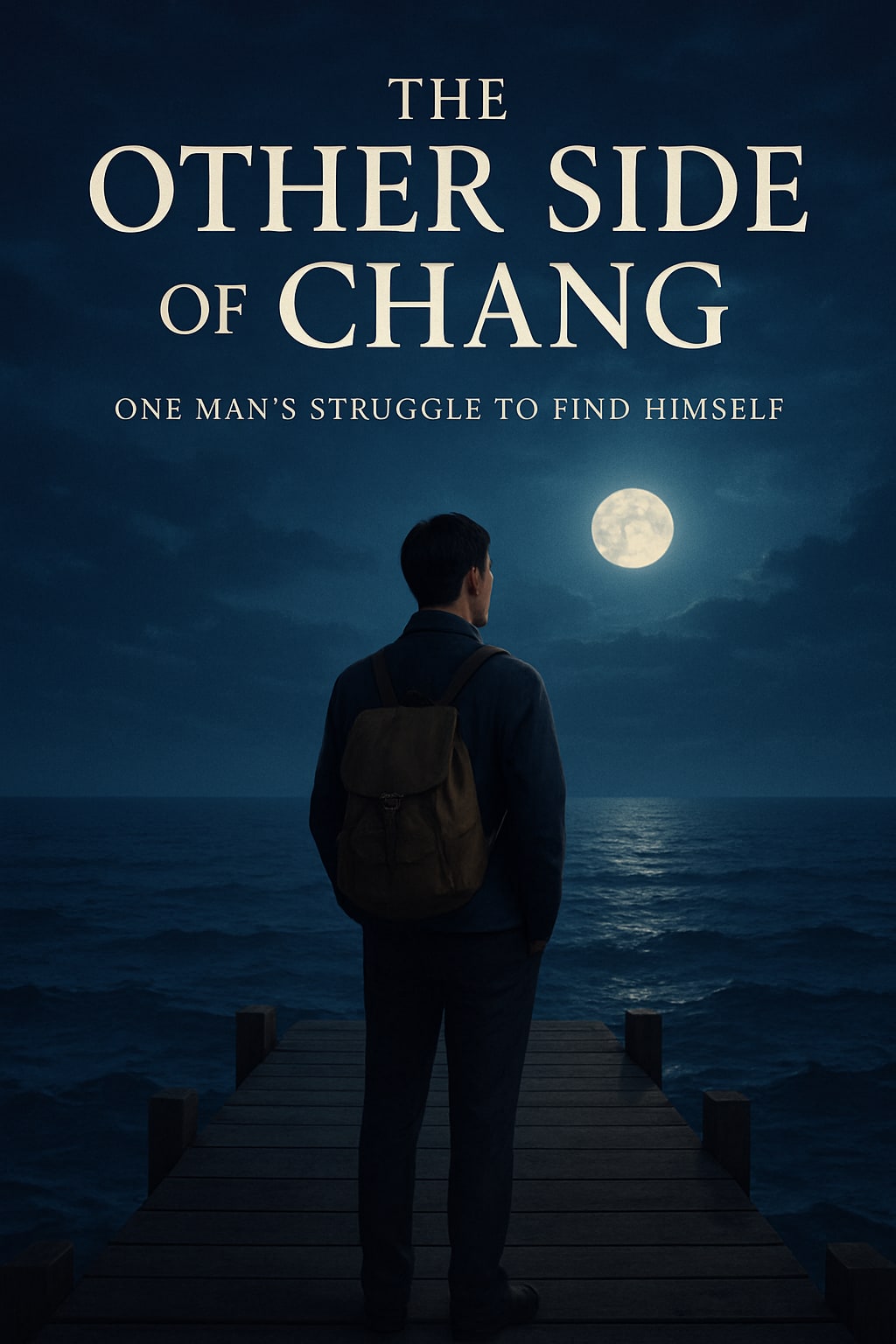
Years passed. The village stayed the same, and so did Chang — on the outside. But inside, the stories never stopped. They clawed at the edges of his mind, whispering of lives he would never live, places he would never go. Until one night, on his thirty-second birthday, Chang stood on the dock long after everyone had gone home. The moon was bright and the waves calm. He made a decision.
He left.
With only a backpack and the little money he had saved, Chang boarded a bus to Guangzhou, then a train to Beijing. He told no one. The city swallowed him whole — bright, buzzing, cold, alive. He worked odd jobs to survive: dishwasher, courier, janitor. At night, he wrote. First on napkins, then on old computers in internet cafés. Slowly, he began submitting his stories to magazines, blogs, anywhere that would read him.
Rejection became routine. But one morning, a small literary journal published one of his short stories. It was titled The Boy Who Couldn’t Swim. It was raw, vulnerable, and full of the sea — but also of escape. Readers noticed. Editors started calling. Within a year, Chang had a book deal.
The book, Drifting Toward the Sky, was a quiet success. It wasn’t a bestseller, but it found a loyal following — people who saw themselves in Chang’s quiet, aching characters. He did interviews, signed books, even got invited to speak at a university. The shy fisherman’s son had become a voice — not loud, but steady.
But fame, even small fame, comes with shadows.
One afternoon, he received a letter. The handwriting was shaky but familiar. His mother. She had read his book. She knew now where he had gone, and why. The letter was short. No apologies, no accusations. Just a single sentence:
"Your father is dying. He asks for you."
Chang didn’t hesitate. He returned home after ten years away.
The village looked the same, though smaller somehow. The sea, unchanged. His father lay in bed, thinner than Chang remembered, the fire in his eyes dimmed. They sat in silence for hours. Finally, his father spoke.
"You wrote about the sea like it hated you," he said.
Chang looked down. "I didn’t hate it. I just didn’t belong to it."
His father nodded slowly. "I always thought you were weak. But now... maybe you were strong in a different way."
It wasn’t forgiveness, not exactly. But it was something.
His father passed that night.
Chang stayed for the funeral, for his mother, for the old neighbors who now looked at him with a kind of quiet respect. He walked the shores he once feared, no longer a prisoner to them. He wasn’t the boy who ran, nor the man who hid in words. He was both — and more.
He returned to Beijing, not to escape, but to write again — this time with a fuller heart.
His second book was titled The Other Side of Chang. In it, he told the story not just of leaving, but of returning. Of the sea and the city. Of silence and speech. Of a boy who was once afraid to be seen, and the man who no longer was.
About the Creator
FKhan
🎙️ Storyteller | 💭 Creative Thinker | ✍️ Word Weaver
📚 Lover of Books | ☕ Fuelled by Coffee | 🌍 Exploring One Idea at a Time
✨ Let's turn thoughts into tales—join the journey! .




Comments
There are no comments for this story
Be the first to respond and start the conversation.