
The Midnight Library Review
A Kaleidoscope of Regrets and Second Chances
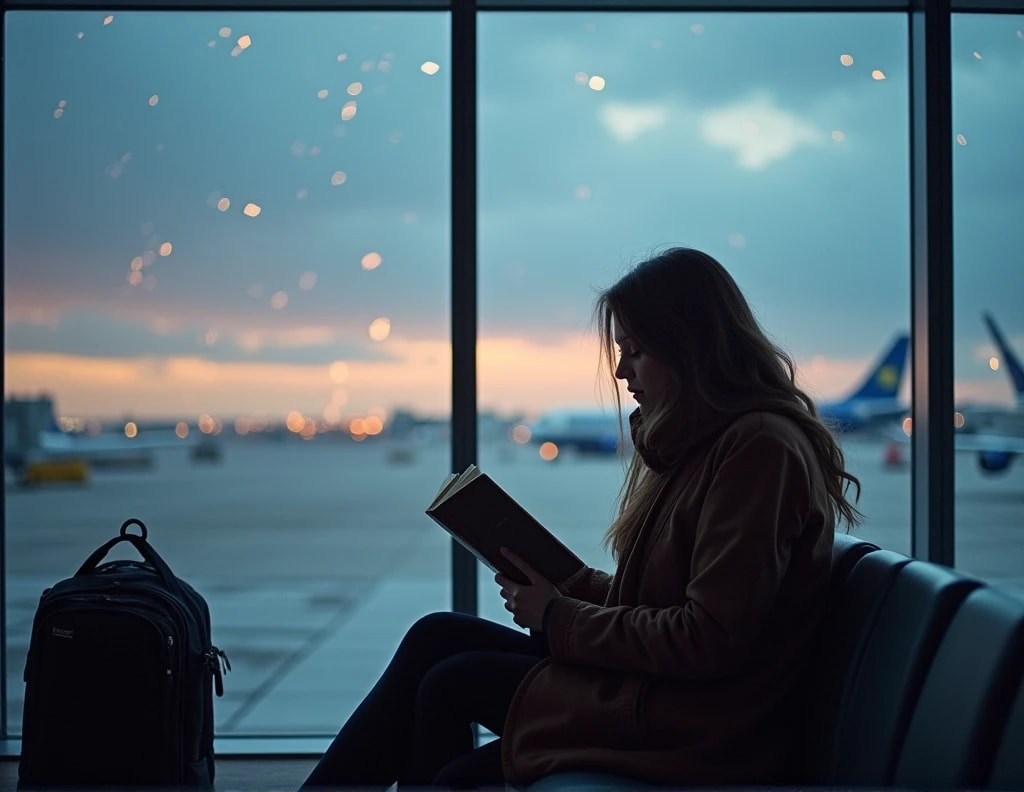
I first cracked open The Midnight Library during a glacial layover in Reykjavik, my breath frosting the airport windows as planes blinked like distant constellations. The cold gnawed at my bones, but the story—oh, the story—was a furnace. Between sips of bitter coffee, I found myself untethered, slipping into Nora Seed’s world where every regret became a door, every choice a universe. By the time my flight boarded, I’d forgotten the chill. The pages hummed.
Characters: Echoes in the Library’s Corridors
Nora Seed is the kind of character who claws into your ribcage. Not a hero, not a martyr—just human, brittle and luminous as a moth’s wing. Haig sculpts her with a scalpel’s precision: a former swimming prodigy turned dropout, a sister haunted by guilt, a woman who wears her failures like a second skin. Her guide, Mrs. Elm—the librarian of infinite lives—is both comfort and enigma, her voice honeyed yet edged with the sharpness of unsaid truths.
The supporting cast flickers in and out like shadows under a swinging lamp. Nora’s ex-fiancé, Dan, is a mosaic of warmth and fragility, his laughter tinged with the sour aftertaste of what could’ve been. Her brother, Joe, exists as a ghost in her periphery, his absence a hollow echo in every timeline. Even the café owner, Ash, isn’t just a romantic possibility but a mirror reflecting Nora’s fear of commitment. These aren’t mere sketches; they’re mirrors of her fragmented selves. Each interaction thrums with the ache of missed connections, the weight of roads untaken. You don’t just read about these people; you collide with them.
Plot: A Labyrinth of What-Ifs
Imagine standing at the edge of a black hole, peering into the gravity of every decision you’ve ever made. That’s the Midnight Library—a purgatory of green-bound books, each volume a parallel life Nora might’ve lived. Drowning regretfully, she tests existence after existence: rockstar, glaciologist, mother, wife. The tangle of narratives could’ve spiraled into chaos, but Haig steers it with a tightrope walker’s grace.
Yet here’s the rub: the plot isn’t about the destinations. It’s the between—the silences where Nora’s breath hitches, the moments she realizes no life is unbruised. In one timeline, she’s a celebrated musician, but the applause rings hollow without her brother’s smile. In another, she’s a researcher in the Arctic, the icy solitude gnawing at her like a feral thing. The pacing stumbles once or twice (a rockstar subplot feels thinner than others), but even the wobbles serve a purpose. They mirror life’s messy cadence, the way our brightest dreams sometimes fizzle like damp fireworks.
Emotional Impact: The Quiet Earthquake
This book doesn’t club you over the head. It seeps in. By the time Nora whispers, “I want to live,” the words aren’t a cliché—they’re a primal roar. Haig’s prose is a cracked mosaic of hope and despair, each shard cutting deeper. There’s a scene where Nora, in one life, plays piano for an audience of none. The notes are described as “raindrops on a tin roof,” and suddenly you’re there, throat raw with the beauty of ordinary sorrow.
It’s not all elegy. Humor flickers like a lighter in the dark—Nora’s wry observations about hipster cafés, Mrs. Elm’s dry quips about quantum physics. But the real triumph is how the story dismantles the myth of the “perfect life.” A chapter where Nora experiences motherhood—exhaustion etched into her bones, yet love blooming like wildflowers in concrete—is a masterclass in nuance. Regret isn’t a cage; it’s a compass. And the midnight between despair and hope? That’s where the stars burn brightest.
For the Lost and Found
If you’ve ever stared at a ceiling at 3 a.m., wondering if your life is a wrong turn, this book is a flare in the dark. Not a tidy answer, not a sermon—just a hand gripping yours in the gloom. The Midnight Library is for anyone who’s tasted the metallic tang of failure, who’s traced the ghostly outlines of paths they abandoned.
Read it on a train with rain streaking the windows. Read it in a park where autumn leaves crumble like old letters. Let it split you open. Let it stitch you back together. Because sometimes, the heaviest truths are carried on the lightest breaths. And Haig’s story? It’s oxygen.
Click here to listen to The Midnight Library Audiobook for free
About the Creator
Francisco Navarro
A passionate reader with a deep love for science and technology. I am captivated by the intricate mechanisms of the natural world and the endless possibilities that technological advancements offer.
Keep reading
More stories from Francisco Navarro and writers in BookClub and other communities.
Books About Time Travel
Exploring Time Travel Through Literature Time travel in literature has always been a captivating theme, not just for its fantastical allure but for its ability to delve into profound human experiences. Through the lens of temporal twists, these stories explore parental love, the weight of regret, the complexities of relationships, and even the very nature of time itself. Here's a curated journey through some remarkable books that use time travel to ask some of life's most compelling questions, and you can listen to any of these audiobooks for free to immerse yourself in their captivating stories.
By Francisco Navarroabout a year ago in BookClub
Rachel Reviews: Lakefront Wolves by Joseph Deegan
Meet Finn. He's an 18 year old kid who has potential. He's bright with great school scores and he's also an athlete, a footballer of some prowess. He has it all going for him, it would seem, and yet, he's determined to send what could be a well-planned, stable existence firmly off the rails. He drinks, he smokes, he takes drugs, he has violent tendencies and he's in danger of losing not only his mind but all that he holds dear.
By Rachel Deeming13 days ago in BookClub
7 Halloween Books You Must Read in 2026
Halloween is the perfect time to immerse ourselves in stories that send chills down our spine and spark our imagination. As autumn arrives with crisp air, glowing pumpkins, and longer nights, many readers look for books that capture the mysterious and eerie spirit of the season.
By Diana Meresc6 days ago in BookClub
Thief In The Night
To the thief in the night that took and replicated what once was mine: Honestly, I feel kind of bad for you. It’s funny, because we hardly know each other. I only know of you through the magazines you’ve written and the broadcasts you have televised in the past — as well as through the public mentions of you from your show business connections there.
By Snarky Lisa7 days ago in Humans


Comments
There are no comments for this story
Be the first to respond and start the conversation.