
The Man in the High Castle
This book didn't change my life, but it did change the way I see the relationship between truth and fiction

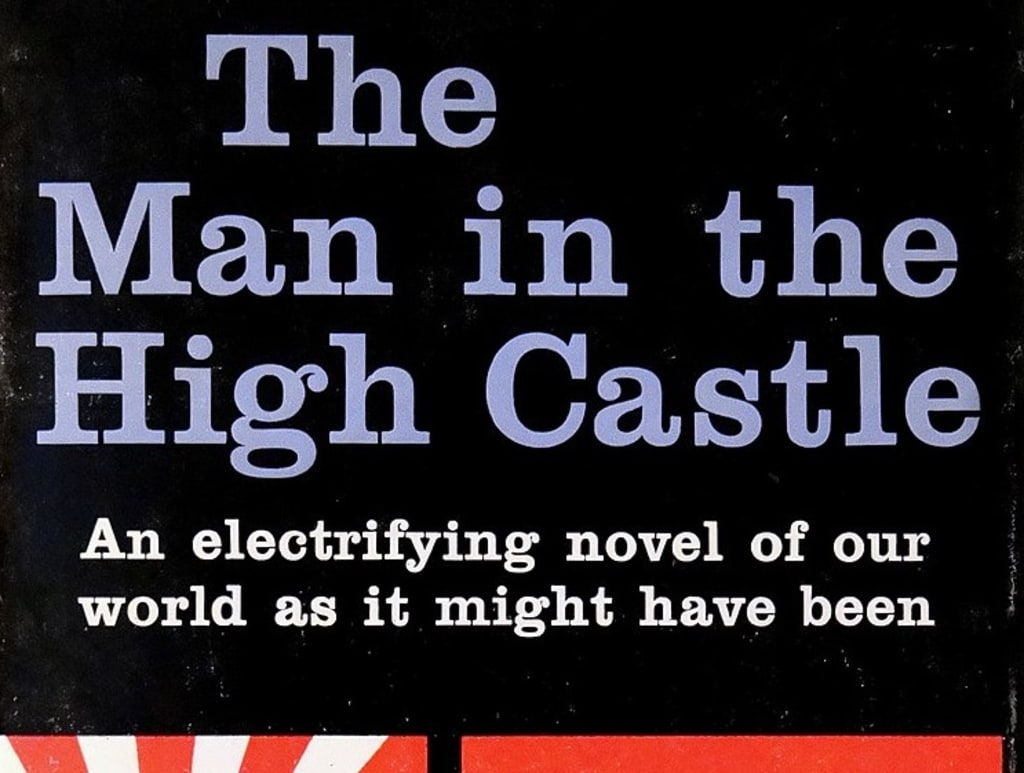
Philip K. Dick's novel, about an alternative ending to the Second World War and defeat for the allies, begins and ends with an inversion of the truth. This upsetting of history and blurring of reality is a constant theme, running throughout the narrative.
When I first read it, some years ago now, I found The Man in the High Castle quite unsettling. No less so the two or three times I have reread it, trying to unravel the mysteries within.
This article is about the novel, The Man in the High Castle, how it helped me as a writer, and not about the Amazon TV series of the same name which bears no relation to Dick's book.
On the surface, the storyline is straightforward enough. The USA, having been defeated by the Axis powers in 1947, is divided into four territories. The German-controlled Eastern 'United States' sit opposed to the Japanese-controlled Pacific States. Between the two is a hinterland known as the Rocky Mountain States, leaving a separate small region of Southern States. The main narrative is written with an almost Japanese voice, taking the Pacific States' point of view of an American people accommodating an often benign Japanese overlordship.
One of the unsettling things I found in this work is that it is hard to pin down who the protagonist is. Also an intriguing thing about the book, so I won't spoil it by giving my own view. Additionally, there appears to be no central moral or underpinning theme to the narrative. For a book that poses an alternative to Nazi defeat, this is troubling in itself.
Characters from the story appear to shift around, interacting with each other or avoiding each other, blending rather than developing the story line. The plot, if there is one, comprises an endless tangling and unravelling of these interactions. If a hero does indeed emerge, they do so reluctantly and without set purpose. One of the themes of the book is the reliance of several characters on the I-Ching, the book of changes. This
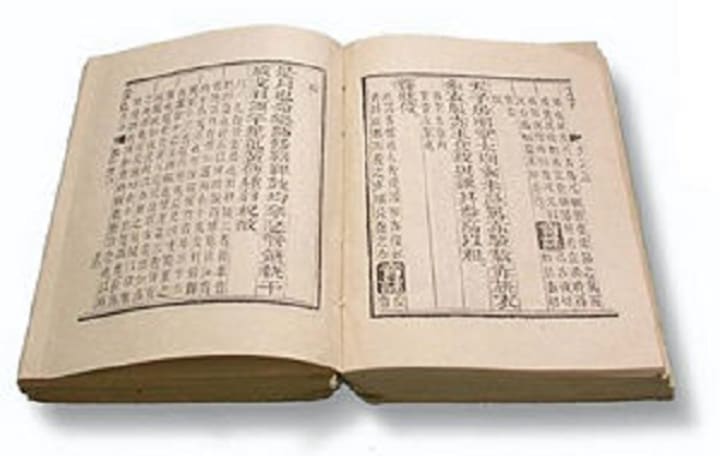
leads to a kind of 'what will be will be' feel to the narrative.
The ever-present reality inversion of the book underpins the whole story and is crucial to the turning points in the plot. One of the characters is a jew who, not surprisingly, changes his name and hides his Jewish heritage. He works in a Californian factory making fake Americana for Japanese visitors and ex-pats. One of their customers, a high-end retailer, supplies one of these products to a high-ranking Japanese official, only to have it identified as a fake, to his horror.
Perhaps the most disturbing aspect of this novel, I found, was the story's undercurrent of the mysterious author Hawthorne Abendsen, who has written a book that is supressed by the Nazis. Consequently Abendsen, fearing for his life, finds a hideaway in a remote part of Colorado. A fortified home, hence the 'the man in the high castle.'
Abendsen's book, The Grasshopper Lies Heavy, forms a central part of the narrative. It is a story about an alternative ending to WWII, in which the allies win! So we have an inversion within an inversion. By the time I finished the book, I was struggling to separate truth and lies, reality from fiction. Did the allies win the war or had I got that wrong? It was that unsettling to all my reference points as a historian, a non-fiction writer, and a child of the latter post-war period.
This is how and why the book helped me as an author. Most of my experience as writer comes from my early background and training in journalism. A skill that depends upon finding out the facts and representing them in way that is engaging, current and balanced. One reason why I think I have struggled to understand how to develop a fictional narrative. I perhaps place too much reliance on the truth (whatever that is) to give my fictional stories the authenticity I value.
Reading and rereading Dick's dystopian storyline in The Man in the High Castle has helped me to let go of that imaginary concept of 'truth' and to accept a blurring of the lines between reality and fantasy. I have not abandoned my insistence on authenticity, I have merely reappraised my understanding of truth, lies and fiction and the need for a rigid structural approach to my story writing.
Thank you, Philip K. Dick, for this gift.
Ray Taylor
August 2023
About the Creator
Raymond G. Taylor
Author living in Kent, England. Writer of short stories and poems in a wide range of genres, forms and styles. A non-fiction writer for 40+ years. Subjects include art, history, science, business, law, and the human condition.
Keep reading
More stories from Raymond G. Taylor and writers in BookClub and other communities.
The first piece
First piece I ever wrote professionally was a survey of uninterruptible power supplies (UPS) in 1987, for a publication aimed at specialist computer equipment manufacturers. Not the most interesting subject for a young business and technology journalist, but I felt I had done a good job.
By Raymond G. Taylor3 years ago in Writers
Rachel Reviews: Lakefront Wolves by Joseph Deegan
Meet Finn. He's an 18 year old kid who has potential. He's bright with great school scores and he's also an athlete, a footballer of some prowess. He has it all going for him, it would seem, and yet, he's determined to send what could be a well-planned, stable existence firmly off the rails. He drinks, he smokes, he takes drugs, he has violent tendencies and he's in danger of losing not only his mind but all that he holds dear.
By Rachel Deeming9 days ago in BookClub
7 Underrated Books That Are Absolutely Worth Reading
In a world where bestseller lists dominate conversations and social media algorithms push the same titles again and again, it’s easy to overlook extraordinary books that quietly sit in the shadows. Yet some of the most transformative reading experiences come not from the most famous titles, but from underrated books—works that never received the massive marketing push or viral attention they deserved.
By Diana Meresc4 days ago in BookClub


Comments (2)
This is a great review. Hoping you can read some of mine posted in the new Book Club.
I have yet to read the book, though know a lot about it, and have not watched the series adaption beyond a few episodes (more a time thing than anything). This was an interesting piece and once I started reading, couldn't stop. I love reading people's interpretations of art anyway, but given your own background and how much the book skews the lines between fact and fiction, truth, reality and all that, it was great to hear your own thoughts and feelings. Well done, Raymond on an engrossing and engaging piece! Great entry to the challenge, indeed!