
The Holy Quran
This is the Book about which there is no doubt, a guidance for those conscious of Allah." (Quran 2:2)

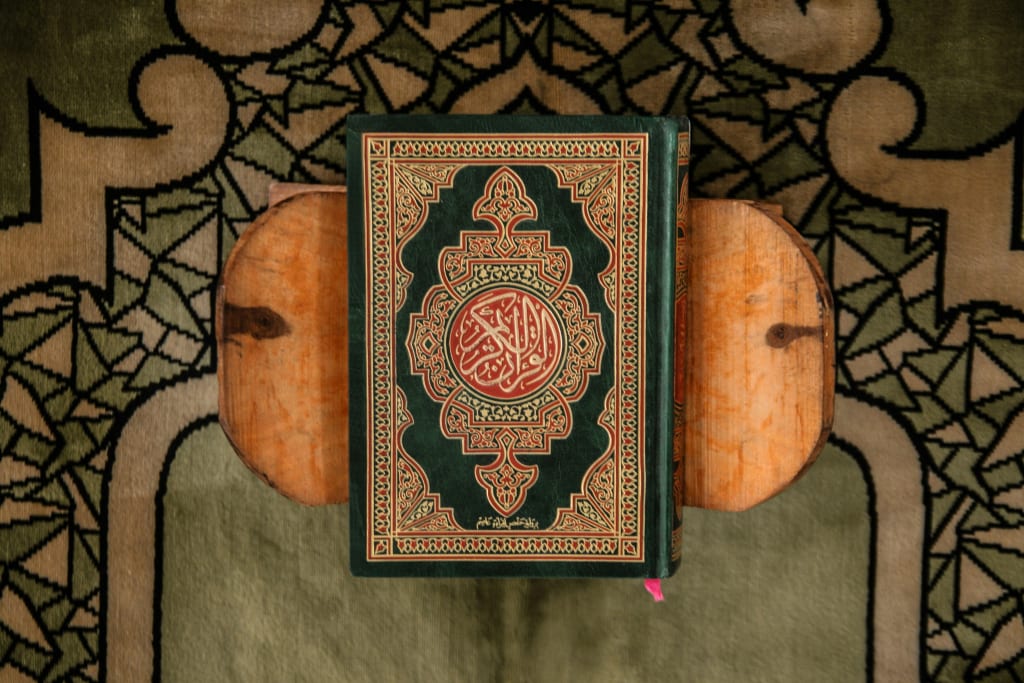
Quran
Introduction to the Quran
The Quran is the holy book of Islam, believed by Muslims to be the literal word of God (Allah) as revealed to the Prophet Muhammad (peace be upon him) over a period of approximately 23 years. It serves as the ultimate source of guidance for Muslims in matters of faith, law, morality, and daily life. The Quran is written in classical Arabic and is considered a linguistic and literary masterpiece.
Significance of the Quran in Islam
The Quran holds a central position in Islam, as it is the primary source of Islamic teachings. Muslims believe it to be the final revelation from God, following previous scriptures such as the Torah (Tawrat), Psalms (Zabur), and Gospel (Injeel). The Quran not only provides spiritual guidance but also establishes laws, ethical principles, and historical accounts of past prophets and civilizations.
Structure and Composition of the Quran
Divisions of the Quran
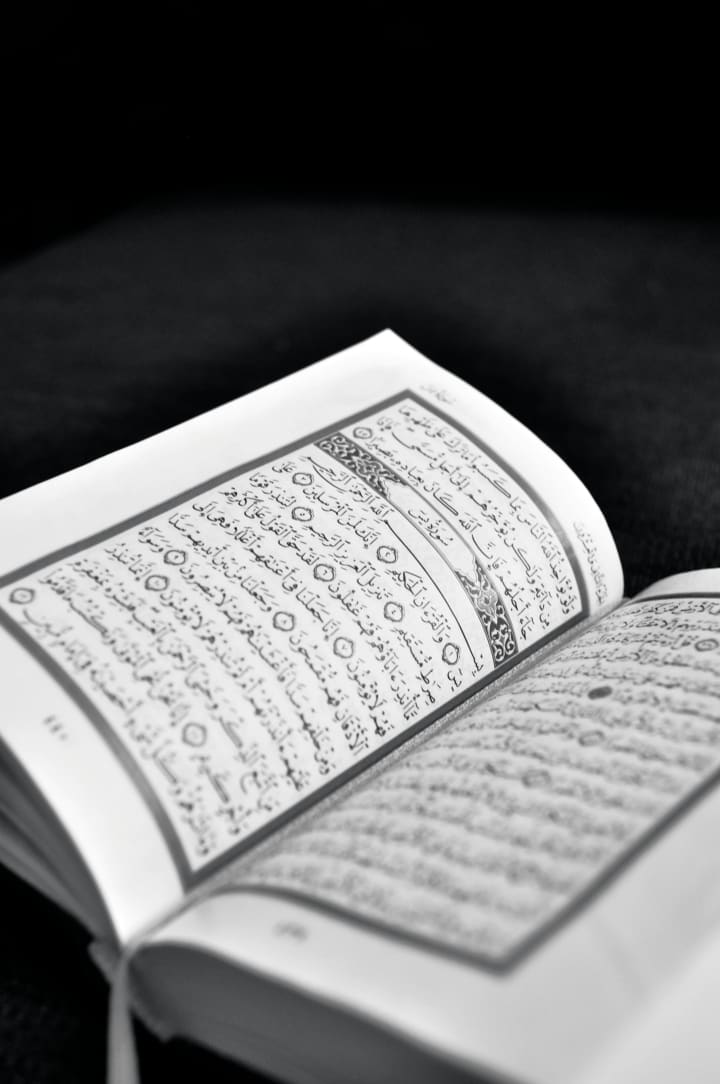
The Quran is divided into 114 chapters, known as Surahs, which vary in length. The longest Surah is Al-Baqarah (286 verses), while the shortest is Al-Kawthar (3 verses). Each Surah is further divided into verses called Ayahs, totaling 6,236 verses (the exact count may vary slightly depending on the method of calculation).
The Quran is also divided into 30 parts (Juz') to facilitate recitation over a month, particularly during Ramadan. Additionally, it is segmented into Rukus (paragraph-like sections) for easier study and understanding.
Classification of Surahs
The Surahs are categorized based on their place of revelation:
Meccan Surahs – Revealed before the Prophet’s migration (Hijrah) to Medina. These focus on faith, the afterlife, and moral teachings.
Medinan Surahs – Revealed after the Hijrah, dealing with legal, social, and political matters for the growing Muslim community.
Themes and Teachings of the Quran
1. Monotheism (Tawhid)
The Quran emphasizes the oneness of God (Allah) and rejects polytheism. Key verses, such as Ayat al-Kursi (2:255) and Surah Al-Ikhlas (112), highlight God’s supreme power, mercy, and uniqueness.

2. Prophethood (Risalah)
The Quran mentions numerous prophets, including Adam, Noah, Abraham, Moses, Jesus, and Muhammad (peace be upon them all). Their stories serve as moral lessons, emphasizing patience, faith, and perseverance.
3. The Afterlife (Akhirah)
Belief in the Day of Judgment, Heaven (Jannah), and Hell (Jahannam) is a recurring theme. The Quran describes the consequences of good and evil deeds, urging believers to lead righteous lives.
4. Ethical and Moral Guidance
The Quran promotes virtues such as honesty, justice, compassion, and humility while condemning oppression, arrogance, and dishonesty.
5. Legal and Social Directives
The Quran provides laws on:
Worship (prayer, fasting, charity, pilgrimage)
Family matters (marriage, divorce, inheritance)
Economic justice (prohibition of interest, fair trade)
Criminal laws (punishments for theft, murder, etc.)
Language and Literary Style of the Quran
Linguistic Miracle (I'jaz al-Quran)
Muslims believe the Quran’s eloquence and linguistic perfection are proof of its divine origin. Its rhythmic prose, depth of meaning, and unmatched style have influenced Arabic literature and rhetoric for centuries.
Recitation (Tajweed)
The Quran is meant to be recited melodiously, following rules of Tajweed (proper pronunciation). Various Qira’at (recitation styles) exist, passed down through generations of scholars.
Preservation and Compilation of the Quran
Revelation and Early Compilation
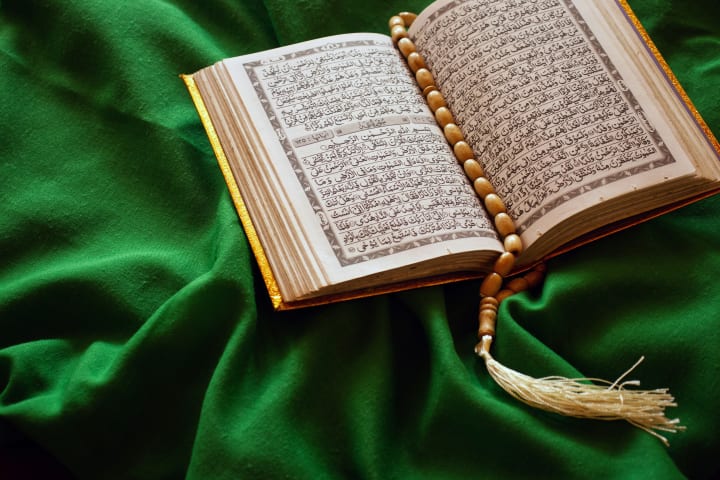
The Quran was revealed piecemeal to Prophet Muhammad (PBUH) through the Angel Gabriel (Jibril). The Prophet memorized and recited it to his companions, who also memorized and wrote it down on materials like parchment, bones, and palm leaves.
Standardization Under Caliph Uthman
After the Prophet’s death, the first Caliph, Abu Bakr, compiled the Quran into a single manuscript. Later, Caliph Uthman (RA) standardized it to prevent variations in recitation, distributing copies to major Islamic centers.
Modern Printing and Digital Quran
Today, the Quran is printed globally in various translations and formats. Digital versions and apps allow easy access for recitation, study, and memorization (Hifz).
Interpretation (Tafsir) and Translations
Tafsir (Exegesis)
Scholars have written extensive commentaries (Tafsir) to explain the Quran’s meanings. Famous works include:
Tafsir Ibn Kathir – Historical and contextual explanations.
Tafsir al-Jalalayn – Concise linguistic analysis.
Tafsir al-Tabari – One of the earliest comprehensive exegeses.
Translations
While the Quran’s original text is in Arabic, translations exist in almost every language. However, translations are considered interpretations, not the literal Quran, as Arabic’s depth cannot be fully captured.
The Quran’s Impact on Civilization
Influence on Science and Knowledge
The Quran encouraged learning, leading to advancements in:
Medicine (Ibn Sina, Al-Razi)
Mathematics (Algebra by Al-Khwarizmi)
Astronomy (Observatories, celestial studies)
Cultural and Artistic Contributions
The Quran inspired:
Islamic calligraphy and architecture (Mosques, manuscripts)
Literature (Poetry, philosophical works)
Music (Quranic recitation styles, Nasheeds)
Conclusion
The Quran is more than a religious scripture; it is a comprehensive guide for life, spirituality, law, and morality. Its preservation, linguistic beauty, and profound teachings continue to influence millions worldwide. For Muslims, it is the eternal miracle and the ultimate source of divine wisdom.
Final Verse for Reflection
"This is the Book about which there is no doubt, a guidance for those conscious of Allah." (Quran 2:2)
About the Creator
Am@n Khan
I'm educational storyteller passionate about turning knowledge into engaging narratives.
I write about topics like science, history and life skills.
Contact
WhatsApp : +923336369634
Rachel Reviews: Lakefront Wolves by Joseph Deegan
Meet Finn. He's an 18 year old kid who has potential. He's bright with great school scores and he's also an athlete, a footballer of some prowess. He has it all going for him, it would seem, and yet, he's determined to send what could be a well-planned, stable existence firmly off the rails. He drinks, he smokes, he takes drugs, he has violent tendencies and he's in danger of losing not only his mind but all that he holds dear.
By Rachel Deeming11 days ago in BookClub
8 Western Novels You Must Read In 2026
Few genres capture the rugged spirit, moral complexity, and sweeping landscapes of human history like the Western novel. These stories transport us to the untamed frontiers of 19th-century America, where lawmen, outlaws, pioneers, and cowboys navigated a world defined by survival, honor, and ambition. Yet, Westerns are more than tales of horseback chases and gunfights—they explore timeless themes of courage, justice, friendship, and the consequences of human ambition.
By Diana Meresc2 days ago in BookClub


Comments
There are no comments for this story
Be the first to respond and start the conversation.