

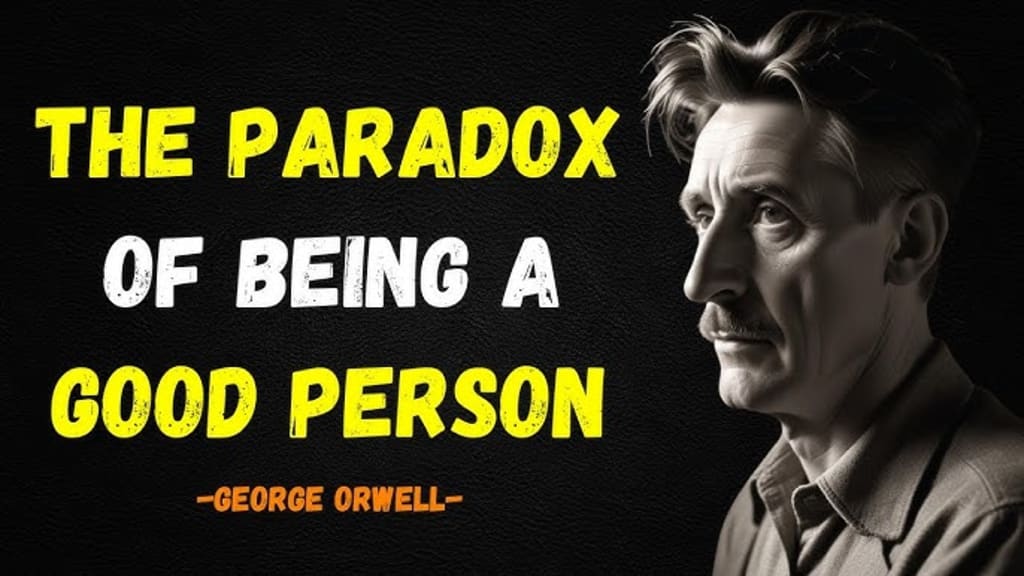
George Orwell, born Eric Arthur Blair in 1903, stands as a towering figure in twentieth-century literature. His works, particularly Animal Farm and 1984, have transcended their historical context to become touchstones in discussions about truth, power, and totalitarianism. Orwell's exploration of these themes remains deeply relevant today, echoing across political and ideological divides.
Orwell's early life in Bengal, India, was marked by a curious mix of privilege and struggle. Although his family had once enjoyed wealth, by the time Orwell was born, their fortunes had dwindled. His father worked as a civil servant, and Orwell's upbringing was characterized by what he described as "lower-upper-middle-class" conditions—an amalgam of social aspirations and financial insecurity. This background profoundly influenced Orwell's worldview, shaping his empathy for the struggles of ordinary people and his disdain for both material excess and intellectual pretension.
Educated in England at preparatory schools and then at Wellington and Eton, Orwell’s experience was marred by discomfort and alienation. His academic brilliance was overshadowed by a profound dissatisfaction with the elitist culture of his schools. Opting out of university, he joined the British Imperial Police in Burma. The harsh realities of colonial rule and his internal conflict with the imperialistic ideals he was supposed to uphold led to his resignation in 1927. This period marked the beginning of his journey as a writer and social critic. During the late 1920s and early 1930s, Orwell's life was marked by economic hardship and varied employment, including a stint in a second-hand bookshop in Paris. It was during this time that he began writing novels, reflecting his disdain for materialism and the intellectual class. His early works, such as Burmese Days, A Clergyman’s Daughter, and Keep the Aspidistra Flying, depicted the struggles of ordinary individuals and critiqued the superficiality of societal norms.
Orwell’s involvement in the Spanish Civil War in 1936 proved pivotal. Initially sent as a journalist, Orwell quickly joined the Republican militia to fight against fascism. His experiences on the front lines and the disillusionment with how the war was reported deeply affected him. Orwell observed that newspapers distorted the truth, presenting battles that never occurred and ignoring the real casualties. He wrote, "I saw newspaper reports which did not bear any relation to the facts," highlighting a fundamental degradation of objective truth. For Orwell, this manipulation of truth revealed a broader threat: the rise of ideologies that distort reality for political ends.
Orwell’s observations about the erosion of objective truth were not merely academic; they reflected his growing concern about the potential for totalitarianism. In his view, when societies abandon the idea of objective truth, reality becomes malleable, easily controlled by those in power. This vulnerability to ideological manipulation transcends political affiliations, presenting a universal risk of totalitarianism, whether it emerges from the left or the right. These themes are vividly explored in Orwell’s seminal works Animal Farm (1945) and 1984 (1949). Animal Farm, a satirical fable featuring anthropomorphized animals, critiques the Russian Revolution and the rise of Stalinist tyranny. Orwell uses the story of a farm where animals overthrow their human masters to illustrate how revolutionary ideals can degenerate into the very oppression they sought to eradicate. The novella’s conclusion, "The creatures outside looked from pig to man, and from man to pig, and from pig to man again; but already it was impossible to say which was which," poignantly underscores the betrayal of revolutionary ideals.
Similarly, 1984 presents a dystopian future under the rule of the Party, led by the omnipresent Big Brother. The novel explores how totalitarian regimes manipulate language and information to enforce ideological conformity and suppress dissent. Concepts like Newspeak, doublethink, and the Thought Police illustrate how the regime’s control extends to every facet of life, including the manipulation of language to prevent critical thinking. Orwell’s depiction of a society where citizens are subjected to constant surveillance and ideological indoctrination serves as a chilling warning of the potential consequences of unchecked political power.
Orwell’s works are not merely pessimistic forecasts but serve as warnings against the potential for tyranny within any political system. His portrayal of totalitarian regimes is meant to caution against the dangers of ideological manipulation and the erosion of objective truth. Despite the grim realities depicted in his novels, Orwell’s intention was not to predict an inevitable dystopia but to alert readers to the perils of totalitarianism and the importance of safeguarding democratic values. The term "Orwellian" has since become a descriptor for situations where language and information are distorted to serve power, often in ways Orwell himself would have criticized. Ironically, the term is sometimes misused to support causes that Orwell might have opposed, demonstrating the complexity of applying his insights to contemporary issues.
Orwell’s commitment to democratic socialism and his critique of capitalism reflect his belief in the need for a just and equitable society. His advocacy for a politically democratic and socially responsible economy was driven by his opposition to totalitarianism and his desire to address systemic inequalities. His works remind us that the threat of tyranny is not confined to any single ideology but is a risk inherent in all systems of power. Ultimately, Orwell’s insights into language, truth, and totalitarianism remain profoundly relevant. His warning against the manipulation of truth and the suppression of dissent serves as a reminder of the vigilance required to preserve freedom and democracy. Orwell’s ability to distill complex social and political phenomena into accessible and compelling narratives has ensured that his work continues to resonate, challenging readers to remain aware of the dangers of ideological manipulation and to strive for a more just and transparent society.
In conclusion, Orwell’s exploration of the nature of truth and power remains a crucial part of our understanding of political and social dynamics. His works urge us to question the manipulation of language and to be vigilant against the forces that seek to undermine our freedoms. As Orwell himself warned, "Don’t let it happen. It depends on you." This call to action underscores the ongoing relevance of his work and the importance of safeguarding the values of truth and democracy.
About the Creator
Horace Wasland
Research analyst, writer & mystical healer. Exploring the edge where science meets mystery. From mystery/the mystical, to facts, news & psychology. Follow for weekly insights on all four and please leave a tip if you like what you read :)
Keep reading
More stories from Horace Wasland and writers in BookClub and other communities.
A Bowl of Mystery
The disappearance of Malaysia Airlines Flight MH370 has captivated the world for years, leaving behind a trail of speculation, heartache, and unanswered questions. In MH370: Mystery Solved, investigative journalist and aviation expert Larry Vance takes readers on a comprehensive journey into the tragic event, offering what he believes to be the definitive explanation for the aircraft's fate.
By Horace Waslandabout a year ago in BookClub
Espresso Shots & Espionage: The Blonde Who Came in From the Cold
Welcome back to The Chapter Café, where stories are always on the menu and comfort is served by the chapter. I’m your host, Kristen, and today we’re trading in our cozy cardigans for leather jackets and encrypted burner phones. On today’s menu? The Blonde Who Came in From the Cold by Ally Carter—a second-chance spy romance that’s equal parts adrenaline and heart.
By Kristen Barenthalera day ago in BookClub




Comments
There are no comments for this story
Be the first to respond and start the conversation.