

Summary
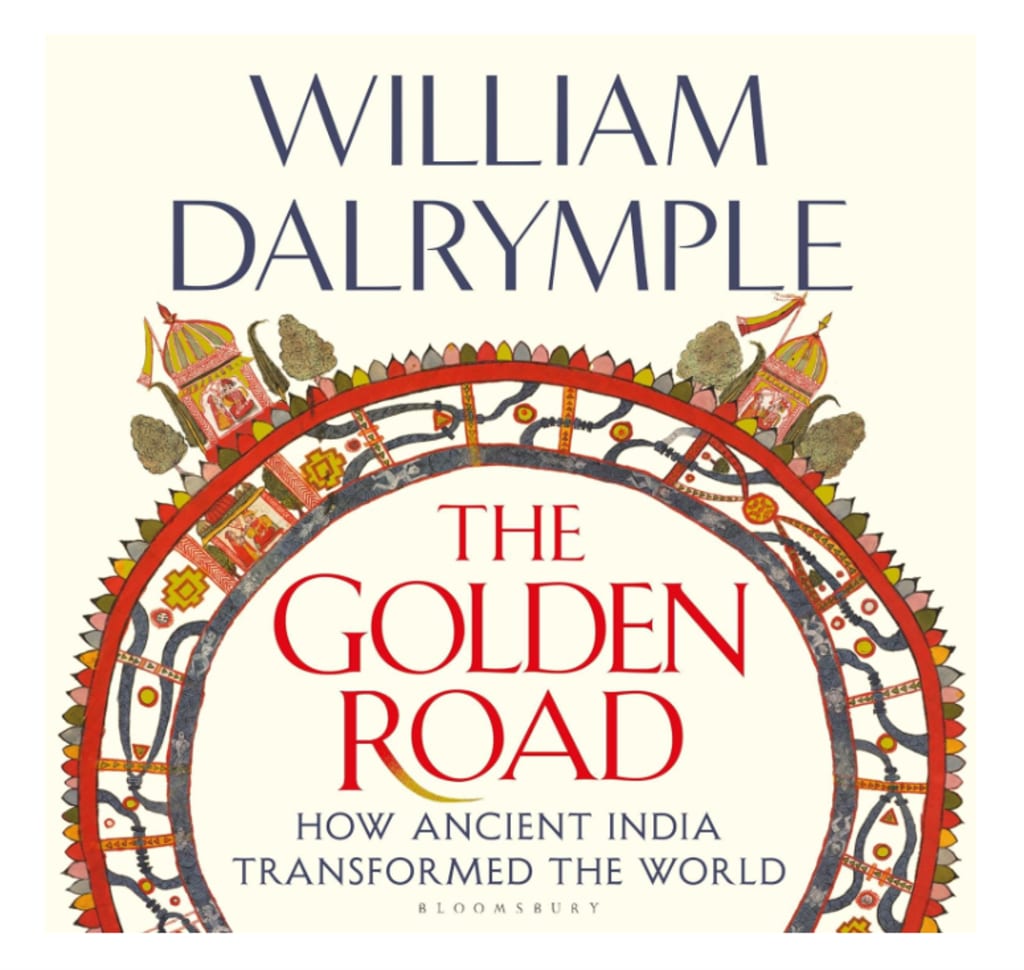
Summary William Dalrymple’s "The Golden Road" helps us see the vast effect India had on Asia. If you’re unsure because the word history is involved, you shouldn’t be. It’s told with casual confidence by a friend who has endless knowledge. He doesn’t only share historical facts; he shows how India was at the centre of culture, spirituality and learning, shaping many distant areas.
Rather than concentrating on one individual, the book brings us several interesting characters. Xuanzang, a Chinese seeker of knowledge, walked thousands of miles to learn from Buddhist masters in India and Emperor Ashoka, who gave up warfare and made Buddhism grow widely. We see how Indian culture reached new places through conversations with monks, artisans, scholars and traders. Although the figures themselves add great depth, the main question that dominates the book is how the remarkable story was missed by so many historians.
Listen to "The Golden Road" with a Free Audible Trial
Key Themes of the Book
1. Culture Without Conquest: One of the most powerful ideas in the book is how Indian culture spread not through war, but through wisdom. Through trade, storytelling, and spiritual teaching, India left its mark on regions from Indonesia to Japan. It's a reminder that influence doesn’t always come at the tip of a sword.
2. The Indosphere: This is Dalrymple’s way of describing the vast area that absorbed Indian ideas, stretching across Asia. It’s not just about Buddhism or Sanskrit, but a whole web of influence: art, science, medicine, and more. Once you see it, you can’t unsee it.
3. The Monsoon Highway: I’d never thought about the ocean winds that blow back and forth between India and its neighbours, but Dalrymple paints them like ancient highways. These seasonal winds powered ships full of goods, books, and ideas. It’s fascinating to realise how something as simple as a wind pattern helped build cultural bridges.
4. Who Gets to Tell History? This theme hit home for me. The book gently but firmly questions the version of history many of us grew up with—one that sidelines India’s role. Dalrymple doesn’t rant, but he makes you think: why are some stories remembered while others are buried?
Experience
Going through this book felt like I had visited a different time in history, not only learned new things. I would often picture myself in an old library, in the yard of a Buddhist temple or sailing toward Java on a ship. Dalrymple paints the world as full of colour, excitement and life.
The book’s themes moved me quite a lot emotionally. The intelligence of Indian people inspired me, as did their achievements, and I felt sorrow that so much of Indian history has been skipped over or misunderstood. I felt both proud and inspired by what I saw.
I realised more than ever how much interaction and connection there was between the ancient civilisations. It’s common to imagine history in little separated groups, but this book reveals the flow of ideas across the Middle Ages. I realised that language, mainly Sanskrit, had a powerful influence on thought in many countries. I am amazed that ideas written long ago in India spread to China, Thailand and Japan.
I needed to review some chapters because they were so full of insight. I found it surprising to learn about how Indian math ideas, such as zero and how we count in tens, made their way west. What Marx and other thinkers suggested here actually shaped the course of history.
Find "The Golden Road" on Amazon
Strengths and Weaknesses
Dalrymple uses his experiences and writing to give the book its focus. He lets us picture history happening with energetic and colourful portrayals of battles, discussions and trading. He gathers information from all over and combines it in a way that’s easy for you to follow.
He also powerfully brings an original viewpoint to what India means. Much of the time, people judge India based on its poverty or its various mystical beliefs. In this space, ideas are big and people are confident, making changes with their learning. When you read the book, the links become easier to notice everywhere you look.
I’ll tell you the truth. This book is written in a challenging manner. It’s dense. Often, I would draw back as the amount of information became too much to handle. If your history background isn’t deep, this could feel a little complicated. In some passages, his admiration for ancient India seems too exaggerated—you can tell he likes it. That’s alright, though, the book could have also included different viewpoints
Final Thoughts
This isn’t a simple read—it teaches you to see things differently. Wonder why some history sticks in our minds, yet some is forgotten? This book will answer that question. It doesn’t tell you what to do, yet it softly encourages you to think again and understand things from a new angle.
I believe this book is valuable reading for those excited about history, alongside students and teachers interested in better explaining world events. It is also a great match for people who’ve been to places like Bali, Cambodia or Sri Lanka and want to look into their background. If you enjoy stories that are told sensitively and with true understanding, this book won’t leave you.
Eventually, Dalrymple teaches that culture can carry the same weight as the power of arms. This book proves we are closer together than we think, especially when the world is experiencing the greatest sense of division.
My Recommendations
When you’re open to learning a new viewpoint, start by reading this book. Allow it to carry you along. After that, keep going. The Indosphere is full of things that have yet to be rediscovered.
If you enjoy The Golden Road. Here are some other books you may enjoy.
1. India: A History by John Keay – A broad yet engaging look at India’s rich and complex past.
2. The Discovery of India by Jawaharlal Nehru – Written from prison, this book is Nehru’s love letter to India’s soul.
3. When Asia Was the World by Stewart Gordon – An eye-opening look at how Asian civilisations interacted long before European colonialism.
4. The Argumentative Indian by Amartya Sen – A collection of essays that celebrate India’s intellectual traditions.
Make sure to look beyond books. Watch documentaries. Go to locations where history was made. Have conversations with older people. We learn history from stories, not just from books.
Affiliate Disclaimer
This book review contains affiliate links. If you choose to make a purchase or sign up for a service through these links, I may earn a small commission at no extra cost to you.
About the Creator
Sid Coulton
I have discovered a love for writing blogs, creating stories and writing articles. My book reviews do contain affiliate links as i am an Amazon Associate.
Keep reading
More stories from Sid Coulton and writers in BookClub and other communities.
Darling Girls by Sally Hepworth
A Gripping Mystery Thriller Summary The tale of Darling Girls by Sally Hepworth assembles Contemporary Fiction with Mystery elements, which maintained my deep interest throughout the entire story. The narrative traces the life of three foster sisters named Jessica, Norah and Alicia who spent their youth with Miss Fairchild at Wild Meadows, where dark secrets hid within a seemingly lovely farm setting.
By Sid Coulton9 months ago in BookClub
7 Books That Take Less Than a Week to Finish
In a world overflowing with information, notifications, and endless to-do lists, finding time to read can feel like a luxury. Yet reading remains one of the most powerful ways to sharpen our thinking, deepen our empathy, and expand our perspective—often in just a few hours a day. The good news? You don’t need months to finish a life-changing book.
By Diana Meresc7 days ago in BookClub




Comments
There are no comments for this story
Be the first to respond and start the conversation.