
The End of Loyalty: The Rise and Fall of Good Jobs in America – An In-Depth Review Introduction: Why This Book Matters in 2026
Ryan D'Agostino, a former senior editor at Money, wanted to know how the wealthiest Americans got that way. So he asked. Knocking on 500 doors in some of the most affluent zip codes in America,

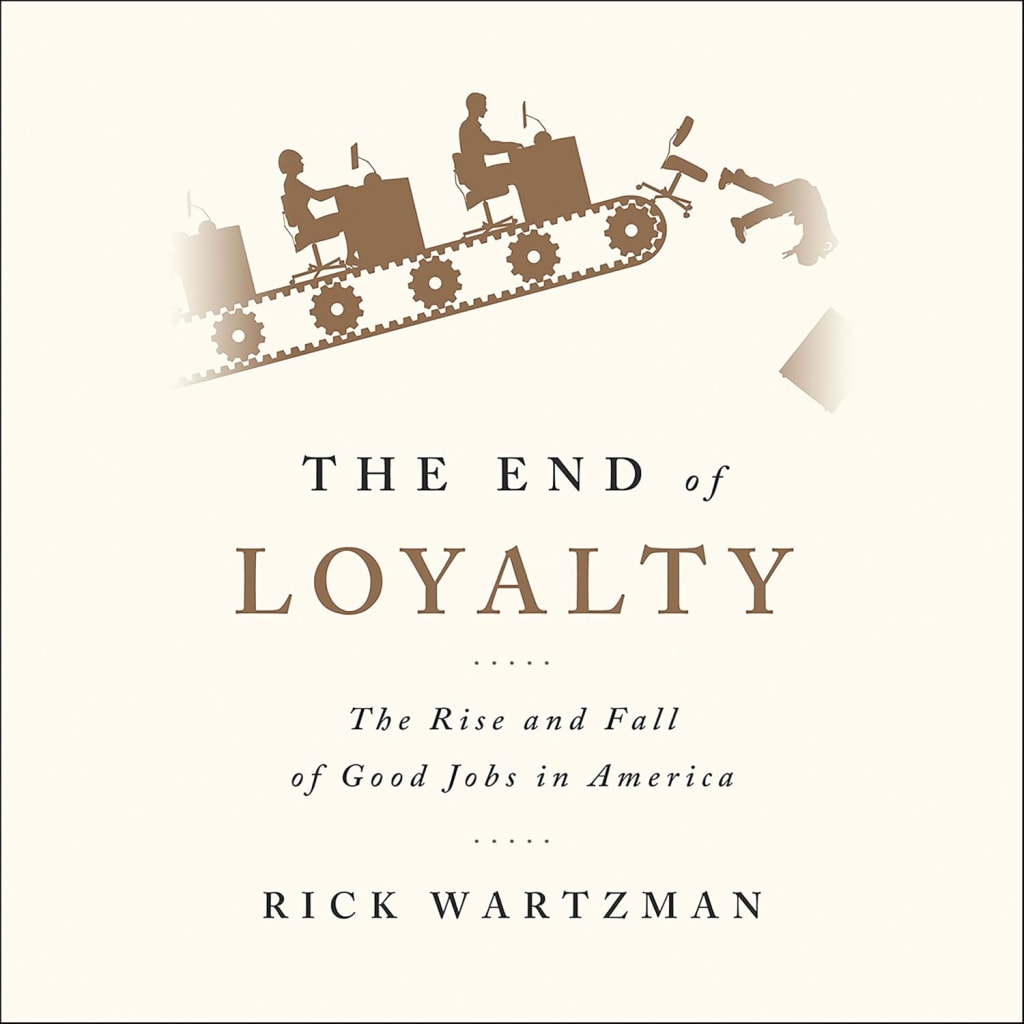
The American workplace has undergone a dramatic transformation over the past 70 years. If you’ve ever wondered why your grandparents could work for one company their entire lives, retire with a pension, and own a home — while today’s workers face layoffs, contract jobs, and gig work — The End of Loyalty: The Rise and Fall of Good Jobs in America by Rick Wartzman offers answers.
In this powerful, meticulously researched book, Wartzman takes us on a journey through the post–World War II era up to the modern gig economy, showing exactly how and why the concept of company loyalty collapsed.
If you’re interested in labor history, corporate culture, economics, or simply want to understand why the “good job” seems extinct, this is a must-read.
➡️ Get your copy of The End of Loyalty on Amazon
About the Author: Rick Wartzman
Rick Wartzman is an award-winning author, business journalist, and director at the Drucker Institute. Known for his In-depth examinations of corporate ethics and the human side of capitalism, Wartzman writes with both analytical precision and compassion for the working class. His background makes him uniquely qualified to tackle a topic as complex as the decline of good jobs in America.
What the Book Covers
Wartzman examines the rise and fall of stable, well-paying corporate jobs in the United States between the 1940s and the early 2000s. Using four iconic companies — General Electric, General Motors, Coca-Cola, and Kodak — as case studies, he paints a vivid picture of corporate America’s golden age and its eventual unraveling.
A Theme-by-Theme Breakdown
1. The Golden Age of Corporate Loyalty (1940s–1970s)
After World War II, U.S. companies experienced unprecedented growth. Jobs were abundant, wages were rising, and the American Dream felt attainable. Wartzman shows how businesses offered generous pensions, health care, and career-long stability — not purely out of altruism, but because unions were strong and public expectations demanded it.
Workers could reasonably expect to:
Stay with one company until retirement
Receive pensions and health benefits
Afford a home, education, and vacations
It was a time when the phrase “lifetime employment” actually meant something.
2. The Cracks Begin to Show (1970s–1980s)
By the late 1970s, inflation, oil crises, and global competition began squeezing profits. Corporations, once seen as guardians of the middle class, started focusing more on shareholder returns than employee welfare.
Key developments:
Union power declined sharply.
Companies began outsourcing and automating.
Executive pay skyrocketed while wages stagnated.
This period marks the start of what Wartzman calls “the slow erosion of the social contract.”
3. The Rise of the Shareholder-First Mentality (1980s–2000s)
During the Reagan era, deregulation, tax cuts, and globalization accelerated the shift toward short-term profits. CEOs began to see themselves as responsible primarily to investors, not employees.
Examples from the book:
GE’s Jack Welch — often celebrated as “Manager of the Century” — prioritized aggressive restructuring, layoffs, and stock price growth.
Kodak, once a symbol of job security, failed to adapt to digital photography and slashed its workforce.
4. The Modern Era: Precarious Work and the Gig Economy
By the 2000s, the concept of the “good job” — stable, well-paid, with benefits — was largely gone. Instead, the workforce was increasingly:
Part-time
Freelance
Contract-based
Without pensions or adequate health care
Wartzman ties this to larger social consequences: rising inequality, political polarization, and declining trust in institutions.
Wartzman’s Writing Style
One of the book’s strengths is its blend of journalistic storytelling and historical analysis. Wartzman doesn’t just throw statistics at you — he weaves in human stories that make the data come alive.
The pacing is smooth, but readers who prefer quick, bullet-point style summaries might find it dense. This is a book to study, not skim.
Why This Book is Relevant in 2026
In the wake of the COVID-19 pandemic, remote work, and the explosion of AI-driven automation, Wartzman’s work feels prophetic. The debates about universal basic income, corporate responsibility, and the future of unions all trace back to the trends he describes.
If you want to understand why job security has become a luxury, this book provides the historical roadmap.
Who Should Read It
Students & academics studying labor history, economics, or sociology
Business leaders who want to understand the long-term effects of corporate policies
Policy makers working on labor reform
Workers & job seekers curious about how we got here
Pros & Cons
Pros:
✅ Deep historical context
✅ Engaging narrative with real company examples
✅ Balanced analysis without political bias
✅ Relevant to current workplace debates
Cons:
❌ Dense in places — not a “light read”
❌ Focuses mostly on large corporations, less on small business dynamics
Final Verdict
The End of Loyalty is both a history lesson and a cautionary tale. It reminds us that the stability many Americans once enjoyed was not inevitable — it was built through policy, corporate choices, and societal expectations, all of which have changed.
Whether you’re nostalgic for the past or determined to shape the future of work, this book is essential reading.
➡️ Order your copy of The End of Loyalty: The Rise and Fall of Good Jobs in America on Amazon today
About the Creator
TAPHA
Hi! Whether you're looking for insightful answers or a fresh perspective on a topic,I'm here to provide engaging, accurate,and thought-provoking content tailored just for you. Stick around, and let's explore the world of knowledge together!
My New Book is Finally Here
My poetry collection Beautiful and Brutal Things is done. It's actually done and finally published over 270 pages. Over a year of my life went into this book. More than a year, really. Long days at my computer, sometimes seven days a week because I couldn't stop even when I probably should have. Then two months of editing that felt harder than the writing itself. But it's finished, and I'm still standing, and the book is real.
By Tim Carmichael3 days ago in BookClub
7 Cozy Books You Need To Read In 2026
In a world that often feels loud, rushed, and overwhelming, cozy books offer us something profoundly healing: a safe place to land. These are the stories we reach for when we want to slow down, breathe deeply, and remember that gentleness still exists. Cozy books don’t rely on high-stakes drama or relentless tension. Instead, they wrap us in warm characters, comforting settings, and quietly meaningful moments that linger long after the final page.
By Diana Meresc4 days ago in BookClub



Comments
There are no comments for this story
Be the first to respond and start the conversation.