

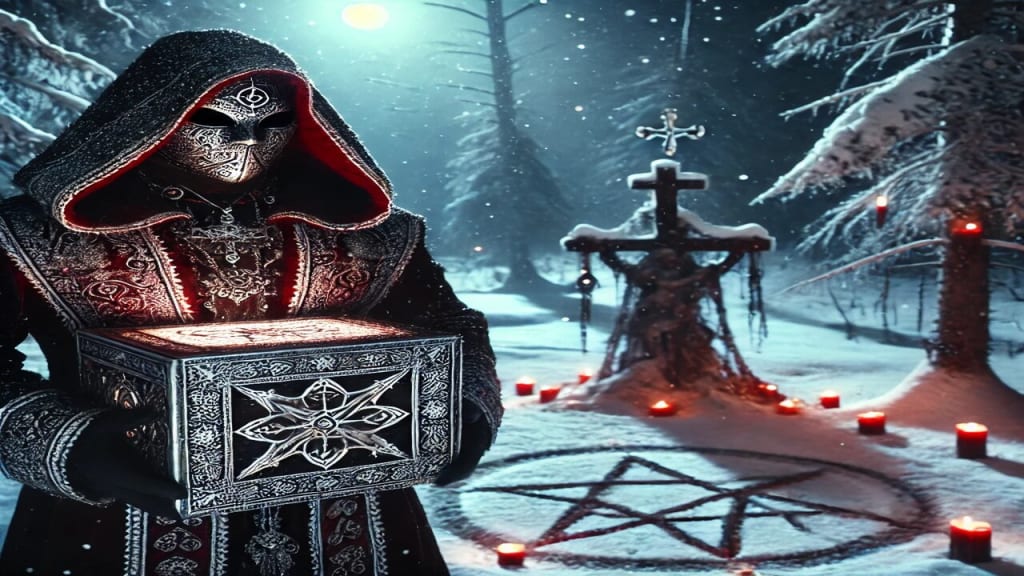
In the heart of a frostbitten December, the snow-covered streets were alive with the shimmer of twinkling lights and festive cheer. But beneath the merry veneer lay a forgotten truth—a shadowy origin of what the world now celebrated as Christmas.
Long ago, in a time before carols and evergreens adorned homes, December was marked by a very different ritual. It began in a bleak age when the common people lived under the iron grip of oppressive rulers. For them, December was not a season of joy but one of desperation. Food was scarce, warmth was fleeting, and the ruling elite basked in plenty while the masses starved.
The Origins of the Protest
On one cold December day, a group of the oppressed—ordinary men and women who called themselves "The Starved Coalition"—gathered. With fists clenched and hearts aflame, they marched to the grand castle of their rulers. Their demand was simple: "Box the excess! Share the wealth!"
This "Boxing Day" protest sparked a movement. The people demanded that the nobility fill wooden boxes with food, clothing, and gold to distribute among the starving. What began as a singular demand snowballed into an annual uprising each December, where the downtrodden claimed their rights from the abundance of the elite.
But the rulers, fearing the power of unity, twisted the narrative. To suppress rebellion, they rebranded the day into a grand festival of generosity. They called it "The Feast of Lights," encouraging public revelry to distract from the protest's true intent. Over centuries, it morphed, mingling with traditions of various cultures, until it became what we now know as Christmas.
The Myth of the Birth
Many later believed Christmas celebrated the birth of Jesus Christ, a figure of hope and salvation. While December 25th bore no direct link to his birth, the Church adopted it to align with pagan solstice festivities and overshadow the rebellious spirit of the protest. This seamless merging buried the true roots of the tradition under layers of faith, feasts, and festivity.
A Dark Evolution
However, as centuries passed, whispers of darkness crept into the celebration. What began as a protest for survival and justice turned into something far more sinister in hidden corners of society. Stories spread of secret gatherings on Christmas Eve—rituals carried out under the cover of snowstorms and silent nights.
Some claimed these rituals sought to summon forces beyond comprehension, channeling the collective energy of celebration for purposes unknown. Others spoke of sacrifices made to ensure prosperity, mirroring the early demands but twisted into darker forms. These gatherings were said to occur in ancient cathedrals, abandoned estates, and deep forests, where the merriment of Christmas masked the chilling echoes of chants.
Today’s Celebration
Now, Christmas is a kaleidoscope of traditions: gift-giving, family feasts, and midnight services. Few remember the fiery protests of the Starved Coalition or the generosity wrested from the hands of the elite. Even fewer dare to acknowledge the shadowy undercurrents whispered by conspiracy theorists and folklore keepers.
But some still wonder. When the church bells toll at midnight, and laughter fills the air, does the December Ritual truly end with joy? Or does it live on, hidden behind the wreaths and ribbons, shaping the world in ways unseen?
For most, ignorance is bliss. They celebrate with innocence, believing in the magic of the season. But for those who dig deeper, Christmas is more than just a day of celebration—it's a legacy of protest, manipulation, and perhaps, something far darker.
About the Creator
fidel ntui
Step into a realm where every word unfolds a vivid story, and each character leaves a lasting impression. I’m passionate about capturing the raw essence of life through storytelling. To explore the deeper layers of human nature and society.
Keep reading
More stories from fidel ntui and writers in BookClub and other communities.
THE FAILURE OF DNA
In the heart of a bustling ghetto in an African country, a family of eight thrived against the odds. Our home was a modest structure, weathered by the storms of life but brimming with warmth and laughter. Among us were four fair-skinned siblings and four dark-skinned siblings, an arrangement that sparked whispers in the community and one of my brothers from the same family, the same mother and father, with the red-haired having blue eyes, with a dark complexion? but what could be his DNA result?. Yet, despite our strikingly different complexions, we shared an unmistakable resemblance—eyes that twinkled with mischief and smiles that lit up even the darkest corners of our lives.
By fidel ntuiabout a year ago in BookClub
7 Psychological Thriller Books You Need To Read In 2026
In the realm of literature, psychological thrillers occupy a unique space—stories that grip your mind, twist your emotions, and leave you questioning the nature of reality itself. Unlike traditional thrillers that rely solely on action or suspense, psychological thrillers delve into the human psyche, exploring obsession, manipulation, moral ambiguity, and the shadows lurking within the mind. For readers seeking heart-pounding tension and intellectual stimulation, the right book can be both an adrenaline rush and a profound reflection on human nature.
By Diana Meresc5 days ago in BookClub




Comments
There are no comments for this story
Be the first to respond and start the conversation.