
The Crash Review by Freida McFadden
A Tale of Blizzard-Bound Survival and Tangled Yearnings
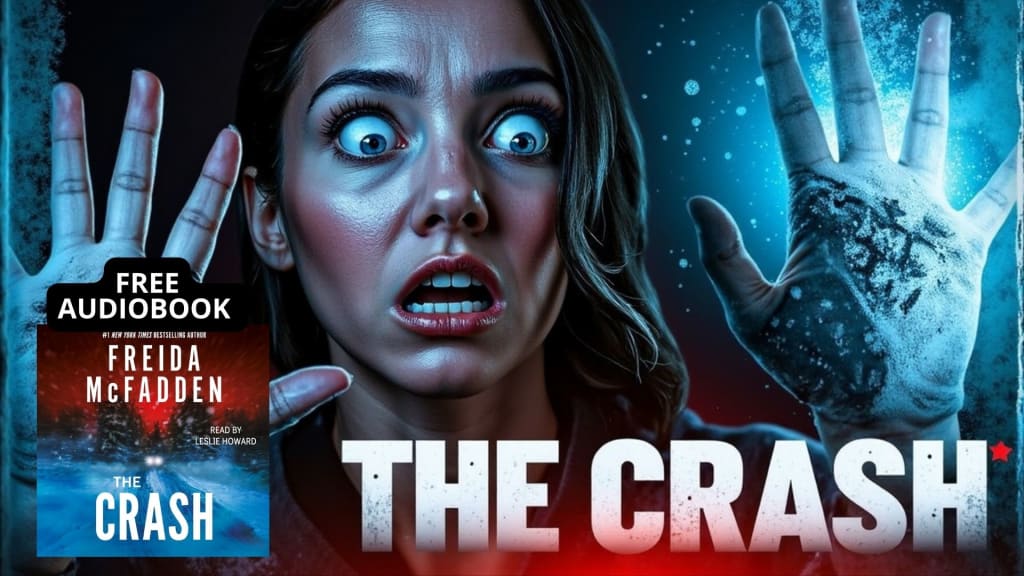
Freida McFadden, the maestro behind pulse-quickening yarns like The Housemaid and The Locked Door, steps back into the fray with The Crash. This isn’t just a story—it’s a shivering, snow-crusted plunge into survival’s raw edges, a meditation on motherhood’s fierce grip, and a shadowed dance with the hungers that gnaw at the soul. Picture a blizzard howling outside, its icy fingers clawing at the windows, while inside, the air thickens with secrets. That’s where The Crash lives. It’s a jagged little gem in McFadden’s crown—not flawless, mind you, but bristling with enough twists to keep your breath hitching, your fingers flipping pages past midnight.
Click here to hear The Crash Audiobook for free
A Story That Clutches and Frays
Meet Tegan. Eight months swollen with life, she’s running—fleeing a world that’s crumbled beneath her feet like dry earth after too long a drought. Then comes the crash. Metal shrieks, glass splinters, and the snow swallows her whole. Stranded, shivering, she’s plucked from the white void by Hank and Polly—a pair who seem carved from kindness. Their remote house glows like a beacon through the storm, promising warmth, safety. But the walls creak with something else. Something off. What starts as a lifeline sours fast. Polly’s eyes linger too long on Tegan’s rounded belly, her voice dripping with a hunger that isn’t quite maternal. Hank, meanwhile, teeters—a man caught between his wife’s spiraling wants and the unease prickling his spine.
The tale unfurls through two sets of eyes, a back-and-forth that feels like a heartbeat stuttering under strain. Tegan’s dread seeps into you, cold and heavy, while Polly’s schemes coil like smoke, dark and deliberate. It’s a clever trick, letting you peer into both their skulls—her fear, her plotting, their clashing why’s. But the rhythm stumbles sometimes. The middle sags under its own weight, scenes looping like a scratched record, words piling up where a knife’s edge would’ve cut cleaner. Still, McFadden knows how to yank you back. A twist here, a gasp there, and you’re hooked again, snow or no snow.
Motherhood’s Pulse, Survival’s Teeth
Strip it down, and The Crash is a raw hymn to motherhood—to the primal thud of it in your chest. Tegan’s every step thrums with it. She bolts from ruin, cradles her unborn child like a flame in a gale, fights tooth and nail when the shadows close in. You feel her fragility—the way her hands tremble, the way her breath catches like a snagged thread. Yet she hardens, too, shedding fear like old skin. It’s a quiet triumph, watching her claw her way from prey to protector. Though, let’s be real—sometimes you want to shake her. Girl, don’t trust the tea. Her innocence can chafe, especially when the danger’s flashing neon-bright.
Then there’s Polly. She’s no cartoonish fiend, no cackling witch. She’s a wound that walks—a woman hollowed out by losses you can almost taste, like ash on the wind. Her ache for a child isn’t soft or sweet; it’s a jagged thing, sharp enough to cut. McFadden paints her with deft strokes, letting you hate her, pity her, maybe even root for her in some twisted way. She’s the storm’s heart—unpredictable, human, awful. And Hank? He’s the tether fraying between them, loving her too much, seeing too late. He’s not fleshed out as richly as he could be, but his quiet wrestle with guilt threads another knot into the tangle.
Survival isn’t just Tegan outrunning the cold or the couple’s grip. It’s deeper, messier. It’s Polly clawing at a dream that’s slipped through her fingers. It’s Hank choking on his own silence. Each of them wrestles something unseen—ghosts, regrets, the weight of what they might become. That’s the marrow of it: surviving yourself when the world’s gone brittle.
Trust That Splinters, Betrayal That Bites
Trust is a fragile thing here, cracking like ice underfoot. Tegan starts grateful—Hank’s steady hands, Polly’s warm soup—but gratitude curdles fast. Suspicion creeps in, slow at first, then all at once, a flood. Polly’s the puppeteer, tugging strings with a smile that doesn’t reach her eyes. She plays Hank, plays Tegan, plays the whole damn house like it’s her stage. And it works—until it doesn’t. The air hums with distrust, every glance a question, every kindness a trap.
But it’s not just them betraying each other. It’s the betrayal within. Tegan stares down her own limits—how far will she bend, how much will she break? Hank’s a man at war with himself, complicit but crumbling. These quiet reckonings hit harder than the loud ones, their echoes lingering like frost on glass.
Words That Flow, Pace That Staggers
McFadden writes like she’s pouring it straight from her veins—direct, unadorned, alive with voices and motion. The dialogue snaps; the action pulls you along like a sled over fresh snow. Her doctor’s eye shines through, too—pregnancy’s ache, the crash’s bruising aftermath, all rendered with a precision that grounds the wildness. But the tempo wavers. The middle drags its feet, circling back to moments that don’t need repeating, piling on explanations when a whisper would’ve sufficed.
Splitting the tale between Tegan and Polly is a double-edged blade. It cracks open their minds—her panic, her plotting—and that’s gold. But the shifts can jolt, yanking you from one head to another when you’re not ready to let go. And the twists? They land, mostly. Some hit like a fist; others lean on luck too thin to hold up under scrutiny. Still, you forgive it. The ride’s worth the bumps.
Echoes of Other Shadows
If you’ve cracked open Misery, you’ll catch whispers of it here—the claustrophobia, the captor’s unraveling, the captive’s defiance. Polly’s not Annie Wilkes, not quite, but her descent has that same fevered pitch, a madness you can’t look away from. There’s a nod to Room, too, in the way motherhood becomes a shield and a sword, though The Crash veers darker, its edges serrated with intent.
What Shines, What Stumbles
This book has claws. The tension coils tight, the surprises snap like branches in a storm, and the characters—flawed, fractured—stick with you. Motherhood’s fierce pull, survival’s grim stakes, the murky waters of right and wrong—it’s all laid bare, raw and real. But it’s not perfect. The slog in the middle tests your patience. Tegan’s blind spots grate. Hank’s brother Mitch and a stray figure like Sadie flicker in and out, half-formed. And the ending? It ties some knots but leaves others dangling, rushed where it could’ve lingered.
Comparison to Similar Works
Fans of psychological thrillers will find echoes of Stephen King’s Misery in The Crash, particularly in its exploration of captivity and the psychological battle between captor and captive. Like Misery, McFadden’s novel thrives on the tension between its characters, with Polly’s increasingly erratic behavior mirroring Annie Wilkes’ descent into madness.
The novel also shares thematic similarities with Emma Donoghue’s Room, particularly in its exploration of maternal love and survival in confined spaces. Both stories highlight the resilience of their protagonists and the lengths they will go to protect their children, though The Crash takes a darker, more twisted approach.
The Last Breath
Flaws and all, The Crash sinks its teeth in and doesn’t let go. It’s a shivering, thought-stirring ride that holds you captive till the final line. McFadden’s brewed something potent here—a stew of desperation, love, and the places morality goes to die. It’s not her sharpest blade, but it cuts deep enough. For anyone who craves a thriller that twists and tugs, this one’s a keeper.
At its beating heart, The Crash is about what we’ll endure to live—and what we’ll shatter to guard what’s ours. In the end, when the snow settles and the wind falls silent, it whispers a truth: desperation blurs every line we swear we’ll never cross.
Ready to feel the chill of The Crash ripple through your bones? Click here and dive into the audiobook for free—let the storm howl, the secrets unravel, and the tension grip you, all without spending a dime. Don’t wait; the snow’s piling up, and Tegan’s fate is calling.
About the Creator
Francisco Navarro
A passionate reader with a deep love for science and technology. I am captivated by the intricate mechanisms of the natural world and the endless possibilities that technological advancements offer.
Keep reading
More stories from Francisco Navarro and writers in BookClub and other communities.
A Deep Dive into Conclave by Robert Harris
Look, the Vatican is one of those places that seems straight out of a movie, right? Ancient walls, closed-door rituals, and an air of mystery that fuels crazy theories. So when I picked up Robert Harris's Conclave, I was already in the mood for something intense. And, truth be told, I wasn't fooled. This book doesn't stop at just the drama of electing a new Pope—it goes way beyond that. It's what happens when you put a bunch of cardinals in a room, close the door, and let their beliefs, ambitions, and secrets crash into each other. Harris, who has a gift for turning history into a gripping thriller, takes us right into that world behind the Vatican doors and shows us that even in the most sacred place there are very human messes.
By Francisco Navarroabout a year ago in BookClub
Rachel Reviews: Lakefront Wolves by Joseph Deegan
Meet Finn. He's an 18 year old kid who has potential. He's bright with great school scores and he's also an athlete, a footballer of some prowess. He has it all going for him, it would seem, and yet, he's determined to send what could be a well-planned, stable existence firmly off the rails. He drinks, he smokes, he takes drugs, he has violent tendencies and he's in danger of losing not only his mind but all that he holds dear.
By Rachel Deeming15 days ago in BookClub
8 Western Novels You Must Read In 2026
Few genres capture the rugged spirit, moral complexity, and sweeping landscapes of human history like the Western novel. These stories transport us to the untamed frontiers of 19th-century America, where lawmen, outlaws, pioneers, and cowboys navigated a world defined by survival, honor, and ambition. Yet, Westerns are more than tales of horseback chases and gunfights—they explore timeless themes of courage, justice, friendship, and the consequences of human ambition.
By Diana Meresc6 days ago in BookClub


Comments
There are no comments for this story
Be the first to respond and start the conversation.