
The Book That Made Me Forgive My Inner Child
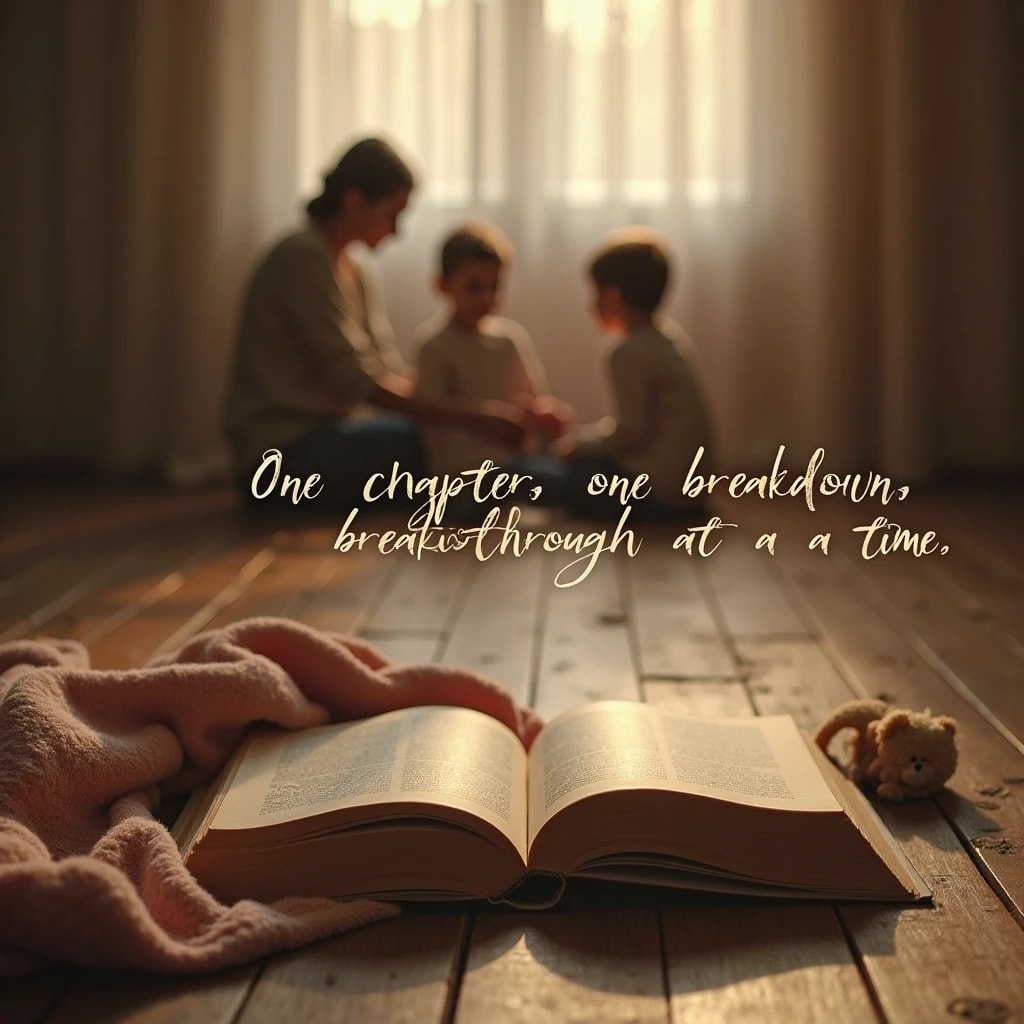
One chapter, one breakdown, one breakthrough at a time

I used to believe that survival was the same as living. That moving forward—day after day, year after year—meant I had healed. But I hadn’t. I had merely become good at pretending. Pretending that the past was over. That I had grown beyond the tears of a child who only wanted to be heard. That I was strong.
But grief has a long memory. And so does the child I once was.
This is the story of how a single book cracked me open, forced me to sit beside the child I had abandoned within myself—and eventually led me to forgiveness, not of others, but of me.
Chapter One: The Voice I Silenced
I didn’t expect to break down in a bookstore.
It was a rainy Thursday afternoon. I had stopped into a cozy little indie shop after a rough therapy session. I wasn’t looking for anything in particular—maybe something light, something distracting. I wasn’t trying to feel anything. I had done enough of that for the day.
But then I saw it. “The Comfort Book” by Matt Haig.
It wasn’t flashy. The cover was simple, the title unassuming. But something about it felt… safe. Or maybe I just needed someone to talk to, and the book felt like a promise that someone would listen.
I bought it on impulse and read the first five pages at the café next door. And that’s when I knew: this wasn’t going to be a light read. This was going to wreck me. In the best way possible.
Chapter Two: The First Breakdown
There’s a passage in that book that reads:
“Nothing is stronger than a small hope that doesn’t give up.”
I read it over and over again, each time feeling a pressure in my chest that I couldn’t name. It wasn’t sadness. Not exactly. It was recognition. As if someone had pulled a memory from my bloodstream.
I remembered being eight, curled up under my blanket with a flashlight, whispering stories to myself because no one else would listen. Stories where I was seen, where I was loved, where I didn’t have to be afraid.
And suddenly, I couldn’t breathe. Right there in that café, surrounded by strangers, I broke. Not loudly. But fully. Quiet tears, clenched jaw, the kind of sob that comes from your gut.
That was the moment I realized: I hadn’t just silenced my inner child. I had exiled them.
Chapter Three: The Mirror of Guilt
Guilt is a sneaky thing.
I didn’t know I was still blaming myself for what happened when I was little. I thought I had grown past that. But the more I read—the more Haig’s words held a mirror up to my pain—the more I saw the truth:
I had hated that child version of me. Blamed them for being too emotional, too needy, too “weird.” I believed if I hadn’t been so much, I wouldn’t have been hurt. If I had just behaved better, maybe they wouldn’t have left. If I had been quieter, stronger, smarter… maybe life would’ve been easier.
The book didn’t shame me for thinking that. It just reminded me that my inner child was innocent. That none of it was their fault.
That alone made me cry for days.
Chapter Four: Writing Letters to the Past
Inspired by the book, I started writing letters to my younger self.
The first one was awkward. I didn’t know what to say. I felt foolish. But soon the words poured out like a broken dam.
“Dear little me, I’m sorry I wasn’t there to protect you…”
“Dear little me, you were never too much…”
“Dear little me, you didn’t deserve their silence…”
Each letter became a ritual. A return. I began to feel their presence again—not as a ghost from the past, but as a soft voice within. Timid at first. Then louder. And braver.
I kept reading the book. Some chapters were no more than a paragraph. But they felt like conversations I’d waited my whole life to have.
Chapter Five: A Breakthrough in the Grocery Store
Grief doesn’t schedule itself.
One day, while walking through the cereal aisle, I saw a box of Cocoa Pebbles—the kind I hadn’t eaten since I was ten. I grabbed it on instinct, and it felt like lightning in my hand.
Suddenly, I was standing in our old kitchen. My mother yelling. Me stirring the milk in silence. My small fists clenched around the spoon. Trying not to cry.
I had buried that memory. But it surfaced, raw and undeniable. And you know what surprised me the most?
I didn’t get angry. I didn’t go numb.
I whispered, right there in the middle of the aisle:
“You didn’t deserve that. I’m sorry I didn’t say this sooner.”
Chapter Six: When Forgiveness Looks Like Rest
One chapter in the book talked about giving yourself permission to rest. Not to earn rest. Just to allow it.
For years, I equated rest with laziness. I had to prove I was useful. Constant motion. Constant productivity. Even therapy felt like another “task.”
But one night, after another breakdown, I wrapped myself in a blanket, laid on the floor, and just breathed.
That night, I didn’t cry. I didn’t think. I just was. And that felt revolutionary.
Forgiving my inner child looked like offering them the things they never received: comfort, patience, stillness.
It looked like whispering: “You’re allowed to stop running now.”
Chapter Seven: One Last Chapter, One New Beginning
As I closed the final pages of The Comfort Book, I realized it had given me more than wisdom—it had given me permission. To grieve. To return. To forgive.
One chapter, one breakdown, one breakthrough at a time.
I still talk to my inner child. Not every day. But often. I buy them things I used to love—coloring books, fuzzy socks, stickers. I ask what they need. I listen.
And the strangest, most beautiful part? They’ve started talking back.
Why This Story Matters (And Might Be Yours Too)
If you’ve ever felt like you were too broken, too far gone, too much for the world—you’re not. You’re just carrying things that were never yours to hold alone.
Sometimes healing doesn’t come from therapy alone. Sometimes it comes from words on a page, at just the right time, from someone who’s walked a similar road.
For me, it was The Comfort Book by Matt Haig.
And that book…
That book made me forgive my inner child.
That book gave me my voice back.
That book helped me return home—to myself.
About the Creator
Muhammad Sabeel
I write not for silence, but for the echo—where mystery lingers, hearts awaken, and every story dares to leave a mark
Keep reading
More stories from Muhammad Sabeel and writers in BookClub and other communities.
Rachel Reviews: Lakefront Wolves by Joseph Deegan
Meet Finn. He's an 18 year old kid who has potential. He's bright with great school scores and he's also an athlete, a footballer of some prowess. He has it all going for him, it would seem, and yet, he's determined to send what could be a well-planned, stable existence firmly off the rails. He drinks, he smokes, he takes drugs, he has violent tendencies and he's in danger of losing not only his mind but all that he holds dear.
By Rachel Deeming14 days ago in BookClub
A New Perspective on Change Arrives in Denver with Lori Montry’s You’re Not the Problem
In a culture that often tells people to try harder, stay disciplined, and push through discomfort, Lori Montry’s upcoming book launch event in Denver offers a different starting point. Her message is simple but powerful. Many of the struggles people blame on themselves may have far deeper roots.
By Chris Adams2 days ago in BookClub



Comments
There are no comments for this story
Be the first to respond and start the conversation.