
The Book of Five Rings
The Book of Five Rings: Mastering Strategy, Combat, and Life's Challengea
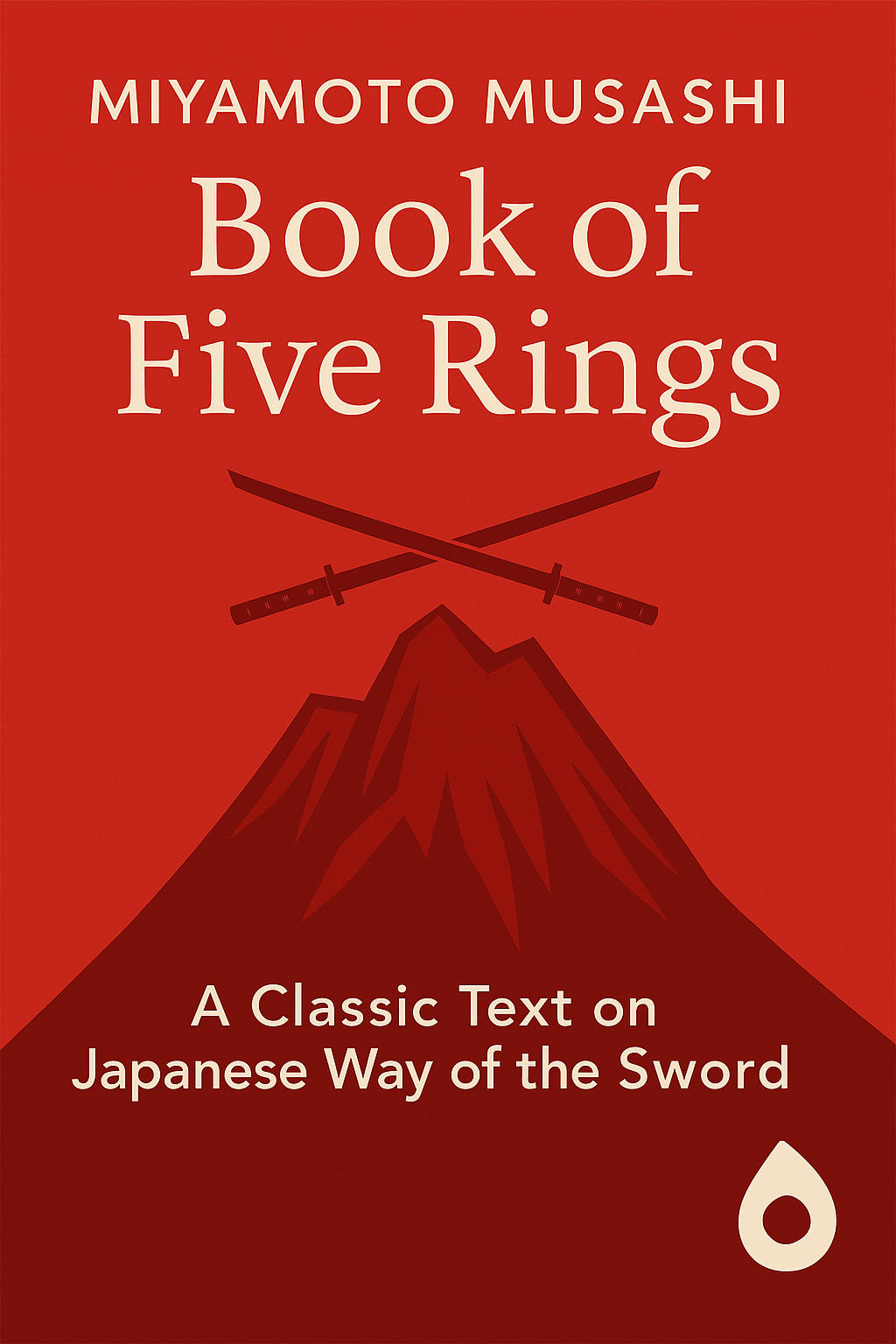
The Book of Five Rings is a classic text on strategy, tactics, and philosophy, written by the legendary Japanese swordsman Miyamoto Musashi. Known for his unique insight into the martial way, Musashi's work provides a timeless framework that has influenced not only martial arts but also business, leadership, and personal development. Written in 1645, shortly before Musashi’s death, The Book of Five Rings outlines his philosophy and approach to combat, which can be applied to various aspects of life.
Introduction to Miyamoto Musashi
Miyamoto Musashi is one of the most famous samurai in Japanese history, renowned for his unique fighting style and his undefeated record in over 60 duels. Born in 1584, he spent much of his life traveling and honing his skills. His most famous achievement was his victory over Sasaki Kojiro, another legendary swordsman, in a duel in 1612. Musashi developed his own style of swordsmanship, known as Niten Ichi-ryū, which emphasized the use of two swords rather than one.
Musashi’s philosophical and strategic insights culminated in The Book of Five Rings, a text that he wrote in his later years. The book is a reflection of his vast experience, blending practical martial skills with spiritual depth. It is divided into five sections: Earth, Water, Fire, Wind, and Void, each representing a different aspect of life and combat.
The Five Rings
The Earth Book
The Earth Book is the first section of Musashi’s treatise, where he lays the groundwork for his philosophy. In this section, he emphasizes the importance of understanding the fundamental principles of strategy. Musashi discusses the role of the martial artist in the world, the importance of discipline, and the necessity of mastering basic techniques. The Earth represents stability, the foundation upon which everything else is built. The Earth Book is about gaining a strong understanding of the fundamentals, both in martial arts and in life.
Musashi compares this foundational knowledge to the concept of "the ground" in combat, where a warrior must stand firm and be resolute. The Earth Book advises that one must always remain grounded in their actions, be calm, and not be easily swayed by external influences. This idea can be applied beyond the battlefield to areas like leadership and decision-making, where foundational principles provide stability and direction.
The Water Book
The Water Book focuses on adaptability and fluidity. Musashi draws a parallel between water, which takes the shape of whatever container it is poured into, and the need for a warrior to be adaptable in all situations. Just as water changes its form, a martial artist must be capable of adjusting to different circumstances and opponents.
In this section, Musashi discusses techniques and strategies for handling different combat situations. He stresses that a warrior should be versatile, able to switch between offense and defense, and adjust to the rhythm and timing of their opponent. Musashi’s teachings here are also deeply philosophical, pointing to the idea that flexibility and the ability to flow with the challenges of life are key to success.
The Fire Book
The Fire Book represents the dynamic and intense aspects of combat, such as aggression, passion, and the decisive moments of battle. Musashi uses the metaphor of fire to explain the power of decisive action and the need for swift, confident moves when the moment is right. Fire symbolizes both destruction and transformation, just as decisive action in combat can lead to victory or defeat.
Musashi emphasizes the importance of maintaining focus and clarity in high-pressure situations, urging the practitioner to strike decisively when the time comes. He also discusses the role of timing and the necessity of a quick, forceful approach to overcome an opponent. This section is about cultivating the inner strength and assertiveness needed to make critical decisions and take bold actions when necessary.
The Wind Book
The Wind Book is a comparative section in which Musashi discusses other schools of martial arts. He examines the strengths and weaknesses of different styles and schools of thought, stressing the importance of understanding the competition. Wind, in this case, symbolizes the knowledge and awareness of the external environment. A true master of strategy must be aware of the strengths, weaknesses, and strategies of others, and be able to exploit this knowledge to their advantage.
This section also offers insight into how one can avoid common pitfalls by understanding the approaches and mindsets of others. In a broader sense, Musashi’s teachings on wind suggest that awareness of one’s surroundings and the strategies of those around them is essential for success. This applies not only in combat but also in leadership, business, and personal development, where understanding competition or other factors allows one to stay ahead.
About the Creator
Keep reading
More stories from Hamza khan and writers in BookClub and other communities.
THE ART OF WAR
The Art of War by Sun Tzu is one of the most influential works on strategy, warfare, and leadership ever written. Composed over 2,500 years ago in ancient China, this timeless classic continues to shape military thinking, business tactics, sports strategy, and even personal development around the world.
By Hamza khan11 months ago in BookClub
Rachel Reviews: Lakefront Wolves by Joseph Deegan
Meet Finn. He's an 18 year old kid who has potential. He's bright with great school scores and he's also an athlete, a footballer of some prowess. He has it all going for him, it would seem, and yet, he's determined to send what could be a well-planned, stable existence firmly off the rails. He drinks, he smokes, he takes drugs, he has violent tendencies and he's in danger of losing not only his mind but all that he holds dear.
By Rachel Deeming12 days ago in BookClub
Julius Evola
The Enigmatic Mind of Julius Evola Twentieth century intellectual history contains a number of figures whose writings continue to provoke debate long after the surrounding political and cultural conditions have faded into the past. Among the most unusual and controversial of these figures stands Julius Evola, an Italian thinker whose work moves across an extraordinary range of intellectual territory. Philosophical reflection, esoteric speculation, cultural criticism, political theory, and comparative religion appear side by side throughout a body of work that resists easy classification.
By Marcus Hedare6 days ago in BookClub


Comments
There are no comments for this story
Be the first to respond and start the conversation.