
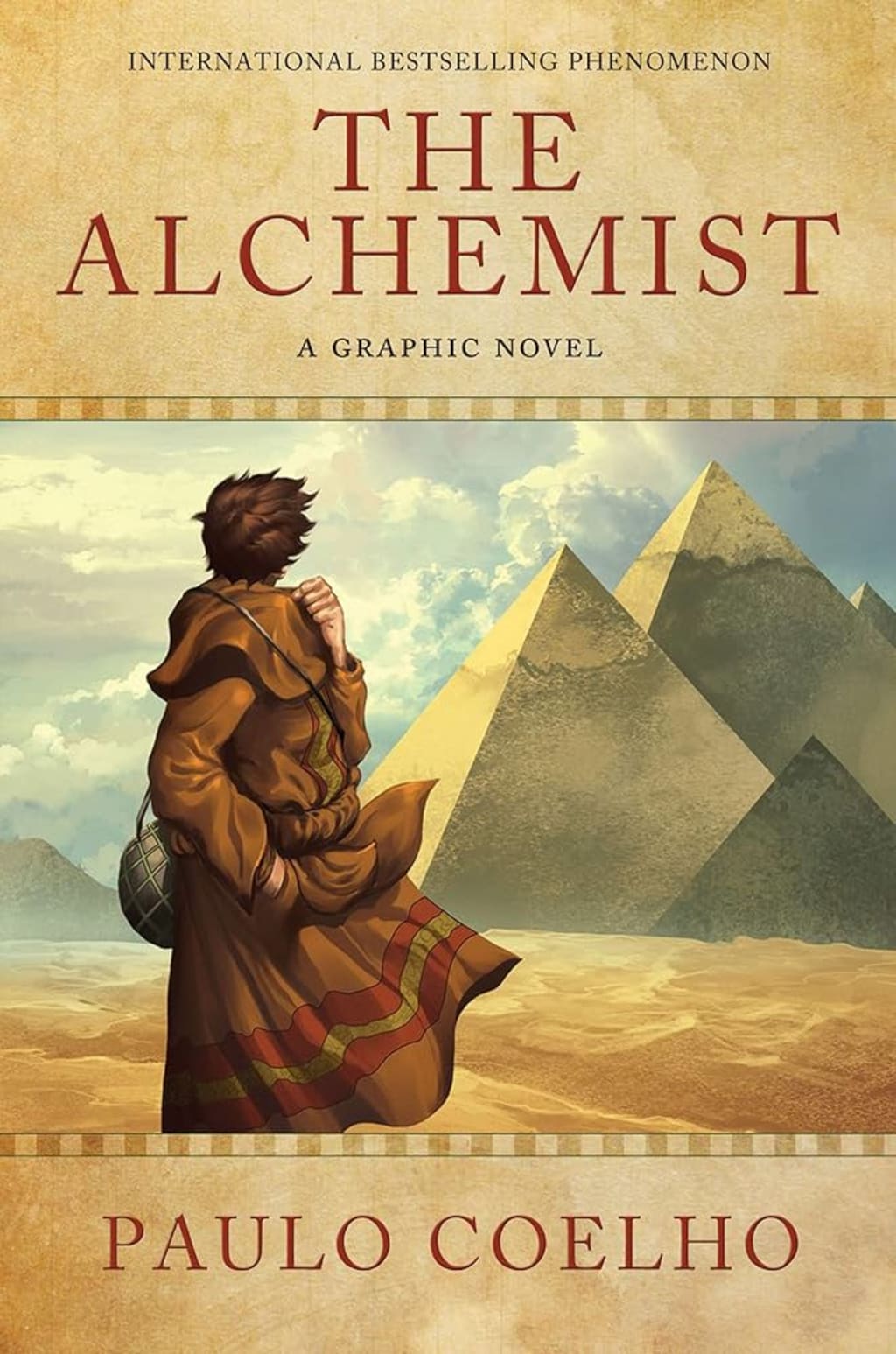
The Alchemist Journey Through the Legendary Story
Part 1

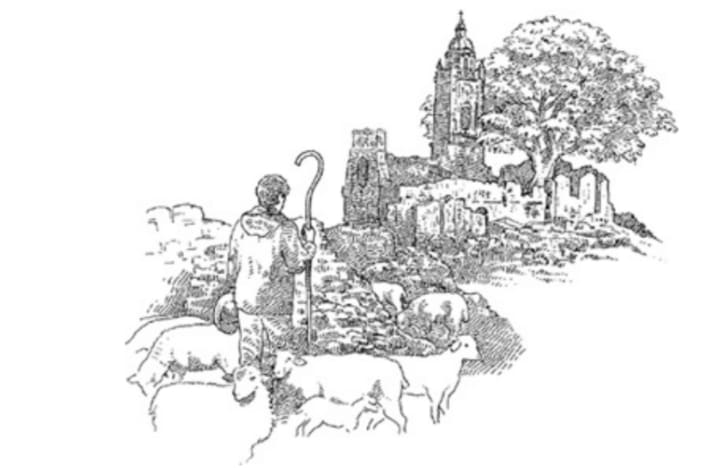
THE BOY’S NAME WAS SANTIAGO. DUSK was falling as the boy arrived with his
herd at an abandoned church. The roof had fallen in long ago, and an enormous
sycamore had grown on the spot where the sacristy had once stood.
He decided to spend the night there. He saw to it that all the sheep entered
through the ruined gate, and then laid some planks across it to prevent the flock
from wandering away during the night. There were no wolves in the region, but
once an animal had strayed during the night, and the boy had had to spend the
entire next day searching for it.
He swept the floor with his jacket and lay down, using the book he had just
finished reading as a pillow. He told himself that he would have to start reading
thicker books: they lasted longer, and made more comfortable pillows.
It was still dark when he awoke, and, looking up, he could see the stars
through the half-destroyed roof.
I wanted to sleep a little longer, he thought. He had had the same dream that
night as a week ago, and once again he had awakened before it ended.
He arose and, taking up his crook, began to awaken the sheep that still slept.
He had noticed that, as soon as he awoke, most of his animals also began to stir.
It was as if some mysterious energy bound his life to that of the sheep, with
whom he had spent the past two years, leading them through the countryside in
search of food and water. “They are so used to me that they know my schedule,”
he muttered. Thinking about that for a moment, he realized that it could be the
other way around: that it was he who had become accustomed to their schedule.
But there were certain of them who took a bit longer to awaken. The boy
prodded them, one by one, with his crook, calling each by name. He had always
believed that the sheep were able to understand what he said. So there were
times when he read them parts of his books that had made an impression on him,
or when he would tell them of the loneliness or the happiness of a shepherd in
the fields. Sometimes he would comment to them on the things he had seen in
the villages they passed.
But for the past few days he had spoken to them about only one thing: the
girl, the daughter of a merchant who lived in the village they would reach in
about four days. He had been to the village only once, the year before. The
merchant was the proprietor of a dry goods shop, and he always demanded that
the sheep be sheared in his presence, so that he would not be cheated. A friend
had told the boy about the shop, and he had taken his sheep there.
“I need to sell some wool,” the boy told the merchant.
The shop was busy, and the man asked the shepherd to wait until the
afternoon. So the boy sat on the steps of the shop and took a book from his bag.
“I didn’t know shepherds knew how to read,” said a girl’s voice behind him.
The girl was typical of the region of Andalusia, with flowing black hair, and
eyes that vaguely recalled the Moorish conquerors.
“Well, usually I learn more from my sheep than from books,” he answered.
During the two hours that they talked, she told him she was the merchant’s
daughter, and spoke of life in the village, where each day was like all the others.
The shepherd told her of the Andalusian countryside, and related the news from
the other towns where he had stopped. It was a pleasant change from talking to
his sheep.
“How did you learn to read?” the girl asked at one point.
“Like everybody learns,” he said. “In school.”
“Well, if you know how to read, why are you just a shepherd?”
The boy mumbled an answer that allowed him to avoid responding to her
question. He was sure the girl would never understand. He went on telling
stories about his travels, and her bright, Moorish eyes went wide with fear and
surprise. As the time passed, the boy found himself wishing that the day would
never end, that her father would stay busy and keep him waiting for three days.
He recognized that he was feeling something he had never experienced before:
the desire to live in one place forever. With the girl with the raven hair, his days
would never be the same again.
But finally the merchant appeared, and asked the boy to shear four sheep. He
paid for the wool and asked the shepherd to come back the following year.
And now it was only four days before he would be back in that same village. He
was excited, and at the same time uneasy: maybe the girl had already forgotten
him. Lots of shepherds passed through, selling their wool.
“It doesn’t matter,” he said to his sheep. “I know other girls in other places.”
But in his heart he knew that it did matter. And he knew that shepherds, like
seamen and like traveling salesmen, always found a town where there was
someone who could make them forget the joys of carefree wandering.
The day was dawning, and the shepherd urged his sheep in the direction of
the sun. They never have to make any decisions, he thought. Maybe that’s why
they always stay close to me.
The only things that concerned the sheep were food and water. As long as the
boy knew how to find the best pastures in Andalusia, they would be his friends.
Yes, their days were all the same, with the seemingly endless hours between
sunrise and dusk; and they had never read a book in their young lives, and didn’t
understand when the boy told them about the sights of the cities. They were
content with just food and water, and, in exchange, they generously gave of their
wool, their company, and—once in a while—their meat.
If I became a monster today, and decided to kill them, one by one, they
would become aware only after most of the flock had been slaughtered, thought
the boy. They trust me, and they’ve forgotten how to rely on their own instincts,
because I lead them to nourishment.
The boy was surprised at his thoughts. Maybe the church, with the sycamore
growing from within, had been haunted. It had caused him to have the same
dream for a second time, and it was causing him to feel anger toward his faithful
companions. He drank a bit from the wine that remained from his dinner of the
night before, and he gathered his jacket closer to his body. He knew that a few
hours from now, with the sun at its zenith, the heat would be so great that he
would not be able to lead his flock across the fields. It was the time of day when
all of Spain slept during the summer. The heat lasted until nightfall, and all that
time he had to carry his jacket. But when he thought to complain about the
burden of its weight, he remembered that, because he had the jacket, he had
withstood the cold of the dawn.
We have to be prepared for change, he thought, and he was grateful for the
jacket’s weight and warmth.
The jacket had a purpose, and so did the boy. His purpose in life was to
travel, and, after two years of walking the Andalusian terrain, he knew all the
cities of the region. He was planning, on this visit, to explain to the girl how it
was that a simple shepherd knew how to read. That he had attended a seminary
until he was sixteen. His parents had wanted him to become a priest, and thereby
a source of pride for a simple farm family. They worked hard just to have food
and water, like the sheep. He had studied Latin, Spanish, and theology. But ever
since he had been a child, he had wanted to know the world, and this was much
more important to him than knowing God and learning about man’s sins. One
afternoon, on a visit to his family, he had summoned up the courage to tell his
father that he didn’t want to become a priest. That he wanted to travel.
“People from all over the world have passed through this village, son,” said his
father. “They come in search of new things, but when they leave they are
basically the same people they were when they arrived. They climb the mountain
to see the castle, and they wind up thinking that the past was better than what we
have now. They have blond hair, or dark skin, but basically they’re the same as
the people who live right here.”
“But I’d like to see the castles in the towns where they live,” the boy
explained.
“Those people, when they see our land, say that they would like to live here
forever,” his father continued.
“Well, I’d like to see their land, and see how they live,” said his son.
“The people who come here have a lot of money to spend, so they can afford
to travel,” his father said. “Amongst us, the only ones who travel are the
shepherds.”
“Well, then I’ll be a shepherd!”
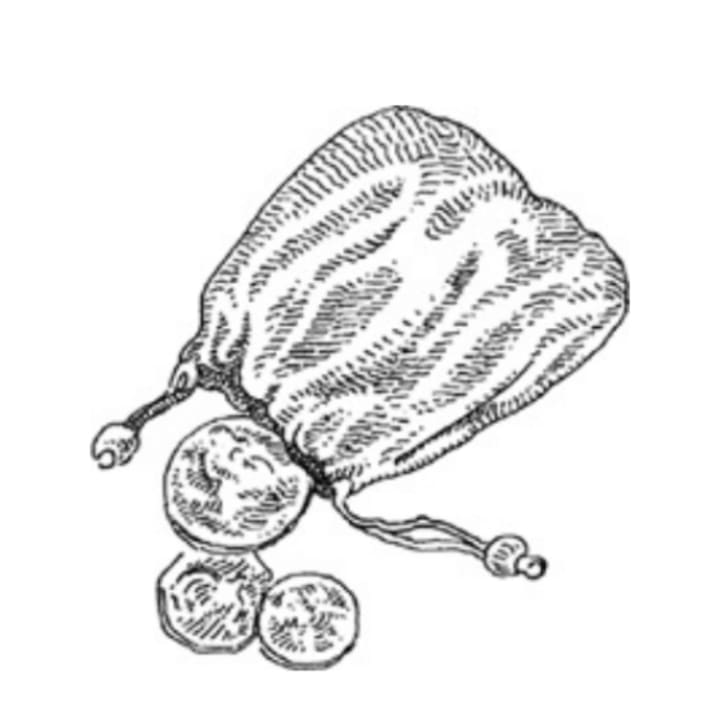
His father said no more. The next day, he gave his son a pouch that held
three ancient Spanish gold coins.
“I found these one day in the fields. I wanted them to be a part of your
inheritance. But use them to buy your flock. Take to the fields, and someday
you’ll learn that our countryside is the best, and our women are the most
beautiful.”
And he gave the boy his blessing. The boy could see in his father’s gaze a
desire to be able, himself, to travel the world—a desire that was still alive,
despite his father’s having had to bury it, over dozens of years, under the burden
of struggling for water to drink, food to eat, and the same place to sleep every
night of his life.
The horizon was tinged with red, and suddenly the sun appeared. The boy
thought back to that conversation with his father, and felt happy; he had already
seen many castles and met many women (but none the equal of the one who
awaited him several days hence). He owned a jacket, a book that he could trade
for another, and a flock of sheep. But, most important, he was able every day to
live out his dream. If he were to tire of the Andalusian fields, he could sell his
sheep and go to sea. By the time he had had enough of the sea, he would already
have known other cities, other women, and other chances to be happy. I couldn’t
have found God in the seminary, he thought, as he looked at the sunrise.
Whenever he could, he sought out a new road to travel. He had never been to
that ruined church before, in spite of having traveled through those parts many
times. The world was huge and inexhaustible; he had only to allow his sheep to
set the route for a while, and he would discover other interesting things. The
problem is that they don’t even realize that they’re walking a new road every
day. They don’t see that the fields are new and the seasons change. All they think
about is food and water.
Maybe we’re all that way, the boy mused. Even me—I haven’t thought of
other women since I met the merchant’s daughter. Looking at the sun, he
calculated that he would reach Tarifa before midday. There, he could exchange
his book for a thicker one, fill his wine bottle, shave, and have a haircut; he had
to prepare himself for his meeting with the girl, and he didn’t want to think about
the possibility that some other shepherd, with a larger flock of sheep, had arrived
there before him and asked for her hand.
It’s the possibility of having a dream come true that makes life interesting, he
thought, as he looked again at the position of the sun, and hurried his pace. He
had suddenly remembered that, in Tarifa, there was an old woman who
interpreted dreams.
READ HERE THE FULL STORY BY SUBSCRIBING SO THAT YOU GET NOTIFICATION ON TIME
About the Creator
MAROOF KHAN
Passionate vocalist captivating audiences with soulful melodies. I love crafting engaging stories as a writer, blending music and creativity. Connect for vocal inspiration!
Keep reading
More stories from MAROOF KHAN and writers in BookClub and other communities.
7 Books To Be More Positive And Confident
In a world that constantly tests our resilience, positivity and confidence are no longer optional—they are essential life skills. Whether we are navigating career challenges, personal relationships, or internal self-doubt, the way we think about ourselves shapes the way we live. The good news? Positivity and confidence can be learned, trained, and strengthened—just like a muscle.
By Diana Meresc3 days ago in BookClub




Comments
There are no comments for this story
Be the first to respond and start the conversation.