
Ten children, abducted in broad daylight, and buried alive
A Deep Dive into Such Quiet Girls by Noelle W. Ihli
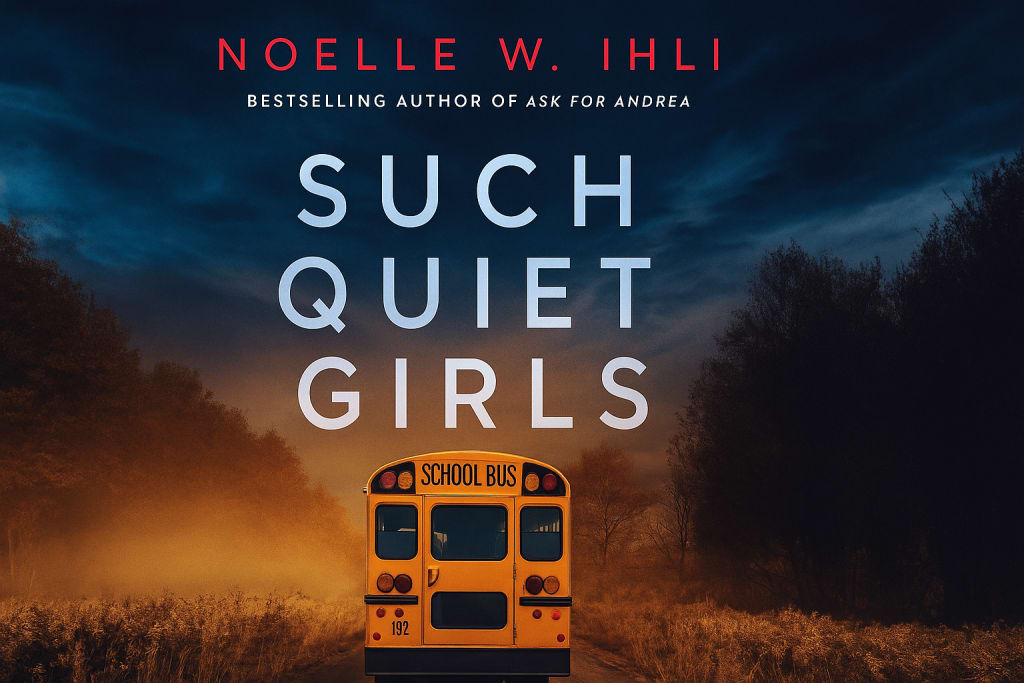
Inspired by shocking real events
It begins in daylight. A school bus. A sunny road. Ten children. A seemingly ordinary day turns into every parent’s nightmare when the bus disappears—and with it, innocence vanishes underground.
Such Quiet Girls by Noelle W. Ihli is not just another psychological thriller; it’s a harrowing story of survival, trauma, resilience, and the haunting duality of hope and darkness. Inspired by a chilling true event, the novel captures the reader in a claustrophobic grip, refusing to let go until the final page. In this in-depth exploration, we’ll unpack the plot, themes, characters, and why Such Quiet Girls hits harder than most thrillers on today’s shelves.
(Now you have the opportunity to listen to the audiobook for free by clicking HERE.)
Plot: Trapped Beneath and Torn Above
At its core, Such Quiet Girls is a survival thriller. The inciting event is brutally simple: a school bus is hijacked in broad daylight. Ten children and their bus driver, Jessa, are abducted and forced into a shipping container buried twenty feet underground. Among the children are Sage and Bonnie Halverson, sisters whose bond becomes a central emotional thread throughout the novel.
The air inside the container quickly turns foul. Supplies are limited. Time is running out. The kidnappers—Ted and Andy—make their demands, but only one parent receives the ransom note: Sheena Halverson, mother of Sage and Bonnie. Already overwhelmed by the demands of caregiving for her father with Alzheimer’s, Sheena is now plunged into an unthinkable position—trying to save her daughters while the authorities remain unaware and the clock ticks.
What follows is a dual race against time: below ground, the children and Jessa fight to stay alive and find a way to escape; above ground, Sheena makes life-altering decisions to meet the kidnappers’ demands. With the story told from alternating perspectives—Jessa, Sage, Sheena, and even one of the kidnappers, Ted—the narrative constructs a multi-faceted emotional and psychological web.
Themes: Claustrophobia, Courage, and the Cost of Silence
1. Survival and Resilience
The most immediate theme is physical survival, but the book goes deeper than that. Ihli explores the psychological dimensions of being buried alive, both literally and metaphorically. Twelve-year-old Sage emerges as the unexpected hero—bold, bright, and desperate to escape. Her actions, including clawing through the container walls and rallying the other children, exemplify youthful courage that borders on defiance.
Jessa, initially dismissed by readers as passive, undergoes a slow transformation into a maternal protector. She becomes Sage’s unlikely ally and the children’s lifeline in the face of despair.
2. Trauma and Psychological Impact
Claustrophobia is not just a physical space here—it’s an emotional reality. Ihli doesn’t rely on gore or graphic violence; instead, she tightens the psychological screws. Readers are thrust into a container that feels smaller with every page. Fear becomes a character of its own.
Through Jessa and Sheena, we see how past trauma lingers like an unhealed wound. Jessa's backstory—having killed her abusive husband and lost custody of her daughter—bleeds into her choices in the container. Sheena, on the other hand, is torn between present-day panic and the slow, grating helplessness of being one step behind her daughters’ suffering.
3. Family, Bonds, and Maternal Instinct
The novel deeply honors the idea that families under pressure either fracture or fuse. The sisterly relationship between Sage and Bonnie offers moments of sweetness and heartbreak, especially as Sage fights to protect Bonnie in the darkness.
Meanwhile, Sheena’s chapters pulse with a parent’s worst fear. Her love, guilt, and drive to save her daughters create a relentless emotional anchor for the narrative. It’s not just a story of kids trying to get out; it’s a story of a mother doing everything in her power to pull them back into the light.
4. Redemption and Moral Ambiguity
Ted, one of the kidnappers, is granted a point of view—a bold choice in a novel with such high emotional stakes. This narrative move introduces a layer of moral complexity. Ted seems to waver. He questions the plan. He considers backing out. There are hints of a conscience buried under complicity.
While some readers found this arc frustrating or underdeveloped, it nevertheless raises compelling questions: Can evil be undone by regret? What does redemption look like when it comes too late? And does understanding a villain ever excuse them?
5. Hope Versus Darkness
Despite its chilling premise, Such Quiet Girls offers a glimmer of something redemptive. It’s a novel that acknowledges the darkness in the world but insists that light fights back. The characters—especially Sage, Jessa, and Sheena—are vessels of that light. Their refusal to surrender becomes a declaration: even underground, hope grows.
Characters: Multi-Dimensional and Emotionally Raw
Sage Halverson
Sage, only twelve, is the oldest of the kidnapped children and the most resourceful. Her voice is confident and compelling, leading many readers to root for her above all others. While some critics questioned the realism of her maturity, most embraced her as a symbol of resilience. She is not just a child victim—she’s a survivor in every sense.
Jessa (The Bus Driver)
Haunted by a dark past and initially seen as weak or frozen by trauma, Jessa’s growth arc is one of the most satisfying in the novel. From the moment she’s pushed into the container, she begins a slow evolution—rediscovering her instinct to protect, finding strength in her connection to the children, especially Sage. Jessa’s story is about reclaiming agency in a world that had stripped her of it.
Sheena Halverson
Sheena is a working mother caught in the chaos of caregiving and crisis. Her chapters are less action-heavy but arguably the most emotionally brutal. She’s the only parent to receive the ransom demand. Every second of her indecision, her panic, her desperate strategizing is soaked in fear and maternal grief. Her struggle adds emotional depth to the novel and raises difficult questions about responsibility, courage, and the limits of control.
Ted (The Kidnapper)
Ted’s chapters introduce the novel’s most controversial element—perspective from the “enemy.” We glimpse his motivations, doubts, and moments of internal struggle. Though not fully redeemed, he is humanized, forcing readers to confront the uncomfortable reality that villains are not always monsters—they are sometimes just weak men who make horrific choices.
A Fast-Paced Thriller with Lasting Impact
Such Quiet Girls is a rare thriller that balances breakneck tension with emotional richness. It’s not just about “what happens next,” but about what it means for the characters—and for us. The novel doesn’t shy away from heavy themes like child endangerment, trauma, and moral ambiguity. But it handles them with care, focusing on the human psyche rather than sensationalism.
The pacing is relentless. The shifts in perspective add complexity without slowing momentum. And the ending? A chaotic, breathless convergence of storylines that leaves the reader both shaken and satisfied.
Content Warnings and Sensitivities
Ihli deals with dark material, and readers should be aware of the content: kidnapping, child endangerment, psychological trauma, domestic abuse (referenced), and claustrophobia. However, the book avoids gratuitous violence and instead leans heavily into suspense and emotional weight.
Conclusion: A Gripping Tale of Fear, Fortitude, and Family
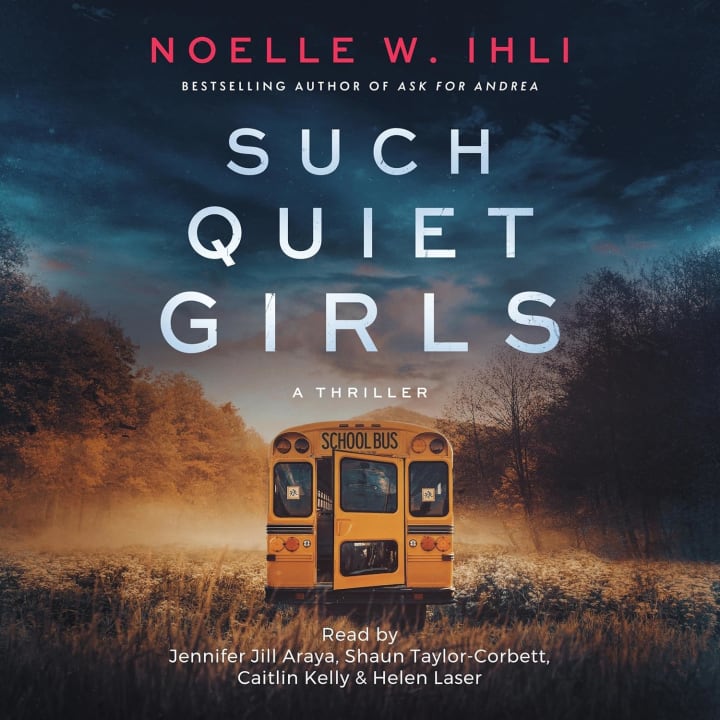
Such Quiet Girls is more than a thriller. It’s an examination of how people break—and how they heal. It’s about the unthinkable choices mothers make, the courage children can summon, and the way strangers become family in crisis.
For readers who crave thrillers with emotional depth, morally complex characters, and unrelenting suspense, this book delivers in spades. It grips your mind with fear and your heart with empathy.
Recommended for: Fans of Room by Emma Donoghue, Then She Was Gone by Lisa Jewell, or anyone looking for a psychological hurricane in novel form. Just don’t read it in an enclosed space.
(Now you have the opportunity to listen to the audiobook for free by clicking HERE.)
About the Creator
Francisco Navarro
A passionate reader with a deep love for science and technology. I am captivated by the intricate mechanisms of the natural world and the endless possibilities that technological advancements offer.
Keep reading
More stories from Francisco Navarro and writers in BookClub and other communities.
The Tenant by Freida McFadden
It began with a creak. That kind of sound that slices through the dark, too deliberate to be old pipes, too intimate to dismiss. I remember thinking, “This house is trying to tell me something.” Of course, it wasn’t. Houses don’t speak. They watch. They wait. Or so Freida McFadden would have us believe in The Tenant, where poor Blake doesn’t get off that easy. When your own home starts to feel less like shelter and more like a Venus flytrap, the only sane move is to flee. Blake, naturally, sticks around. Mistake number one. Of many.
By Francisco Navarro8 months ago in BookClub
Rachel Reviews: The Spiral Archive by Pieter Hendrik
It's difficult for me to know where to start with a review of this book as it was, for me, an entirely unique experience and one that I'll probably never have again. I don't want that to be interpreted as unenjoyable but it has left me scratching my head a little and ruminating on its content, its themes and its characters.
By Rachel Deeminga day ago in BookClub
7 Books About Friendship You Should Read In 2026
It shapes our identities, nurtures our emotional well-being, and provides a sense of belonging in an often chaotic world. But how do we understand friendship in its many forms—loyalty, conflict, growth, and loss? One of the most effective ways is through literature. Books about friendship allow us to explore relationships through the lens of compelling narratives, offering insights that are both timeless and deeply personal.
By Diana Meresc3 days ago in BookClub


Comments
There are no comments for this story
Be the first to respond and start the conversation.