
Summary: The Metamorphosis by Franz Kafka
The Metamorphosis by Franz Kafka is one of the most iconic and influential works of modern literature. First published in 1915, this novella tells the story of Gregor Samsa, a traveling salesman who wakes up one morning to find himself transformed into a giant insect.

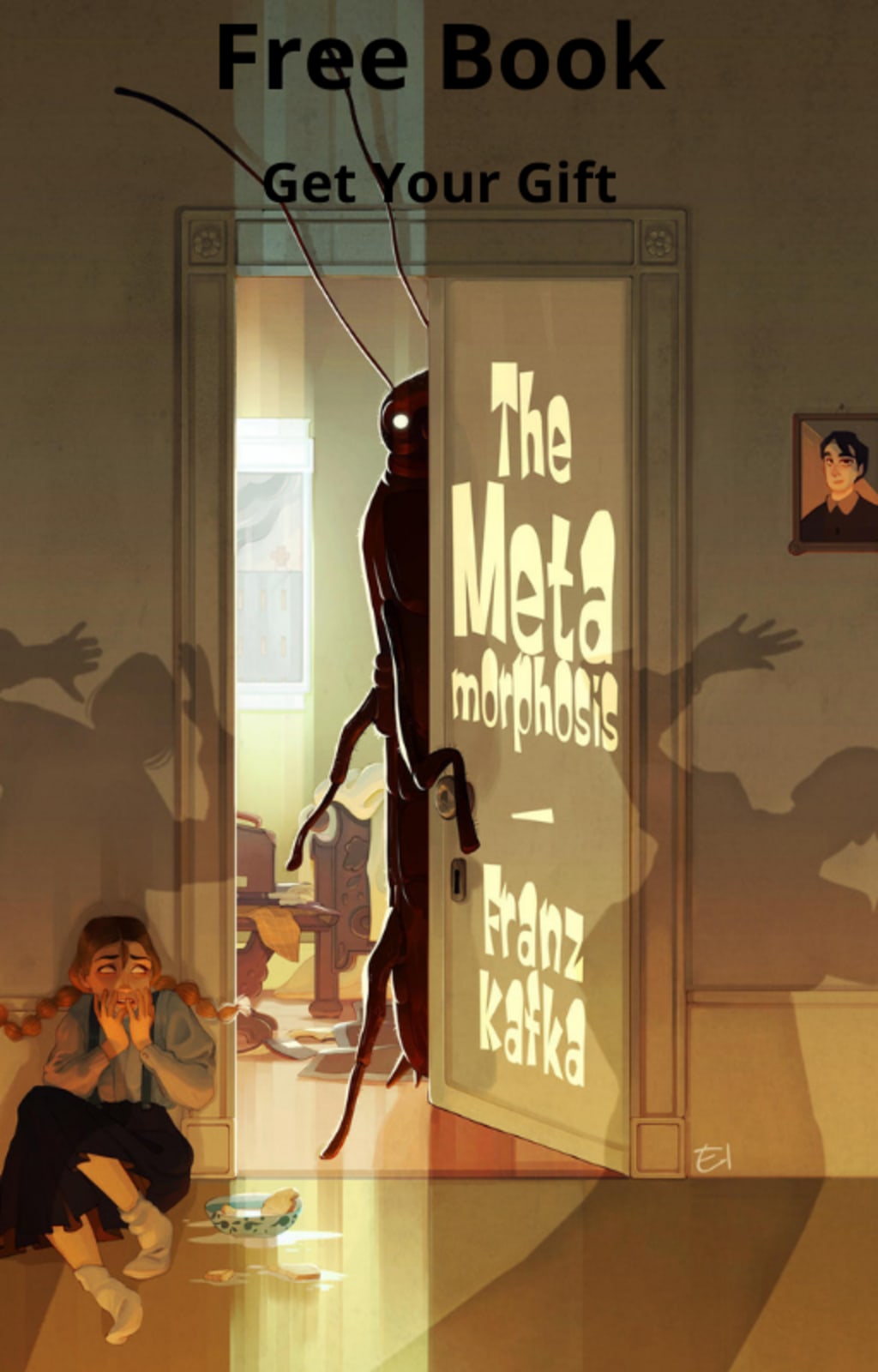
Get Your Free book The Metamorphosis here:
The Metamorphosis by Franz Kafka
The Metamorphosis by Franz Kafka is one of the most iconic and influential works of modern literature. First published in 1915, this novella tells the story of Gregor Samsa, a traveling salesman who wakes up one morning to find himself transformed into a giant insect. Kafka’s tale of alienation, identity, and existential despair has captivated readers for over a century, making The Metamorphosis a seminal work in the canon of existential literature.
In this blog post, we will explore the intricate layers of The Metamorphosis, providing a detailed summary of the plot, an analysis of the characters, a discussion of the central themes, and an exploration of Kafka’s unique writing style. Whether you are reading Kafka for the first time or revisiting this classic work, this summary will offer insights into the profound and unsettling world of The Metamorphosis.
Get Your Free book The Metamorphosis here:
A Dark Transformation
The story of The Metamorphosis begins with an unforgettable scene: Gregor Samsa, a hardworking traveling salesman, wakes up in his bed to discover that he has been transformed into a gigantic insect. Despite his shock and confusion, Gregor’s first thoughts are not for himself but for his job and the responsibilities he bears as the breadwinner for his family. His inability to leave his bed and go to work, however, soon draws the attention of his family and his employer, who come to check on him.
Gregor’s transformation sets off a chain of events that disrupt the lives of everyone in his household. His family—his father, mother, and sister Grete—are horrified by his new form and struggle to come to terms with the creature that has replaced their son and brother. Initially, they attempt to care for Gregor, but as time passes, their patience and sympathy wear thin. Gregor’s presence becomes a burden, and the family’s treatment of him grows increasingly cold and neglectful.
As Gregor becomes more isolated, his sense of humanity begins to fade. He loses interest in the things that once brought him joy, such as his love for his sister and his dreams of sending her to music school. His physical condition deteriorates, and he retreats further into the shadows of his room, hiding from the world that has rejected him.
The climax of the novella comes when Gregor’s family decides that they can no longer tolerate his existence. After a tense confrontation with his sister, who has become his primary caregiver, Gregor retreats to his room, where he eventually succumbs to his injuries and dies. The story ends with the family feeling a sense of relief and liberation after Gregor’s death, and they begin to look forward to a brighter future without him.
The Metamorphosis is a story of transformation, not just in a physical sense but also in the emotional and psychological changes that occur within Gregor and his family. Kafka’s portrayal of Gregor’s descent into isolation and despair is both poignant and disturbing, making the novella a powerful exploration of the human condition.
Get Your Free book The Metamorphosis here:
A Family in Crisis
The characters in The Metamorphosis are defined by their responses to Gregor’s transformation, each reacting in ways that reveal their deepest fears and desires. Gregor Samsa, the protagonist, is a complex character whose metamorphosis serves as a metaphor for his alienation from society and his family. Before his transformation, Gregor is a dutiful son who works tirelessly to support his family, but he is also trapped in a job he despises and burdened by the expectations placed upon him. His sudden transformation into an insect symbolizes his internal feelings of worthlessness and dehumanization, as he becomes physically what he has long felt emotionally.
Gregor’s father, Mr. Samsa, initially reacts to his son’s transformation with anger and violence. A man who has relied on Gregor’s income to support the family, Mr. Samsa is forced to take on the role of provider after Gregor can no longer work. His resentment toward Gregor grows as the story progresses, and he becomes increasingly harsh and distant, embodying the role of the authoritarian figure who rejects what he cannot control or understand.
Mrs. Samsa, Gregor’s mother, is a more sympathetic character but is ultimately powerless to help her son. Her love for Gregor is overshadowed by her horror at his new form, and she is unable to reconcile her maternal instincts with her fear and revulsion. Throughout the novella, Mrs. Samsa is portrayed as fragile and emotionally unstable, torn between her desire to care for Gregor and her need to protect herself from the reality of his transformation.
Grete Samsa, Gregor’s sister, undergoes the most significant character development in the story. At the beginning of the novella, Grete is a loving sister who takes on the responsibility of caring for Gregor, bringing him food and trying to make him comfortable. However, as the burden of Gregor’s care becomes too much for her to bear, she begins to distance herself from him. By the end of the story, Grete has transformed from a compassionate caregiver into a young woman who advocates for Gregor’s removal from the family home, seeing him as nothing more than a monstrous obstacle to their future happiness.
The characters in The Metamorphosis are not just figures in Gregor’s life; they represent the different aspects of society’s response to those who are different or marginalized. Kafka’s portrayal of the Samsa family is a powerful commentary on the fragility of human relationships and the ease with which love and compassion can turn into indifference and cruelty.
Get Your Free book The Metamorphosis here:
Alienation, Identity, and the Absurd
The Metamorphosis is rich in themes that have resonated with readers and scholars alike for over a century. One of the central themes of the novella is alienation. Gregor’s transformation into an insect serves as a physical manifestation of the alienation he already feels from his family, his job, and society at large. As he becomes increasingly isolated from the world, Kafka explores the ways in which individuals can be estranged from their own lives, their bodies, and their relationships. Gregor’s metamorphosis is both a cause and a result of his alienation, highlighting the cyclical nature of this existential condition.
Identity is another key theme in The Metamorphosis. Gregor’s transformation forces him to confront the fragility of his own identity, as he is no longer recognized as the person he once was. The novella raises questions about what it means to be human and how identity is shaped by external factors such as work, family, and societal expectations. Gregor’s loss of his human form symbolizes the loss of his identity, as he becomes something unrecognizable even to himself.
The theme of the absurd is also central to Kafka’s work. The Metamorphosis presents a world where the inexplicable happens without reason or explanation, reflecting the absurdity of existence. Gregor’s transformation is never explained, and the reactions of those around him are often irrational and contradictory. Kafka’s use of the absurd highlights the arbitrary and often senseless nature of human life, where individuals are subject to forces beyond their control and comprehension.
In The Metamorphosis, Kafka masterfully weaves together themes of alienation, identity, and the absurd to create a narrative that is both deeply personal and universally relatable. The novella invites readers to reflect on their own lives and the ways in which they are shaped by the forces of society, family, and fate.
Get Your Free book The Metamorphosis here:
A Master of the Surreal
Franz Kafka’s writing style is characterized by its clarity, precision, and the ability to convey complex ideas through simple, almost clinical language. In The Metamorphosis, Kafka’s prose is straightforward, yet it carries a profound emotional weight. He describes Gregor’s transformation and the subsequent events with a matter-of-fact tone that contrasts sharply with the surreal and horrifying nature of the story. This juxtaposition creates a sense of unease and disorientation, drawing the reader into the absurdity of Gregor’s situation.
Kafka’s use of symbolism is also a defining feature of his style. The transformation of Gregor into an insect is the most obvious symbol in the novella, representing his alienation and dehumanization. However, Kafka also uses other symbols throughout the story, such as the locked door of Gregor’s room, which signifies his isolation and the barriers between him and the outside world. The figure of the insect itself can be interpreted in various ways, from a symbol of Gregor’s perceived worthlessness to a representation of the burden he has become to his family.
Another hallmark of Kafka’s style is his focus on the inner lives of his characters. In The Metamorphosis, much of the narrative is devoted to Gregor’s thoughts and feelings as he grapples with his new reality. Kafka delves into the psychological and emotional aspects of Gregor’s experience, offering readers a window into his inner turmoil. This focus on the subjective experience of the protagonist is a key element of Kafka’s work, contributing to the novella’s intense and claustrophobic atmosphere.
Kafka’s writing style in The Metamorphosis is both spare and evocative, allowing readers to project their own interpretations onto the story while guiding them through the surreal landscape of Gregor’s world. His ability to blend the mundane with the extraordinary, the realistic with the fantastical, makes The Metamorphosis a timeless and enduring work of literature.
Get Your Free book The Metamorphosis here:
Conclusion: A Timeless Exploration of the Human Condition
The Metamorphosis by Franz Kafka is a profound and unsettling exploration of the human condition, touching on themes of alienation, identity, and the absurdity of existence. Through the story of Gregor Samsa’s transformation, Kafka invites readers to reflect on their own lives and the forces that shape their identities and relationships. The novella’s enduring relevance and
About the Creator
Marcos Martins da silva
Unlock the power of reading with book summaries across all genres. Discover how great your next read can be.
Keep reading
More stories from Marcos Martins da silva and writers in BookClub and other communities.
Summary Revelation Space by Alastair Reynolds
Summary Revelation Space by Alastair Reynolds "Revelation Space" by Alastair Reynolds is a cornerstone of modern science fiction. Published in 2000, this novel marked the beginning of Reynolds' career as a writer and the first installment in a series that would come to define the space opera genre in the 21st century. The story is set in a far-future universe where humanity has spread across the stars, encountering ancient alien civilizations and grappling with the mysteries of existence. Combining hard science fiction with intricate plotting and deep philosophical questions, "Revelation Space" offers a complex and compelling narrative that challenges the reader's perceptions of life, technology, and the cosmos.
By Marcos Martins da silvaabout a year ago in BookClub
My New Book is Finally Here
My poetry collection Beautiful and Brutal Things is done. It's actually done and finally published over 270 pages. Over a year of my life went into this book. More than a year, really. Long days at my computer, sometimes seven days a week because I couldn't stop even when I probably should have. Then two months of editing that felt harder than the writing itself. But it's finished, and I'm still standing, and the book is real.
By Tim Carmichael9 days ago in BookClub
7 Books For When Life Has No Meaning
Life can sometimes feel like an endless loop of monotony, uncertainty, or existential emptiness. When we face moments of profound disillusionment or a sense of purposelessness, it’s natural to seek guidance, comfort, or insight from the experiences of others. Books have a unique power to illuminate our inner world, offering clarity, reflection, and sometimes, a roadmap toward rediscovering meaning. Below is a list of 7 books for when life has no meaning.
By Diana Meresc2 days ago in BookClub




Comments
There are no comments for this story
Be the first to respond and start the conversation.