
Summary: The Ladies of Grace Adieu and Other Stories by Susanna Clarke
The Ladies of Grace Adieu and Other Stories by Susanna Clarke is a collection of enchanting and whimsical short stories, set in the same richly imagined world as her acclaimed novel Jonathan Strange & Mr Norrell.


Get Your Free Book The Ladies of Grace Adieu and Other Stories Here:
The Ladies of Grace Adieu and Other Stories by Susanna Clarke
The Ladies of Grace Adieu and Other Stories by Susanna Clarke is a collection of enchanting and whimsical short stories, set in the same richly imagined world as her acclaimed novel Jonathan Strange & Mr Norrell. This collection explores magic, folklore, and the subtle power of storytelling, bringing readers deeper into the world of Faerie and the enigmatic ways of magicians. With Clarke’s characteristic blend of historical fiction and fantasy, the stories are infused with wit, charm, and the dark undercurrents of the supernatural.
This blog post will break down the major themes, stories, and characters found in The Ladies of Grace Adieu, offering insights into how Clarke weaves historical realism with fantastical elements. We’ll examine the significance of the stories and how they expand upon the mythology introduced in Jonathan Strange & Mr Norrell.
Get Your Free Book The Ladies of Grace Adieu and Other Stories Here:
Magical Feminine Power in "The Ladies of Grace Adieu"
The titular story, "The Ladies of Grace Adieu," centers on three women who live in a small English village and practice magic in secret. Set against the backdrop of the early 19th century, the story challenges the male-dominated magical world established in Jonathan Strange & Mr Norrell. These women are not content to let men hold power over the mystical arts, and through their magic, they subvert societal expectations.
Clarke uses this story to explore themes of feminine power and independence. The women of Grace Adieu practice their magic quietly but with great skill, showing how power can exist outside traditional structures of authority. In contrast to the male magicians of Clarke's broader universe, who often rely on books and formal education, these women draw on older, intuitive forms of magic, connected to nature and folklore.
The tension between male and female magic is an undercurrent throughout the story, and Clarke deftly explores the theme of agency and control. The story itself is one of quiet rebellion, illustrating how women throughout history have found ways to resist and reclaim power, even in societies that seek to repress them.
Get Your Free Book The Ladies of Grace Adieu and Other Stories Here:
Faerie and the Supernatural
Throughout the collection, the world of Faerie plays a significant role, and many stories focus on the boundary between the human and faerie realms. In "On Lickerish Hill," for example, Clarke retells the classic Rumpelstiltskin tale but infuses it with her own brand of magical realism. Set in the English countryside, the story follows a young woman who must outwit a mysterious faerie creature to save her husband. The language and structure of the story mirror old English folktales, but Clarke’s treatment of the faerie world adds a layer of complexity and darkness.
Faerie in Clarke’s world is not merely a place of whimsy; it is a realm where power, deception, and the rules of human morality don’t always apply. Faeries are capricious and dangerous, as seen in stories like "Mrs Mabb," where the protagonist is caught in a conflict with a faerie woman who has enchanted the man she loves. The supernatural forces in Clarke's stories reflect human fears and desires, and her faeries embody the unpredictability of nature itself.
Clarke’s depiction of Faerie adds depth to the collection, offering readers a sense of otherworldly beauty while maintaining a subtle menace that underscores the unpredictable nature of magic.
Get Your Free Book The Ladies of Grace Adieu and Other Stories Here:
Historical and Literary Influences
One of the most fascinating aspects of The Ladies of Grace Adieu is how Susanna Clarke incorporates historical and literary influences into her storytelling. The collection’s stories draw heavily on English history, folklore, and 19th-century literature, blending these elements seamlessly into her fictional world. For readers familiar with Jonathan Strange & Mr Norrell, these stories provide a richer understanding of the historical context in which magic operates.
In "Mr Simonelli or The Fairy Widower," Clarke introduces a protagonist who writes in the style of a Victorian diary, recounting his encounter with a faerie widower intent on marrying one of the local women. This story blends the Gothic tradition with faerie folklore, reflecting the anxieties and preoccupations of the Victorian period. Clarke’s narrative style mimics that of classic writers like Jane Austen or the Brontës, but with the added twist of magical intervention.
This historical grounding provides the collection with a sense of realism, even as the fantastical elements become more pronounced. Clarke’s attention to detail in the setting, language, and manners of her characters adds a layer of authenticity to the magical events, making the stories feel as though they are genuine relics from a forgotten past.
Get Your Free Book The Ladies of Grace Adieu and Other Stories Here:
The Role of Storytelling and Myth
Another key theme in The Ladies of Grace Adieu is the power of storytelling itself. Clarke often plays with the idea that stories and myths are more than just entertainment—they hold real power in shaping both the magical and mundane worlds. In the story "John Uskglass and the Cumbrian Charcoal Burner," a simple charcoal burner defeats the powerful Raven King not through strength or magic, but through a simple, almost humorous act of defiance. This story emphasizes the idea that legends and folktales can subvert expectations, allowing even the most humble characters to triumph over the mighty.
Clarke’s use of myth and storytelling is not just a backdrop for her tales—it is an active force that shapes the events of the narrative. The stories in this collection show how the characters’ understanding of magic is tied to their understanding of the world through folklore and legend. By tapping into these ancient narratives, Clarke blurs the line between myth and reality, suggesting that the stories we tell shape the world we live in.
Get Your Free Book The Ladies of Grace Adieu and Other Stories Here:
Conclusion
The Ladies of Grace Adieu and Other Stories is a captivating collection that showcases Susanna Clarke’s talent for blending history, fantasy, and folklore into richly layered narratives. The stories explore themes of power, magic, and the nature of storytelling, offering readers a deeper look into the world first introduced in Jonathan Strange & Mr Norrell. Each tale is imbued with a sense of wonder and danger, making the collection a must-read for fans of literary fantasy and historical fiction alike.
Clarke’s unique voice shines through in every story, whether she’s retelling a familiar folktale or exploring new corners of her magical universe. For readers who appreciate carefully crafted worlds where the supernatural seamlessly coexists with the everyday, The Ladies of Grace Adieu offers a rich and rewarding journey into the mystical and the unknown.
About the Creator
Marcos Martins da silva
Unlock the power of reading with book summaries across all genres. Discover how great your next read can be.
Keep reading
More stories from Marcos Martins da silva and writers in BookClub and other communities.
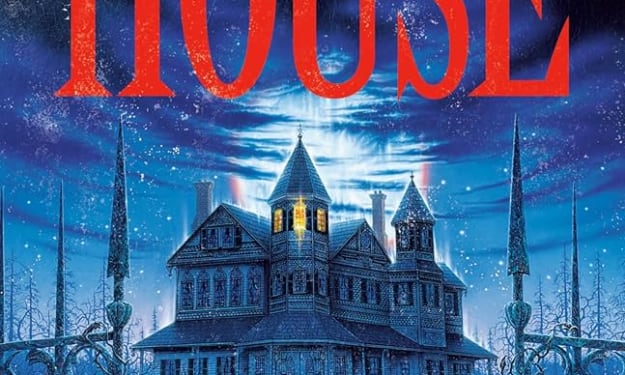
Summary: The House by Bentley Little
Get Your Free Book The House Here: The House by Bentley Little Bentley Little’s The House is a horror novel that explores the dark and sinister nature of our most familiar spaces—our homes. Known for his ability to create eerie atmospheres and slow-building dread, Little’s novel takes the concept of the haunted house to a new level, intertwining psychological terror with supernatural elements. The story follows five estranged characters who are mysteriously drawn back to their childhood homes by a series of bizarre and terrifying events, forcing them to confront their pasts and the strange forces at work within these seemingly normal structures.
By Marcos Martins da silvaabout a year ago in BookClub
My New Book is Finally Here
My poetry collection Beautiful and Brutal Things is done. It's actually done and finally published over 270 pages. Over a year of my life went into this book. More than a year, really. Long days at my computer, sometimes seven days a week because I couldn't stop even when I probably should have. Then two months of editing that felt harder than the writing itself. But it's finished, and I'm still standing, and the book is real.
By Tim Carmichael4 days ago in BookClub
Romance with a Twist (of the Knife)
Welcome to The Chapter Café, where every page is served with a drizzle of desire and a drop of blood. I’m your host, Kristen, and today we’re swirling roses and razor blades in a heady cocktail of passion and peril. Prepare to sip on secrets stained red and savor stolen glances that might end in a deadly twist.
By Kristen Barenthaler6 days ago in BookClub
Smart phones, Humans and Aliens.
WARNING. I will be tapping into one of your favorite creative tensions: The absurdity of humans worshipping their glowing rectangles as if they were tiny oracles. There’s something deliciously poetic about that contradiction, and it lends itself beautifully to an instructive proviso.
By Novel Allen5 days ago in Poets



Comments
There are no comments for this story
Be the first to respond and start the conversation.