
Summary: Orbital Decay by Allen Steele
First published in 1989, this novel is the first in Steele’s Near-Space series, which focuses on the lives of workers in space who face not just the physical challenges of their environment but also the socio-political complexities of their time.

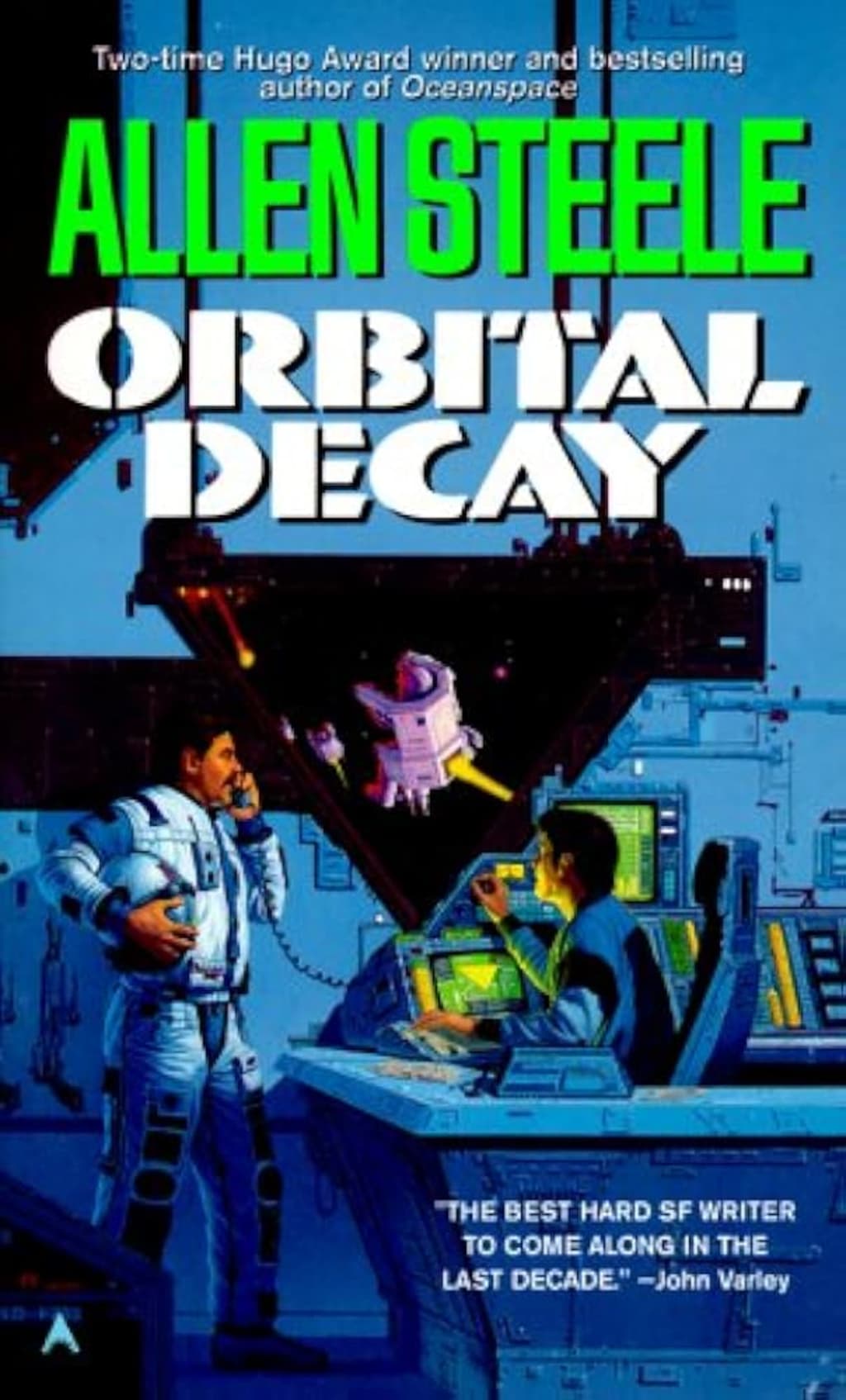
Get Your Free Book Orbital Decay Here
Orbital Decay by Allen Steele
Orbital Decay by Allen Steele is a gripping science fiction novel that blends elements of space exploration with a deeply human story. First published in 1989, this novel is the first in Steele’s Near-Space series, which focuses on the lives of workers in space who face not just the physical challenges of their environment but also the socio-political complexities of their time. Orbital Decay captures the tension between the promise of space as a new frontier and the reality of it being exploited by corporate and government interests. The novel is notable for its realistic depiction of life in space and its exploration of themes such as freedom, surveillance, and the struggle for autonomy.
In this blog post, we will delve into the plot of Orbital Decay, introduce the key characters, discuss the central themes, and explore the writing style that makes this novel a standout in the realm of hard science fiction.
Get Your Free Book Orbital Decay Here
A Story of Rebellion in Space
The plot of Orbital Decay is set in the near future, during the construction of an orbiting space station called the Olympus Station, located in geostationary orbit above Earth. The story centers around a group of construction workers known as the Beamjacks, who are tasked with building the station's massive solar power satellite. These workers live in a highly controlled environment, where every aspect of their lives is monitored by the corporation they work for and the government that funds the project.
The protagonist, Sam Sloane, is a seasoned Beamjack who has grown disillusioned with the increasingly oppressive working conditions and the constant surveillance by the military. The construction project, ostensibly a peaceful endeavor, is secretly being used by the government to conduct covert intelligence operations. The workers, who are risking their lives daily, are kept in the dark about the true purpose of the project.
As tensions mount among the workers, Sloane and his crew begin to resist the oppressive regime. They covertly gather evidence of the government's illegal activities and plot to expose the truth. However, the risks are immense, and the workers must navigate not only the dangers of space but also the ever-present threat of discovery by their overseers.
The story builds to a climax as Sloane and his fellow Beamjacks make their stand against the forces that seek to control them. Their rebellion is both a fight for personal freedom and a struggle to reveal the truth to the world below. The novel ends on a note of hope and uncertainty, with the outcome of their efforts left open to interpretation.
The plot of Orbital Decay is a tense and compelling narrative that combines the thrills of space adventure with a nuanced exploration of power dynamics and resistance.
Get Your Free Book Orbital Decay Here
Workers, Soldiers, and Rebels
The characters in Orbital Decay are a diverse group of individuals, each with their own motivations, backgrounds, and roles in the story. These characters are brought together by their shared experience of life in the harsh environment of space and their common struggle against the oppressive forces that control their lives.
Sam Sloane is the central character and the leader of the rebellion. A veteran Beamjack, Sloane is experienced, resourceful, and deeply cynical about the motives of those in power. His journey from disillusionment to active resistance forms the emotional core of the novel. Sloane’s determination to fight back, despite the overwhelming odds, makes him a compelling and relatable protagonist.
Matt Koenig is a young and idealistic Beamjack who looks up to Sloane as a mentor. Koenig is passionate about space exploration and initially naive about the true nature of the project. As the story progresses, he becomes a key ally in the rebellion, driven by a desire to do what’s right. His evolution from wide-eyed newcomer to determined rebel mirrors the broader theme of awakening to the harsh realities of the world.
Joseph Anson is the military officer in charge of security on the Olympus Station. Cold, calculating, and loyal to his superiors, Anson represents the oppressive force that Sloane and his crew must contend with. His character adds tension to the story, as he is always one step away from discovering the rebels' plans.
Ellen Murphy is one of the few women among the Beamjacks, and her presence adds depth to the group dynamic. Murphy is tough, smart, and fiercely independent. She becomes an essential part of the rebellion, using her skills to help Sloane and the others navigate the challenges they face.
Alonzo Ramos is a fellow Beamjack and close friend of Sloane. Ramos is the heart of the group, known for his humor and optimism even in the direst of circumstances. His character provides much-needed levity in the otherwise tense atmosphere of the story.
These characters, with their distinct personalities and complex relationships, bring the story of Orbital Decay to life. Their struggles and triumphs are at the heart of the novel’s emotional impact.
Get Your Free Book Orbital Decay Here
Power, Surveillance, and the Human Spirit
Orbital Decay is a novel rich with themes that explore the intersection of technology, power, and the human condition. Through its depiction of life in space, the novel delves into issues that resonate far beyond its science fiction setting.
Power and Control are central themes in Orbital Decay. The novel portrays a future where corporate and governmental power is exerted over individuals to an extreme degree. The workers on the Olympus Station are subject to constant surveillance, their every move monitored by their employers and the military. This theme is explored through the characters’ growing awareness of the ways in which they are being manipulated and their subsequent fight for autonomy.
Surveillance is another key theme, closely tied to the idea of control. The novel presents a world where privacy is virtually nonexistent, and the workers are constantly watched. This omnipresent surveillance creates a sense of paranoia and tension among the characters, driving the plot forward as they attempt to evade detection. Steele uses this theme to comment on the potential dangers of unchecked surveillance in society, making the novel a prescient exploration of issues that are increasingly relevant today.
The Human Spirit is perhaps the most enduring theme of Orbital Decay. Despite the oppressive conditions, the characters' determination to fight back and assert their humanity shines through. The novel highlights the resilience of the human spirit in the face of adversity, emphasizing the importance of solidarity, courage, and resistance. The Beamjacks' rebellion is not just a fight for survival, but a fight for dignity and freedom, making the novel both a thrilling adventure and a poignant commentary on the human condition.
These themes, woven into the fabric of the story, give Orbital Decay a depth and resonance that elevates it beyond a simple space adventure. The novel’s exploration of power, surveillance, and the human spirit makes it a thought-provoking read that engages both the mind and the heart.
Get Your Free Book Orbital Decay Here
Realism, Technical Detail, and Character Focus
Allen Steele’s writing style in Orbital Decay is characterized by a strong emphasis on realism, technical detail, and character-driven storytelling. These elements combine to create a narrative that is both immersive and intellectually engaging.
Realism is a defining feature of Steele’s approach to science fiction. In Orbital Decay, he meticulously depicts the technical aspects of space construction, the challenges of living and working in zero gravity, and the psychological effects of prolonged isolation. Steele’s background as a journalist and his extensive research into space technology are evident in the authenticity of the world he creates. This commitment to realism grounds the story in a believable future, making the characters’ experiences more relatable and the stakes feel more immediate.
Technical Detail is another hallmark of Steele’s writing. The novel is filled with detailed descriptions of the machinery, tools, and procedures used by the Beamjacks in their work. Steele doesn’t shy away from the complexities of space construction, instead using them to enhance the story’s sense of authenticity. For readers interested in the nuts and bolts of space technology, these details add a layer of richness to the narrative.
Character Focus is at the heart of Orbital Decay. While the novel is rich in technical detail, Steele never loses sight of the human element. The characters' relationships, motivations, and personal struggles are central to the story, making it more than just a tale of space exploration. Steele’s ability to create complex, relatable characters who drive the narrative forward is what makes Orbital Decay stand out as both a science fiction novel and a compelling human drama.
Steele’s writing style in Orbital Decay is a masterful blend of realism, technical expertise, and character-driven storytelling. This combination makes the novel a standout in the genre, offering both a thrilling space adventure and a thoughtful exploration of human resilience.
Get Your Free Book Orbital Decay Here
Conclusion: A Powerful Tale of Resistance in Space
Orbital Decay by Allen Steele is a powerful and thought-provoking novel that combines the excitement of space exploration with a deep exploration of human themes. Through its realistic depiction of life in space, its complex characters, and its exploration of power, surveillance, and the human spirit, the novel offers a rich and rewarding reading experience.
About the Creator
Marcos Martins da silva
Unlock the power of reading with book summaries across all genres. Discover how great your next read can be.
Keep reading
More stories from Marcos Martins da silva and writers in BookClub and other communities.
Summary: The Hitchhiker's Guide to the Galaxy by Douglas Adams
Get Your Free Book The Hitchhiker's Guide to the Galaxy Here The Hitchhiker's Guide to the Galaxy by Douglas Adams The Hitchhiker's Guide to the Galaxy by Douglas Adams is a seminal work in the science fiction genre, blending wit, humor, and philosophical musings into a unique narrative. First published in 1979, the book is the first installment in a five-part “trilogy” that has become a beloved classic, influencing countless readers and creators across various media. The story follows Arthur Dent, an ordinary man thrust into extraordinary circumstances when Earth is destroyed to make way for a hyperspace bypass. With the help of his friend Ford Prefect and a host of eccentric characters, Arthur embarks on a wild journey through space, armed with nothing but his dressing gown and the titular Hitchhiker's Guide to the Galaxy.
By Marcos Martins da silvaabout a year ago in BookClub
My New Book is Finally Here
My poetry collection Beautiful and Brutal Things is done. It's actually done and finally published over 270 pages. Over a year of my life went into this book. More than a year, really. Long days at my computer, sometimes seven days a week because I couldn't stop even when I probably should have. Then two months of editing that felt harder than the writing itself. But it's finished, and I'm still standing, and the book is real.
By Tim Carmichael4 days ago in BookClub
7 Books For A Relentless Mindset
In a world that constantly tests our patience, confidence, and resilience, cultivating a relentless mindset is no longer optional—it’s essential. Whether we’re building a career, pursuing financial freedom, training our bodies, or navigating personal challenges, success belongs to those who refuse to quit when progress feels slow or obstacles feel overwhelming.
By Diana Meresc6 days ago in BookClub




Comments
There are no comments for this story
Be the first to respond and start the conversation.