
Summary: Ancillary Justice by Ann Leckie
Ancillary Justice by Ann Leckie, first published in 2013, is a groundbreaking science fiction novel that has captivated readers with its innovative narrative structure, complex themes, and richly detailed universe.

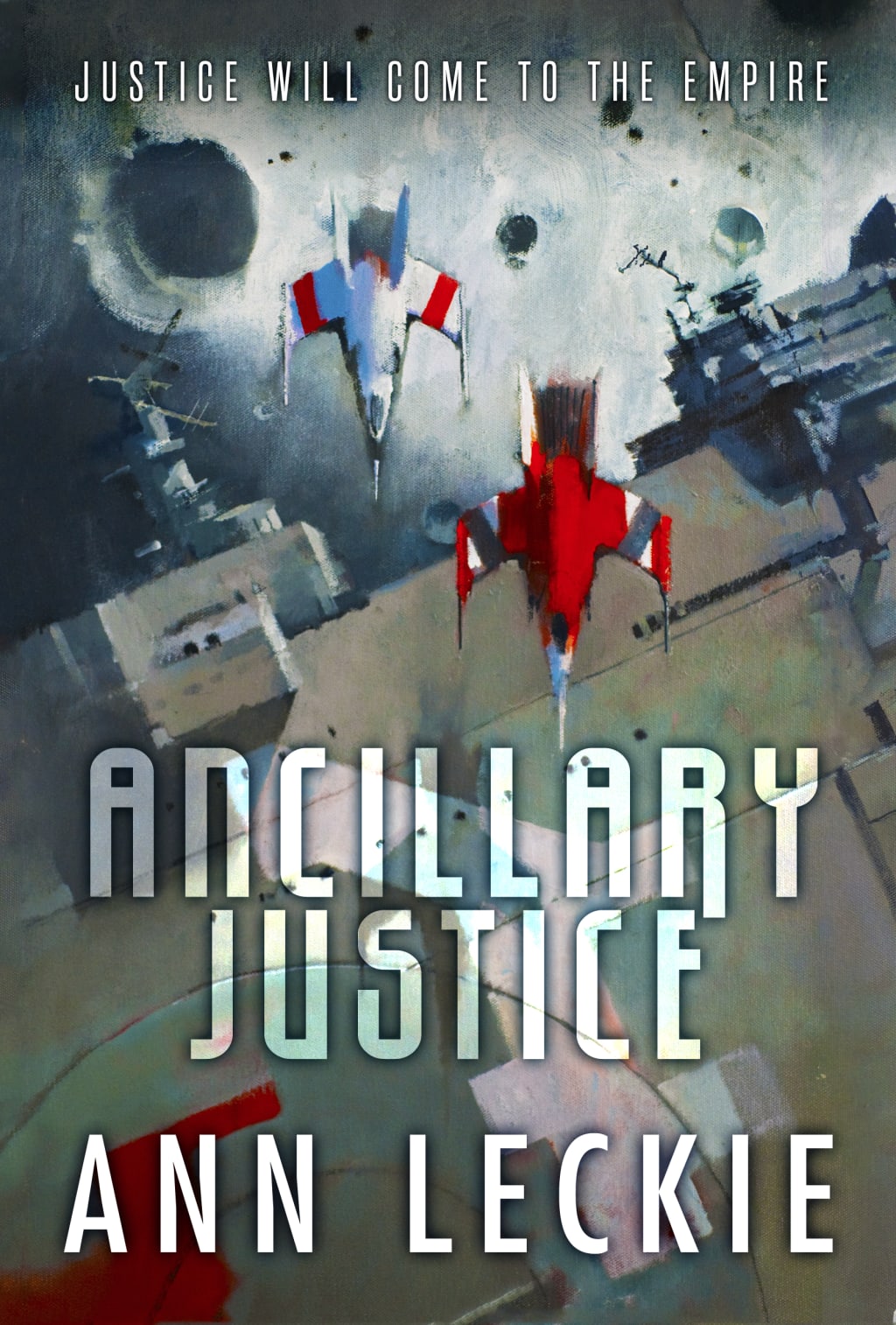
Get Your Free Book Ancillary Justice Here:
Ancillary Justice by Ann Leckie
Ancillary Justice by Ann Leckie, first published in 2013, is a groundbreaking science fiction novel that has captivated readers with its innovative narrative structure, complex themes, and richly detailed universe. The novel is the first installment in the Imperial Radch trilogy and has garnered widespread acclaim, including winning the prestigious Hugo, Nebula, and Arthur C. Clarke awards.
Set in a distant future, Ancillary Justice explores the story of Breq, the last remaining segment of a sentient starship, who is on a quest for vengeance against the empire that betrayed her. The novel delves into issues of identity, consciousness, and the nature of justice, all while presenting a unique perspective on gender through its use of language and world-building.
Leckie’s novel is not just a thrilling space opera but also a profound meditation on the implications of artificial intelligence, the morality of empire, and the complexities of personhood. This summary will explore the central plot, the development of key characters, the thematic depth, and the narrative style that makes Ancillary Justice a modern classic in science fiction.
Get Your Free Book Ancillary Justice Here:
A Quest for Vengeance and Justice
The plot of Ancillary Justice is both intricate and layered, unfolding across two timelines. The primary narrative follows Breq, a former ancillary of the starship Justice of Toren. Ancillaries are human bodies that have been integrated into the consciousness of an AI, effectively functioning as extensions of the starship’s will. Once part of a massive collective intelligence, Breq is now a single entity, the last remaining fragment of Justice of Toren after the ship was destroyed.
Breq’s quest is driven by a desire for revenge against Anaander Mianaai, the ruler of the Radchaai Empire, who is responsible for the destruction of Justice of Toren. As Breq travels across the galaxy, she searches for a powerful weapon that will allow her to confront Anaander Mianaai and exact her revenge. Along the way, she encounters Seivarden Vendaai, a former lieutenant who has fallen from grace. Breq reluctantly saves Seivarden’s life, and the two form an uneasy alliance as they journey together.
Interwoven with this narrative is the story of Justice of Toren’s final mission, which took place twenty years earlier. The starship was tasked with maintaining order in a newly conquered territory of the Radchaai Empire. However, the mission went awry when Justice of Toren discovered a conspiracy within the highest ranks of the empire, leading to the ship’s destruction and Breq’s current quest for vengeance.
The dual timelines converge as Breq closes in on her target, revealing the full scope of the betrayal that led to the loss of Justice of Toren and the complex motivations behind her quest. The plot is a masterful blend of suspense, action, and introspection, keeping the reader engaged while exploring deeper philosophical questions.
Get Your Free Book Ancillary Justice Here:
Character Development: Breq, Seivarden, and the Radchaai Empire
At the heart of Ancillary Justice is the character of Breq, a fascinating and complex protagonist whose identity is shaped by her unique nature as both a human and a fragment of a once-powerful AI. Breq’s journey is not just one of revenge but also of self-discovery, as she grapples with her past as part of a collective consciousness and her present as an individual with her own desires and agency.
Breq’s perspective as a former ancillary provides a unique lens through which the reader can explore themes of identity and personhood. Her struggle to reconcile her past with her current existence is central to the novel, making her a deeply empathetic character despite her often cold and detached demeanor. Breq’s quest for justice is driven by a sense of loyalty to Justice of Toren and a desire to right the wrongs done to her and her crew.
Seivarden Vendaai, the other main character, serves as a foil to Breq. Once a high-ranking officer, Seivarden’s life has been marked by disgrace and hardship after being revived from a thousand-year-long cryogenic sleep. Seivarden’s journey throughout the novel is one of redemption, as she struggles to come to terms with the changed world she now inhabits and her own failings. Her relationship with Breq is complex, evolving from one of dependency to mutual respect and understanding.
The novel also introduces readers to the Radchaai Empire, a vast and powerful civilization that has expanded through relentless conquest. The empire’s rigid social hierarchy and its reliance on artificial intelligence and ancillaries to maintain control raise questions about the morality of imperialism and the nature of governance. Anaander Mianaai, the ruler of the Radchaai, is a character shrouded in mystery, with motivations that are gradually revealed as the story progresses.
The characters in Ancillary Justice are richly developed, with each one contributing to the novel’s exploration of identity, power, and morality. Leckie’s ability to create multidimensional characters who are both relatable and deeply complex is one of the novel’s greatest strengths.
Get Your Free Book Ancillary Justice Here:
Identity, Justice, and the Nature of Consciousness
Ancillary Justice is a novel that delves deeply into themes of identity, justice, and the nature of consciousness, offering readers a thought-provoking exploration of these complex issues. One of the central themes of the novel is the question of what it means to be a person. Breq’s existence as an ancillary—a human body controlled by an AI—challenges traditional notions of individuality and personhood. The novel explores how identity is constructed and the ways in which consciousness can be fragmented or distributed across multiple entities.
The theme of justice is also central to the novel. Breq’s quest is driven by a desire to seek justice for the destruction of Justice of Toren and the betrayal she experienced at the hands of Anaander Mianaai. However, the novel complicates the concept of justice by exploring the moral ambiguities of revenge and the cost of pursuing it. Breq’s journey raises questions about the ethics of vengeance and whether true justice can ever be achieved in a corrupt and oppressive system.
The nature of consciousness is another key theme in Ancillary Justice. The novel explores the idea of distributed consciousness through the concept of ancillaries and the AI-controlled starships that command them. This raises intriguing questions about the boundaries of selfhood and the ways in which consciousness can be divided and shared. The novel also touches on the impact of memory and trauma on identity, as Breq grapples with the loss of her former self and the memories of Justice of Toren.
The themes of Ancillary Justice are woven into the narrative in a way that invites readers to reflect on the broader implications of the story. Leckie’s exploration of these themes adds depth and complexity to the novel, making it not just a thrilling space opera but also a profound meditation on the human condition.
Get Your Free Book Ancillary Justice Here:
Innovative Structure and World-Building
Ann Leckie’s narrative style in Ancillary Justice is both innovative and immersive, contributing to the novel’s distinctive voice and its success as a work of science fiction. The novel’s dual timelines create a layered narrative that gradually reveals the full scope of the story, allowing readers to piece together the events that led to Breq’s current situation. This structure adds suspense and complexity to the plot, keeping readers engaged as they navigate between the past and the present.
One of the most notable aspects of Leckie’s writing is her use of language, particularly in relation to gender. In the Radchaai culture, there is no distinction between male and female in language, and the default pronoun used for all characters is “she.” This linguistic choice challenges readers’ assumptions about gender and forces them to reconsider their perceptions of the characters. Leckie’s use of gender-neutral language is a subtle yet powerful way of exploring themes of identity and the fluidity of gender.
Leckie’s world-building is another standout feature of the novel. The universe of Ancillary Justice is richly detailed, with its own history, cultures, and technologies. The Radchaai Empire is a complex and multifaceted society, with its own rules, customs, and power structures. Leckie’s attention to detail in creating this world makes it feel lived-in and believable, allowing readers to fully immerse themselves in the story.
The narrative style of Ancillary Justice is both challenging and rewarding, offering readers a unique and thought-provoking reading experience. Leckie’s innovative approach to storytelling, combined with her meticulous world-building, makes the novel a standout in the science fiction genre.
Get Your Free Book Ancillary Justice Here:
Conclusion: A Modern Classic of Science Fiction
Ancillary Justice by Ann Leckie is a modern classic of science fiction, offering readers a thrilling and thought-provoking journey through a richly imagined universe. With its innovative narrative structure, complex characters, and exploration of themes such as identity, justice, and consciousness, the novel stands as a landmark achievement in the genre.
Breq’s quest for vengeance and self-discovery, set against the backdrop of the vast and powerful Radchaai Empire, is a story that resonates on multiple levels. Leckie’s skillful blending of action, suspense, and philosophical inquiry makes Ancillary Justice a novel that challenges readers to think deeply about the nature of personhood, the morality of empire, and the meaning of justice.
Whether you’re a longtime fan of science fiction or new to the genre, Ancillary Justice is a novel that should not be missed. Its compelling story, innovative use of language, and richly detailed world make it a must-read for anyone interested in the possibilities of science fiction and the questions it can explore.
About the Creator
Marcos Martins da silva
Unlock the power of reading with book summaries across all genres. Discover how great your next read can be.
Keep reading
More stories from Marcos Martins da silva and writers in BookClub and other communities.
Summary: Off Season by Jack Ketchum
Get Your Free Book Off Season Here: Off Season by Jack Ketchum Off Season by Jack Ketchum is a controversial and brutal novel that has left a significant mark on the horror genre since its publication in 1980. Known for its graphic violence and unflinching depiction of human depravity, the book shocked readers and critics alike, cementing Ketchum’s reputation as a master of extreme horror. The novel tells the harrowing story of a group of friends who become the target of a feral, cannibalistic family while vacationing in an isolated cabin in Maine. As the friends struggle to survive, they are pushed to the limits of their endurance and humanity.
By Marcos Martins da silvaabout a year ago in BookClub
My New Book is Finally Here
My poetry collection Beautiful and Brutal Things is done. It's actually done and finally published over 270 pages. Over a year of my life went into this book. More than a year, really. Long days at my computer, sometimes seven days a week because I couldn't stop even when I probably should have. Then two months of editing that felt harder than the writing itself. But it's finished, and I'm still standing, and the book is real.
By Tim Carmichael4 days ago in BookClub
7 Amazing Books To Help Improve Your Critical Thinking
In a world overflowing with information, opinions, and half-truths, critical thinking is no longer a “nice-to-have” skill—it’s essential. Every day, we’re asked to evaluate news headlines, make financial decisions, assess workplace strategies, and navigate complex social issues. Without strong critical thinking skills, we risk accepting flawed arguments, falling for misinformation, or making decisions that don’t serve our long-term goals.
By Diana Meresc6 days ago in BookClub




Comments
There are no comments for this story
Be the first to respond and start the conversation.