
Sheldon Greene:
Law, Story and the Search for Justice


Sheldon Greene’s career, at first glance, looks like a split screen. On one side is a life in law and policy: much of it in public interest law; impact litigation for the rural poor, drafting statutes, work on national energy and immigration policy, founding roles in major institutions.
On the other side is a shelf of Sheldon Greene novels that travel from Caribbean sugar islands to a near future California Republic, from nineteenth century railheads to a Jewish boarding school in a failing steel town. A body of work that critics have begun to treat as literature on justice and identity and as fiction inspired by legal careers.
Seen more closely, the split disappears. Greene’s fiction and his legal work are twin approaches to the same set of questions: Who belongs where. What justice might look like. How people keep their dignity when history and institutions are against them.
His novels are not position papers. They are page turning stories that invite readers to inhabit moral problems from the inside. The concern with law, power and memory that shaped his public career quietly structures the imaginative worlds he builds on the page, giving his work the feel of literary fiction on power structures as well as fiction about belonging.
A Lawyer Formed in Argument and Policy
Greene’s training was in argument long before it was in story. At Case Western Reserve University, he graduated magna cum laude, was elected to Phi Beta Kappa, edited the law review, and won prizes in contracts and advocacy. His early professional life took him into rural legal assistance work, where clients were not corporations but migrant workers, farm laborers, women and families living in poverty. Cases involved minimum wages, housing, illegal employment of undocumented workers and environmental harm.
Those years left a mark. They taught him that power usually moves through small mechanisms: a clause in a contract, a missed filing, an administrative hearing that no one attends except the parties who can afford lawyers. That sensibility appears throughout his fiction, where the fate of a valley or a community often hinges not on a single dramatic gunfight, but on a permit, a title, or a policy decision made far away. This is one reason Sheldon Greene is often described as a legal fiction author, even when his books range widely across time and place.
Greene’s work did not stop at individual cases. He helped draft and pass the first state law penalizing the knowing employment of illegal entrants, which Governor Reagan signed, and later served on Obama policy teams dealing with energy and immigration. He became president and director of a wind energy company, bringing environmental and regulatory questions into his daily work.
He also became one of the founders of the New Israel Fund. There, he helped design a structure with dual board and support components, applying lessons from public interest law to the governance of a philanthropic institution. The through line in all of this is not a single issue but a habit: look for leverage points where systems can be nudged toward fairness.
Fiction did not replace this career. It ran alongside it, as a second channel for the same concerns.
The American Quartet: Belonging, Faith and The Problem of Home
Four novels in particular, sometimes referred to as Greene’s “American Quartet,” return to the questions of belonging, faith and home in different settings: Lost and Found, The Seed Apple, The Lev Effect, and Tamar. Read together, they form a kind of extended conversation about how communities survive, and at what cost.
Lost and Found
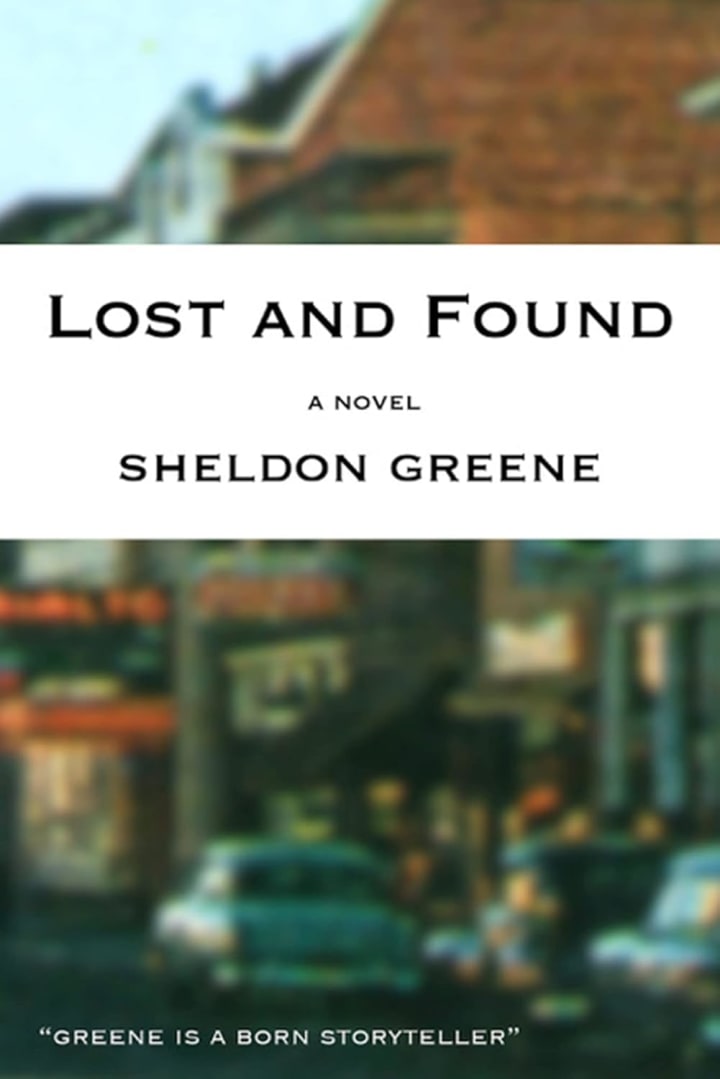
Lost and Found takes place in postwar Bolton, Pennsylvania, and is narrated by Mendel Traig, a Holocaust survivor who has washed up in a place that knows the Shoah mainly as an item in the news. The novel is episodic by design. Each chapter carries its own story and its own moral knot, filtered through Mendel’s wry, observant voice.
Some of these episodes are comic, some moving, all of them quietly pointed. A bookstore with shelves of trivia becomes a metaphor for what was lost in the destruction of European Jewry, and for a broader cultural fascination with the superficial rather than the serious. An episode about a cookbook teases the idea of “authenticity,” raising the question of whether anything deserves that label or whether authenticity is always a matter of perspective. The story of a pewter mug suggests that Americans and Europeans have repressed the horrors of the Holocaust more than they like to admit. When Greene originally made that point, a New York Times critic objected, but in the same year planning began for the United States Holocaust Memorial Museum, a coincidence that could be read as confirmation of his claim.
There is even a modern version of Elijah’s visit at Passover, recast as a “Luftmensch” whose presence disturbs routines. All of these vignettes are rooted in a specifically Jewish environment, yet their questions are larger: what does it mean to live decently after catastrophe, and how much of that catastrophe a society is willing to remember.
The Seed Apple

If Lost and Found stays close to one town, The Seed Apple travels to a hidden California valley where descendants of ancient Jewish builders have settled. They have brought with them a heritage of construction that goes back, in Greene’s fictional genealogy, to temple builders, and now manifests in a monumental tower project in the desert.
The patriarch’s tower is not simply an aesthetic object. It is designed to transmit a doomsday message to passing nuclear submarines, layered on an earlier radio tower, which in turn lies on the site of an earlier holy structure. Underneath the steel and concrete is a geological and spiritual palimpsest.
The patriarch’s son has a different idea of what it means to build. He is drawn instead to seeds and soil, to the slower work of preserving life rather than sending warnings into the ocean. Their conflict is generational and philosophical at once: a clash between monumental projects and modest stewardship. A romance between Mendel and the son links these visions across time and family lines, and a narrative strand follows the family’s journey from Yucatan to the California desert, merging cultures and bringing a Christian missionary into the story.
The questions here are familiar in Greene’s work. What is owed to tradition. When does continuity become rigidity. What happens when the skills that once served sacred purposes are repurposed into projects that may harm the world instead of protect it.
The Lev Effect

The Lev Effect returns to Pennsylvania, this time to a Jewish boarding school and attached retirement home in a declining steel town. The school is under financial strain. Salaries are low, staff are stretched, the older generation lives on site. Into this setting comes Lev, a Jewish refusenik scholar from the Soviet Union who had been forced to work as a school superintendent because he was barred from an academic career and persecuted for wanting to emigrate. Tikva hires him to lead the school as its director.
Lev’s leadership style is both democratic and authoritarian. Teachers and staff talk at length in meetings, and then he decides. He stages morning rituals in which students and elders gather together. He pushes against the boundaries of what a religious school is supposed to be. When he insists on admitting a Palestinian Muslim boy into what had been a Jewish institution, the community’s fault lines become visible. A “Nationality Day” that puts Israeli and Palestinian symbols on the same stage at the same time becomes a turning point for the school and for the town.
Reviewers have called the novel a farcical comedy and a theological provocation, praising its mix of satire and serious reflection. Beneath the humor lies a set of hard questions. Can a religious institution offer genuine pluralism without losing its identity? How far can a leader push a fearful community toward empathy before they push back. The narrative also plays with the Passion story and with the modern media environment. Lev is taken by some to be a messianic figure, not because he claims it, but because a hunger for simple answers and heroes drives people toward that kind of reading.
Tamar

Tamar moves the conversation into the nineteenth century American West, and into the first person voice of Tamar Binyan, a woman who leads a mixed Jewish and American Indian community as the railroad and telegraph arrive.
Tamar’s story is a coming of age narrative and a political novel at once. She deals with settlers, the Army, an impulsive husband, a complicated romance, childbirth and the relocation of some of her people. A foolish cousin squanders wealth. Steel rails and wires reach into the valley, bringing with them both opportunity and the industrial revolution’s appetite for land.
Through Tamar, Greene gives leadership, mixed identity and colonial encroachment a human face. The fact that she is a woman whose authority is not formally recognized by the surrounding culture is central, not incidental. Her voice carries memory and judgment in a world that would rather treat her community as an obstacle to be surveyed around. The novel has received recognition, including a Global Book Award medal, which suggests that readers have responded to this voice and its particular angle on American expansion.
Together, these four books trace a set of related problems: how to live as a minority community within larger powers, how to hand down faith without sentimentality, and how to keep “home” from becoming an empty slogan.
Beyond The Quartet: Other Experiments with Justice and History
Other Sheldon Greene novels travel further in time and genre but the same moral imagination is at work.
Prodigal Sons

Prodigal Sons is an espionage and postwar novel that begins in the Holocaust and moves through ghettos, partisan warfare, illegal migration to Palestine, the Israeli War of Independence and postwar Munich. Its central figure is a survivor who works as an assassin for an Israeli unit and lives under a German identity. He falls in love with a pianist who is rehearsing Bach’s Goldberg Variations, and several chapters take their mood and structure from that music. At the same time, the novel is a loose modern retelling of Wagner’s Gotterdammerung, “Twilight of the Gods.” Its underlying theme is the end of ideology, shadowing Wagner’s work while asking whether there is any clean way to settle accounts after mass atrocity, or whether revenge and justice will always be entangled.
Pursuit of Happiness

Pursuit of Happiness takes readers to a Caribbean slave island during the American Revolution and into the life of Joshua, a Quaker deeply committed to the revolutionary cause. The novel includes Washington’s crossing of the Delaware and the Christmas Eve attack on the Hessians, the first battle of the Marines, French arms assistance through Beaumarchais, and a slave revolt. Gullah dialect, Jewish merchants and the brutal economics of sugar plantations are woven into the narrative. The American promise of “pursuit of happiness” looks different from a quay in Cap Francais or a field on St Catherine’s Island than it does from Independence Hall. Joshua must reconcile his pacifist upbringing with his involvement in war, and the love story at the center of the book is inseparable from those political and moral choices.
After The Parch
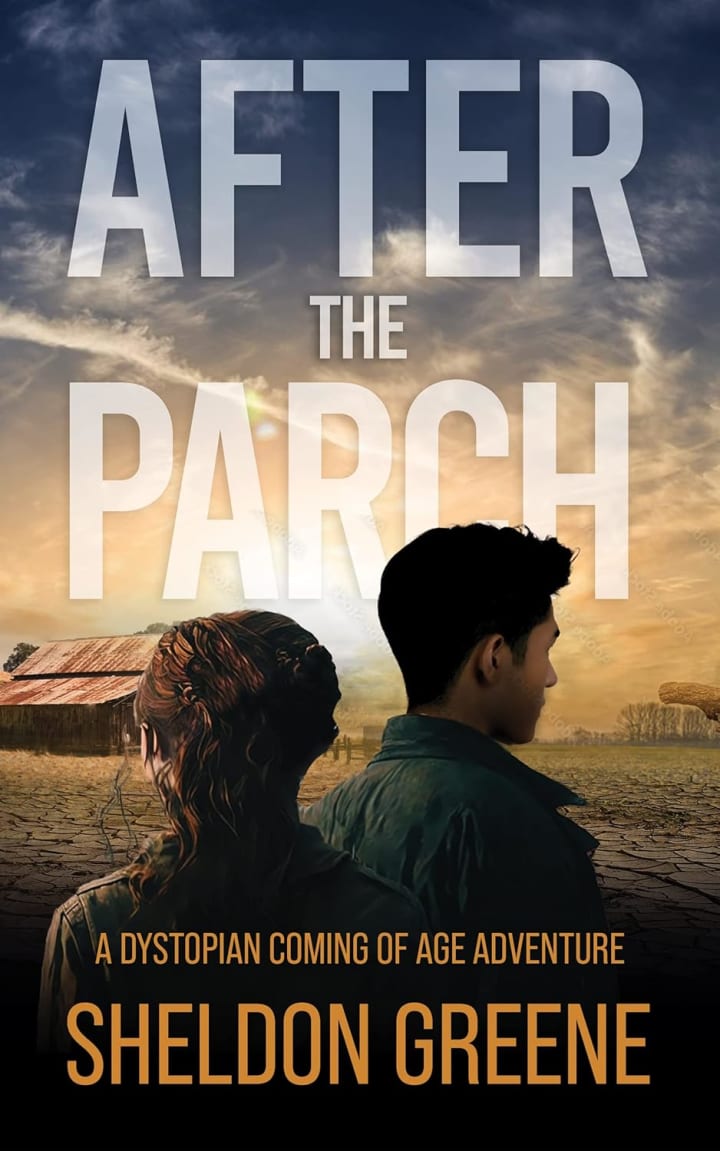
After the Parch moves toward the future. Set in a quarantined California Republic after decades of drought, disease and political dissolution, it follows Bran, a teenager from a self-sufficient outlaw community called the Glade. When a corporation moves to claim the mine and land they occupy, Bran is sent south to register the Glade’s title and prevent its forfeiture. What starts as a simple errand becomes a road story through a fractured landscape of slums, corporate enclaves, church run tunnels and underground democratic networks. Bran travels with a feral child, an African American musician with a revolutionary agenda and a girl with a complex institutional history. By the time he returns, he has learned that survival depends on trusting strangers as well as resisting systems. The book ties together climate crisis, exile, corporate power and the fragile possibilities of democracy.
Burnt Umber

Burnt Umber spans still more time. One strand follows Franz Marc, the German expressionist painter, through the years before and during the First World War, drawing on his actual journal and on extensive research into his circle and their ideas. Another strand follows Harry, a Jewish American artist who discovers Marc’s sketchbook in an abandoned house during the Second World War and spends his life in its shadow. The story moves from World War I trenches to postwar Paris and then to Berkeley in the Cold War era. Art, war, looted culture and the narcissism of genius are all in play, along with a second powerful theme: the changing roles and empowerment of women across the twentieth century. The novel asks what it means to turn horror into art. Is it witnessing. Is it appropriation. Is it some unstable compound of both?
Across these books, certain patterns repeat. Faith appears without sentimentality. Human dignity is defended inside systems that treat people as expendable. Humor and irony are used not to evade painful history but to look at it without flinching. Institutions, from synagogues to schools to courts, are shown shaping and channeling the inner lives of characters who often resist them but cannot fully escape them.
Fiction as A Second Channel for Justice
Greene has written explicitly about his reasons for turning to fiction. In the preface to Lost and Found, he describes creative writing as an attempt to bring into being an alternative reality. Law and writing, he suggests, are different expressions of the same motivation to make the world better.
In law, that motivation appears as arguments over rules, rights and remedies. The tools are statutes, cases and administrative decisions. Success looks like a revised regulation, a favorable judgment, a new program. In fiction, the tools are character, setting and plot. Success has a different shape: a reader who has spent enough time inside a situation to see it from more than one angle.
His novels are not sermons. They rarely offer simple answers. Instead, they stage conflicts that look very much like the ones in his legal work, but from the inside. Mendel Traig in Lost and Found has to choose what it means to be at home in Bolton rather than Israel, and what obligations that choice carries. Lev in The Lev Effect tests how far a school can go in teaching empathy and pluralism without losing its foundation. Tamar leads in the face of almost certain loss, and must decide which compromises are tolerable. The assassin in Prodigal Sons embodies both the lure and danger of righteous violence, and forces readers to sit with their own feelings about vengeance.
What connects these characters is not their setting but their position on an edge. They live at points where history has turned cruel, where institutions are stressed and where personal decency is both more difficult and more necessary.
Why Greene’s Work Matters Now
Taken together, Sheldon Greene’s careers in law, policy and fiction form a single project. In courtrooms and policy meetings, he has worked on rules and structures that affect how people live. On the page, he has created worlds in which readers can experience those structures from the inside.
Certain themes run through his fiction. Survival is more than not dying. It involves retaining a sense of meaning and mutual obligation when the background conditions are hostile. History, faith and economic power are not separate forces. They interact, often in ways that leave individuals with only constrained choices. Trying to be decent in public and in private is not always rewarded, and at certain times and places it becomes a quietly radical act.
Readers who come to Greene’s novels looking only for “issue books” will miss much of their pleasure. These are researched, historically attentive works with strong plots, layered structures and characters who are easy to care about. They are meant to be read as stories, not as disguised editorials. At the same time, they are not escapist in the sense of turning away from the hardest parts of history. They linger exactly where things are uncomfortable.
In a noisy and polarized culture, attention itself is a scarce resource. Greene’s fiction calls readers to give sustained attention to difficult questions rather than fleeing from them. That kind of engagement is not a replacement for law or policy, but it is one of the few forms of resistance still open to anyone willing to pick up a book and stay with it. In that sense, Sheldon Greene’s body of work stands as a quiet but insistent contribution to social justice storytelling, fiction about belonging, and fiction about faith and home.
Sheldon Greene shares occasional essays and reflections on his Substack: https://sheldongreenee.substack.com/
https://www.sheldongreene.com/
About the Creator
Keep reading
More stories from writers in BookClub and other communities.
Center Stage with Gina C.
*** I'm keen to republish the interviews I did for my series with Vocal creators. It's been a few years and I thought it might be nice to revisit these wonderful conversations. I'll be releasing them one at a time for a few weeks/months.
By Heather Hubler7 days ago in Interview



Comments
There are no comments for this story
Be the first to respond and start the conversation.