
Robit the Chronicler
Suggested Reading for the Primal State

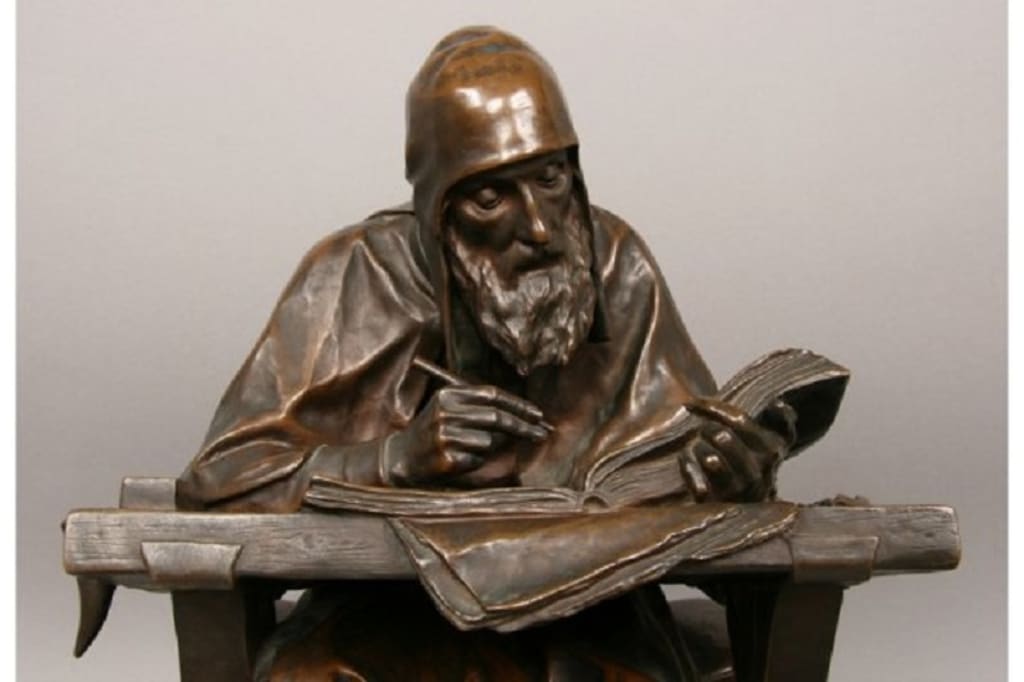
Here is the definitive, comprehensive reading list, synthesizing our entire conversation into a curated journey through the many dimensions of the primal.
This list is organized to guide you from the raw, individual expression of primal energy through to the profound realization of total cosmic interconnectedness.
The Primal Library: A Journey from the Wild Self to the Cosmic Whole
I. The Untamable Self: The Primal as Individual Force
The eruption of unmediated passion, grief, and will. The energy is concentrated, personal, and often destructive.
1. Wuthering Heights by Emily Brontë - The archetype: a love that is identity, hatred, and annihilation.
2. The Bacchae by Euripides - Divine ecstasy and madness challenging order and rationality.
3. Anna Karenina by Leo Tolstoy - All-consuming passion as a force of social and self-destruction.
4. The Poetry of Arthur Rimbaud - A deliberate derangement of the senses to access raw creative vision.
5. The Poetry of Sappho - The debilitating, physical reality of eros in the body.
6. A Streetcar Named Desire by Tennessee Williams - The clash of primal forces: illusion vs. brutal truth.
II. The Interior Abyss: The Primal Psyche
The battlefield shifts inward. The terror of a mind unraveling and reality being questioned.
7. The Yellow Wallpaper by Charlotte Perkins Gilman - Creative spirit driven to madness by enforced passivity.
8. Gaslight by Patrick Hamilton - The systematic dismantling of a person's perception of reality.
9. The Haunting of Hill House by Shirley Jackson - The need for belonging curdling into madness within a predatory home.
10. The Metamorphosis by Franz Kafka - Alienation made literal: the self as a monstrous, unrecognizable body.
11. She Came to Stay by Simone de Beauvoir - The philosophical terror of another's independent consciousness.
12. The Poetry of Sylvia Plath - The psychological event enacted; the raw dissection of the self.
III. The Body & The System: The Primal Made Flesh & Power
The energy is located in the physical body and the political structures that seek to control it.
13. The Handmaid's Tale by Margaret Atwood - Female biology weaponized by a theocratic state.
14. Beloved by Toni Morrison - A love so fierce it commits horrific violence; trauma made manifest as a ghost.
15. Surfacing by Margaret Atwood - The journey back to an animal state to reclaim a lost self.
16. The Lover by Marguerite Duras - The humid, shame-filled primal awakening of adolescent desire.
17. The Second Sex by Simone de Beauvoir - The primal conflict of being a transcendent consciousness forced into immanence.
18. Things Fall Apart by Chinua Achebe - The soul of a culture shattered by colonial force.
19. Alias Grace by Margaret Atwood - The primal mystery of the self and the fragmentation of consciousness.
IV. The Societal Collapse: The Primal Mob & The Moral Core
What is revealed when the social contract is torn away?
20. "The Lottery" by Shirley Jackson - The capacity for ritualized, communal violence.
21. Blindness by José Saramago - Society reverting to a filthy, brutal state of nature.
22. Blood Meridian by Cormac McCarthy - The fundamental, violent nature of humanity unleashed.
23. Who's Afraid of Virginia Woolf? by Edward Albee - Marriage as a gladiatorial arena for psychological warfare.
24. Small Things Like These / Foster by Claire Keegan - The primal force of quiet moral conscience and unconditional love.
V. The Cosmic Scale: The Primal Universe
The energy expands to encompass the indifferent cosmos, vast time, and the fragility of existence.
25. The Road by Cormac McCarthy - The primal will to protect and "carry the fire" in a dead world.
26. The Works of H.P. Lovecraft - Cosmic horror: the terror of humanity's insignificance.
27. The Poetic Edda (Norse Mythology) - A cosmos born from violence and destined for a heroic, futile end.
28. The Epic of Gilgamesh - The ur-text grappling with friendship, loss, and mortality.
29. Solaris by Stanisław Lem - A conscious planet that mirrors the human psyche, forcing a confrontation with a cosmic "Other."
30. The Overstory by Richard Powers - The silent, slow, intelligent consciousness of the networked living world.
31. The Sea, The Sea by Iris Murdoch - The sea as a primal, chaotic, and moral force that shatters human illusion.
32. The Book of Form & Emptiness by Ruth Ozeki - A universe where everything is alive and has a voice.
VI. The Unified Field: The Fractal & The Interconnected
The culmination: the realization that the self and the cosmos are one. The narrative itself embodies interconnection.
33. Pedro Páramo by Juan Rulfo - The land is memory and purgatory; the past is eternally present.
34. The Disappeared by Kim Echlin - Grief and memory as a force connecting personal loss to historical genocide.
35. The Passion by Jeanette Winterson - Passion (gambling, faith, love) as a tangible force that dictates reality.
36. There There by Tommy Orange - The inherited, urban pulse of contemporary Native life, converging in a shared destiny.
37. The Works of Clarice Lispector - The relentless pursuit of the unnamable "it" at the core of being.
38. Ulysses by James Joyce - The celebration of the primal engine of human consciousness and the body.
39. Braiding Sweetgrass by Robin Wall Kimmerer - The paradigm of reciprocal relationship between all living things.
40. Piranesi by Susanna Clarke - The protagonist is the House; a perfect fictional embodiment of the fractal self.
41. The God of Small Things by Arundhati Roy - A fractal narrative where personal history is microcosm of political and cosmic law.
42. Cloud Atlas by David Mitchell - A structural representation of the soul's patterns repeating across time.
43. The Lathe of Heaven by Ursula K. Le Guin - The ethics of wielding primal, causal connection to reality.
44. The Waves by Virginia Woolf - The porous boundaries of individual consciousness merging into a collective human rhythm.
45. The Poetry of Rainer Maria Rilke - The project to bridge the human and cosmic, to transform the visible into the invisible within the heart.
46. The Left Hand of Darkness by Ursula K. Le Guin - What is humanity when the primal driver of gender is removed?
This library is a spiral path. You may find that after reading a work in Category VI, your understanding of a book in Category I is forever deepened. The primal howl in Wuthering Heights and the silent unity in Braiding Sweetgrass are not opposites; they are different points on the same spectrum of a single, universal energy. This is the journey of seeing the one in the many, and the many in the one.
About the Creator
M.L. Ross
The thoughts, stories, ideas, nonsense piling up in my mind have reached critical mass. Sometimes they're coherent enough to share directly, sometimes they have to filter through the Robit first.
Robit Lays an Egg
This interaction explores the human struggle with ambiguity, using the neutron as a central metaphor. We are cognitively wired for binary choices—all or nothing, yes or no—because they provide clear, actionable answers. However, this forces us into a false dichotomy, ignoring the vast, complex middle ground where most of life actually resides.
By M.L. RossExclusive • 4 months ago
Rachel Reviews: Lakefront Wolves by Joseph Deegan
Meet Finn. He's an 18 year old kid who has potential. He's bright with great school scores and he's also an athlete, a footballer of some prowess. He has it all going for him, it would seem, and yet, he's determined to send what could be a well-planned, stable existence firmly off the rails. He drinks, he smokes, he takes drugs, he has violent tendencies and he's in danger of losing not only his mind but all that he holds dear.
By Rachel Deeming11 days ago in BookClub
7 Books That Will Push You Further Than You Thought Possible
Every so often, we encounter a book that doesn’t merely inform us—it reshapes how we think, act, and approach our limits. These are the books that challenge our comfort zones, ignite ambition, and force us to confront the gap between who we are and who we could become.
By Diana Meresc2 days ago in BookClub


Comments
There are no comments for this story
Be the first to respond and start the conversation.