
Review Why "A" Students Work for "C" Students and "B" Students Work for the Government by Robert Kiyosaki:
Kiyosaki expands on his belief that the school system was created to churn out Es / Employees...those "A Students" who read well, memorize well and test well... and not the creative thinkers, visionaries, and dreamers - entrepreneurs-in-the-making...those "C Students" who grow up to be the innovators and creators of new ideas, businesses, applications, and products.

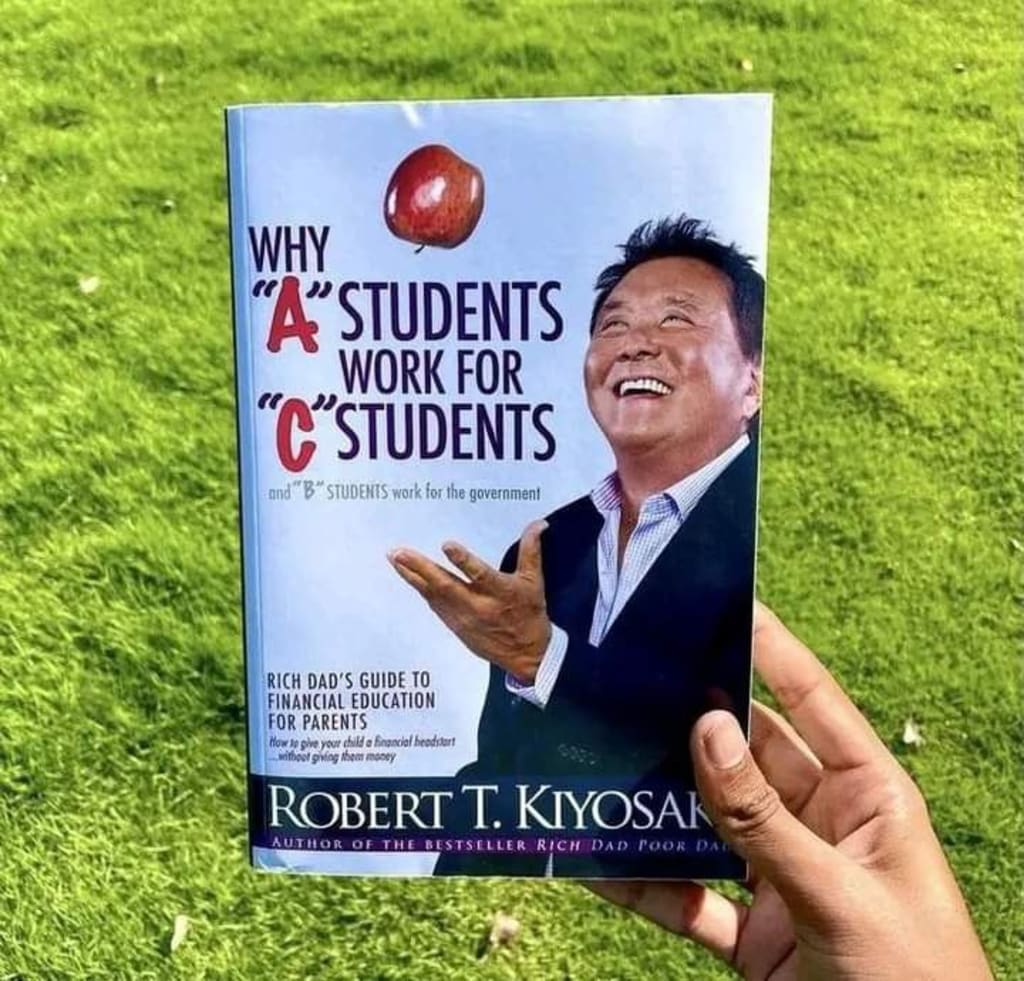
Here are 10 key lessons from
Why "A" Students Work for "C" Students and "B" Students Work for the Government by Robert Kiyosaki:
1. Financial Education Is Crucial: Traditional schools focus on academic and professional skills but often neglect financial literacy, leaving students unprepared for managing money effectively.
2. Entrepreneurship Over Employment: "C" students often become entrepreneurs because they think creatively, take risks, and learn from failure. Meanwhile, "A" students excel in structured environments and often work for these entrepreneurs.
3. The Importance of Soft Skills: Success is not just about grades but also about developing leadership, communication, and problem-solving skills, which are vital in business and life.
4. Money Works for the Financially Literate: Wealth grows for those who understand investments, passive income, and the principles of money. Schools rarely teach these skills, which are critical for financial freedom.
5. Think Beyond Job Security: Job security can lead to a false sense of stability. Instead, focus on creating multiple income streams and building assets for long-term financial independence.
6. Failure Is a Stepping Stone: Unlike school, where failure is penalized, in real life, failure is a powerful teacher. Embrace mistakes as opportunities to learn and grow.
7. Taxes Favor the Financially Educated: Wealthy individuals and businesses leverage tax laws to their advantage. Understanding tax systems is key to keeping more of what you earn.
8. Schools Train Employees, Not Leaders: The traditional education system prepares students to be employees rather than innovators or employers. Leadership skills are essential for those who want to lead businesses and organizations.
9. Creativity Outranks Conformity: "C" students often think outside the box and question norms, making them more suited for entrepreneurial endeavours and unconventional paths to success.
10. Teach Financial Literacy to the Next Generation: Parents and guardians must teach their children about money management, investments, and entrepreneurship since schools do not adequately cover these topics.
This book emphasizes the importance of financial education, creativity, and entrepreneurial thinking over traditional academic success.
About the Creator
TAPHA
Hi! Whether you're looking for insightful answers or a fresh perspective on a topic,I'm here to provide engaging, accurate,and thought-provoking content tailored just for you. Stick around, and let's explore the world of knowledge together!
My New Book is Finally Here
My poetry collection Beautiful and Brutal Things is done. It's actually done and finally published over 270 pages. Over a year of my life went into this book. More than a year, really. Long days at my computer, sometimes seven days a week because I couldn't stop even when I probably should have. Then two months of editing that felt harder than the writing itself. But it's finished, and I'm still standing, and the book is real.
By Tim Carmichaela day ago in BookClub
Ludacris and Nelly draw backlash over bookings at MAGA-coded music festival
Ludacris and Nelly headlining a mostly right-wing event is good for them. It’s also great for the genre of hip hop. The two rap veterans have showcased their talents on other stages. Why can’t they perform for mostly MAGA folks and grab that bag?
By Skyler Saunders4 days ago in Beat




Comments
There are no comments for this story
Be the first to respond and start the conversation.