
Revenge of the Tipping Point by Malcolm Gladwell Review
Reviewing Malcolm Gladwell’s Latest
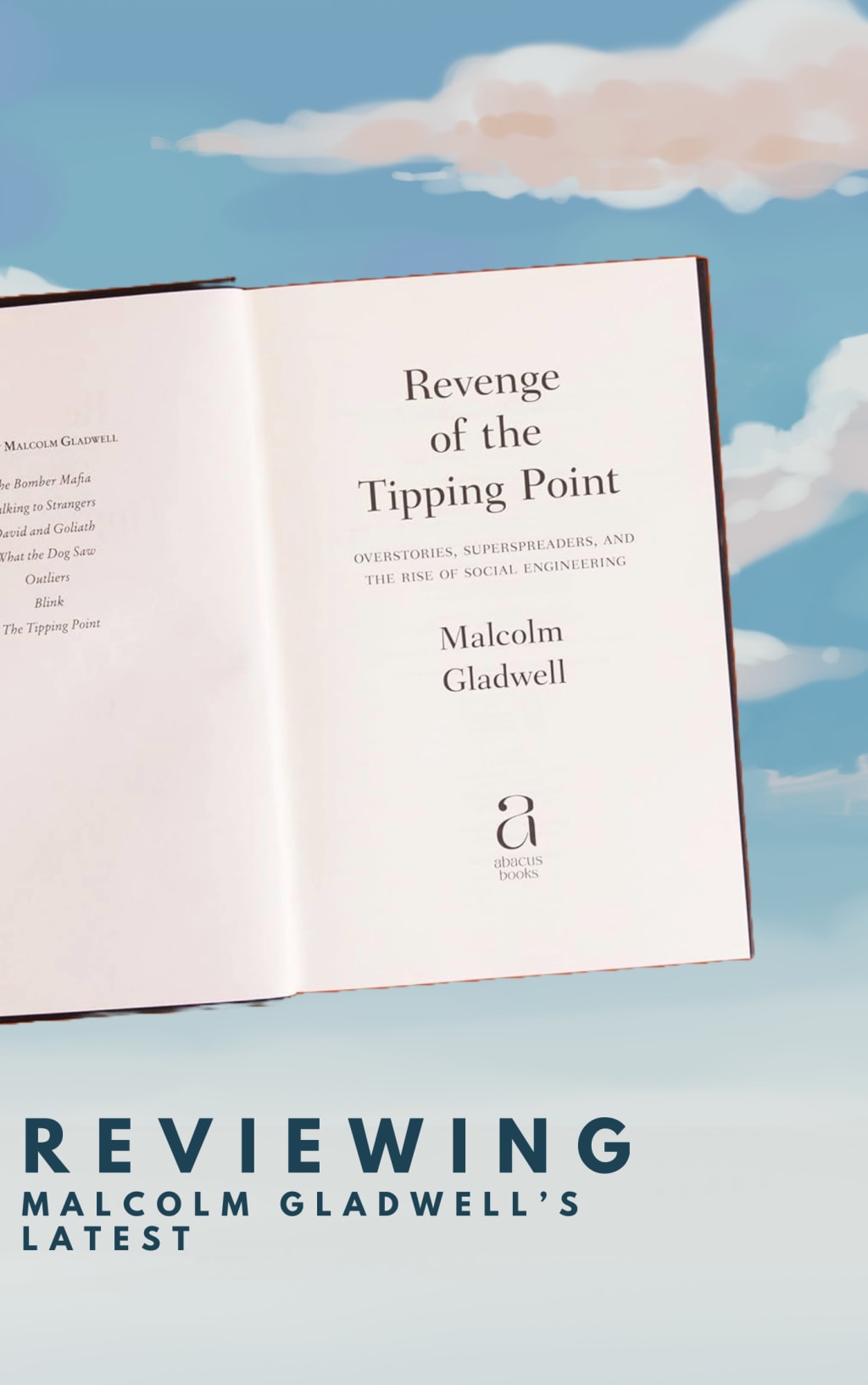
Reading Revenge of the Tipping Point was nothing short of an intellectual adventure. As someone fascinated by the intersection of social psychology and human behavior, I was eager to dive into Malcolm Gladwell’s follow-up to his iconic The Tipping Point. This time, he turns his focus to the darker side of social phenomena, examining how harmful ideas and trends spread with the same momentum as positive ones. The result is a book that is as engaging as it is unsettling.
Click here to read 'Revenge of the Tipping Point' for free with a 30-days free trial.
In this review, I’ll break down my thoughts on the book, focusing on its themes, storytelling, and the impact it left on me as a reader.
Storytelling That Sparks Curiosity
What makes any Gladwell book captivating is his ability to tell a good story, and Revenge of the Tipping Point doesn’t disappoint. Gladwell introduces each case study with vivid anecdotes, whether he’s unpacking the role of misinformation in elections or tracing the roots of a public health crisis like the opioid epidemic. His narrative style pulls you in, making complex topics feel both accessible and urgent.
Click here to read 'Revenge of the Tipping Point' for free with a 30-days free trial.
One standout chapter examines the COVID-19 pandemic through the lens of “superspreaders,” not just of the virus itself but of misinformation surrounding it. Gladwell’s ability to link such diverse phenomena—social media conspiracies, physical gatherings, and societal fear—is both fascinating and unsettling. It’s like he’s drawing a map of our collective vulnerabilities, showing how easily they can be exploited.
At times, however, Gladwell’s simplicity works against him. While his storytelling is undeniably compelling, some of the broader sociological theories feel oversimplified. For example, his analysis of high school hierarchies as a microcosm for larger social behaviors felt reductive, glossing over nuances that could have enriched the discussion.
Click here to read 'Revenge of the Tipping Point' for free with a 30-days free trial.
Themes of Influence and Responsibility
One of the most thought-provoking aspects of Revenge of the Tipping Point is its exploration of influence. Gladwell doesn’t just analyze why things tip; he questions who gets them to tip—and why. He introduces readers to “overstorytellers” and “superspreaders,” individuals and groups who accelerate the spread of ideas, both good and bad.
For me, this theme hit close to home. It made me think about my own role in the information ecosystem: How often do I verify the facts before sharing an article or reacting to a story online? Gladwell challenges us to take a hard look at how we contribute to the spread of trends and ideas, often without realizing the potential consequences.
Click here to read 'Revenge of the Tipping Point' for free with a 30-days free trial.
Another recurring theme is resilience—or the lack thereof—in systems and communities. From public health to digital spaces, Gladwell paints a sobering picture of how fragile our systems are in the face of tipping points, especially when bad actors exploit them.
Style That Balances Accessibility and Complexity
Gladwell’s signature style—mixing storytelling with research—makes Revenge of the Tipping Point an accessible read for anyone, even if you’re not well-versed in sociology or psychology. His anecdotes, ranging from whistleblowers to viral conspiracy theories, are as entertaining as they are educational.
However, as much as I enjoyed his approach, there were moments where I wished for more depth. Some of the solutions he proposes to counteract harmful tipping points felt too simplistic, given the gravity of the issues he describes. That said, the book succeeds in starting a conversation rather than providing definitive answers—and perhaps that’s the point.
Click here to read 'Revenge of the Tipping Point' for free with a 30-days free trial.
What I Took Away
Reading this book left me with a deeper understanding of how both positive and negative trends gain momentum. It’s a reminder that tipping points don’t just happen; they are engineered, either intentionally or accidentally. Gladwell’s insights into the darker side of virality made me more critical of how I engage with information and trends in my daily life.
For me, the most striking takeaway was the idea that we are all part of the ecosystem that creates tipping points. Whether we’re sharing a post on social media or participating in a movement, our actions contribute to the tipping forces at play. This realization was both empowering and a little unnerving—it made me want to be more deliberate in how I engage with the world.
Click here to read 'Revenge of the Tipping Point' for free with a 30-days free trial.
Final Thoughts
Revenge of the Tipping Point is an engaging, timely, and thought-provoking read. While it has its flaws—mainly in the form of oversimplifications—it excels at sparking curiosity and encouraging self-reflection. Gladwell’s ability to weave storytelling with science is as sharp as ever, and the book feels like a natural evolution of his earlier work.
Click here to read 'Revenge of the Tipping Point' for free with a 30-days free trial.
If you’re a fan of Gladwell’s style or interested in understanding the forces shaping our world today, this book is well worth your time. It’s not just an analysis of social trends; it’s a call to action, urging readers to think critically about how they participate in—and potentially influence—the tipping points of tomorrow.
About the Creator
Rachel Reviews: The Spiral Archive by Pieter Hendrik
It's difficult for me to know where to start with a review of this book as it was, for me, an entirely unique experience and one that I'll probably never have again. I don't want that to be interpreted as unenjoyable but it has left me scratching my head a little and ruminating on its content, its themes and its characters.
By Rachel Deeming7 days ago in BookClub



Comments
There are no comments for this story
Be the first to respond and start the conversation.