
Philippine Mythology's Impact on Filipino Middle-Grade Minds
Philippine Mythology
Legend and myth make up the fabric of stories, where layers of cultural heritage are sewn making it tangible to a lot of who hear it. Filipino mythology which is made up of various entities such as Engkantos, Aswangs as well as fantastical creatures helps kids to develop their creativity. Along with the exciting and thrilling stories they are reading, young Filipino minds are also exposed to the cultural elements of their ancestors through the works of notable authors such as Arnold Arre, Eliza Victoria, Paulo Chikiamco, Budjette Tan, and Yvette Tan.
Yet another play that unravels the deep-rooted culture of the Philippines is Arnie Arre's "The Mythology Class:" placed on the UP Diliman campus from the late 1990s to the early part of the 21st century, this story focuses on Nicole Lacson, a student of Ethnology, and her friends, who journey into the supernatural world to capture evil The story does not only introduce young readers to different kind of mythological creatures but also make them visualize what Manila looks like and as a result they will have a recognition of a place and idea of who they are.
Different from the usual narrative that Elizabeth Victoria's "Wounded Little Gods" follows wherein readers journey together with Regina, an office worker, who wanders through unseen Philippine folklore. Besides that, the story is full of suspense where the main character is looking for his pen to be communicated well with the combination of modern workplace and folklore. The book delivers a novel approach for Filipino Middle-grade readers to embrace a mythology that uses the modern age as a backdrop.
The Philippine mythology background of "Mythspace" by Paulo Chikiamco is in science fiction as the Philippine ancient folklores become the residents of a futuristic cosmos. Through this novel fresh outlook on story-telling, young generations are not only able to open their minds to new stories but also introduced to the classic tales that have been told and shared through the past generations. Chikiamco merges mythological narratives with scientific fiction allowing a whole new adventure on the Filipino folklore through which a new and fun exploration is possible.
Budjette Tan, in his "Alejandro Pardo Chronicles," not only makes reading about the Philippine monsters exciting but also creates a road map to Philippine mythology. This is an educational book, which is the most appropriate way to introduce young readers to the diversified and magnificent world of mythical creatures, which have become an integral part of Filipino culture for the past many centuries Tan's tales are more than just a story; it becomes a means for the Filipino middle-grade children to reach out to its cultural origins.
Yvette Tan's "Waking the Dead and Other Horror Stories" has its special way of presenting the paranormal world in a terrifying yet fascinating manner. As a result, Tan presents a series of allegories that elicit the realities of Philippine mythology, the juxtaposition of which produces the mystical and the mundane. Through this collection of stories, children are introduced to the tales that have been intertwined with the culture of the Philippines, which are told in an unnerving manner, and as a result, they are encouraged to explore the cultural weave that is at the center of their lives.
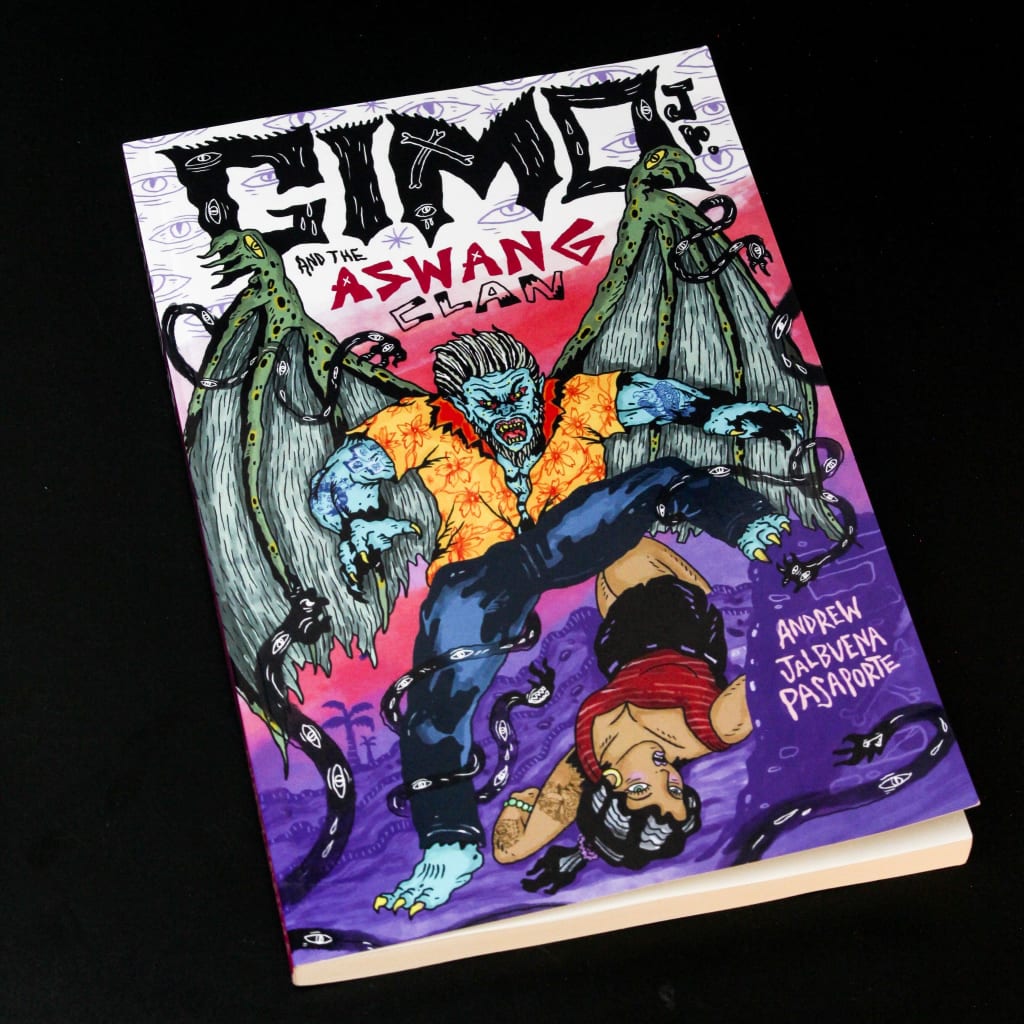
A novel for young Filipino readers in the middle-grade age range, Andrew Jalbuena Pasaporte's work "Gimo Jr and the Aswang Clan" may not be an award-winning yet it can attract the readers' attention. With the sprouting of new voices, the National Book Development Board has a pivotal task of supporting and appraising these authors and thereby making sure that their pieces of work end up in the hands of eager young readers.
Appreciation of Philippine mythology by Filipino middle-grade children stems from its power to imbue dominion, identity, and cultural awareness among the youth. While the world seems to be rapidly adopting the globalization mode, these tales act as a pillar, wherein the young minds and their roots stand firm and flourish in the fertile grounds of their culture. Besides adrenaline-pumping adventures that showcase Engkantos and Aswangs, these kids develop a strong connection to their roots.
The integration of Philippine mythology in literature is both entertaining and educational in nature as it gives pleasure while imparting knowledge at the same time. It is no longer simply a medium through which they can acquire information about their origin, their customs, and traditional beliefs but a powerful vessel that has shaped their mold. At this stage of modernization, these stories become the intergenerational story bridges, which serve the key purpose of not letting history forget but passing it on to the storytellers of the future.
For instance, the extensive diversity of mythological creatures allows middle-grade readers to reconsider their surroundings from a Filipino point of view. The engkantos and the equally beautiful aswangs are part of the deep cultural heritage of the Philippines. These creatures are a glimpse of Philippine culture, and what makes it special and unique. By these stories, children will have a wide knowledge of their surroundings which helps them to become sympathetic media. They will also learn to love what makes our culture interesting and diverse.
In the Philippine mythology in many stories too, the unique themes are introduced that are common from a childlike point of view in every part of the world. Friendship, courage, and the good fight against evil, hugely shaped the themes in these legends. The moment these tales transcend the Filipino children of middle grade, they find their peers in different cultures and the understanding that beneath the cultural differences, humanity still retains its universal essence dawns upon them.
At the end of the day, the fascinating world of Philippine mythology, depicted by authors like Arnold Arre, Eliza Victoria, Paulo Chikiamco, Budjette Tan, and Yvette Tan, has much to do with the development of our country's children in grade 8. This sort of tale may be bewitching and often serves as a mirror that reflects the cultural heritage vividly. Readers of various age groups will be able to sail the realm of engkantos and aswangs, which coincides with their initial journey of self-discovery. In this hypothetical situation, they will develop a deep love and respect for their ancestral heritage. Writing is the main tool that the National Book Council for Development and Promotion of Literature uses to foster new writers and guarantee that the charm of Philippine mythology continues to be the guiding light to the audiences.
About the Creator
Keep reading
More stories from Shella Mae Villanueva and writers in BookClub and other communities.
The Filipino Aswang Book Tales in Middle-Grade Literature
Among the diverse literature, there comes the Filipino Aswang Book as an exquisite piece of art made up of cultural heritage, folk-drawn threads, and mysteriously charmed middle-grade stories. During the reading of literary journeys, one cannot deny the magic that we find when titles such as “Marikit and The Ocean Of Stars” by Caris Avendaño Cruz or Vampires of Portlandia By Jason Tanamor and Dark Folk Tales from Philippine Countryside Louises Bulaong appear.
By Shella Mae Villanueva2 years ago in BookClub
Rachel Reviews: Lakefront Wolves by Joseph Deegan
Meet Finn. He's an 18 year old kid who has potential. He's bright with great school scores and he's also an athlete, a footballer of some prowess. He has it all going for him, it would seem, and yet, he's determined to send what could be a well-planned, stable existence firmly off the rails. He drinks, he smokes, he takes drugs, he has violent tendencies and he's in danger of losing not only his mind but all that he holds dear.
By Rachel Deeming15 days ago in BookClub
7 Amazing Books to Read When You're Feeling Lazy
We all have those moments when life feels slow, energy is low, and the idea of tackling dense, heavy books feels impossible. Yet, even on our laziest days, reading can still be one of the most rewarding ways to spend time. The trick lies in choosing the right books—stories that are engaging without being exhausting, inspiring without being overwhelming, and comforting without feeling trivial.
By Diana Meresc6 days ago in BookClub
Babbling Dixie
The short form of tomorrow is never the whole story. Abbreviations mean nothing when we are born to die and we all are aren't we? Being spoken for before birth is something we're not supposed to remember like some kind of karma after effect. Still here we are spending our lives looking for each other.
By Canuck Scriber Lisa Lachapelleabout 7 hours ago in Fiction




Comments (1)
Loved this article by Shella Mae Villanueva—it's spot on about how Philippine mythology shapes young minds. Gimo Jr. and the Aswang Clan came to mind right away—it’s a fun intro to aswangs without being too scary. Compared to darker titles like Trese or Takod, it really fits that middle-grade space. Wonder if we’ll see more stories blending myth with real-life Filipino experiences soon?