
One Dangerous Book You Should Read at Your Own Risk: Man’s Search for Meaning
The Life-Changing Truth About Pain, Purpose, and Human Resilience

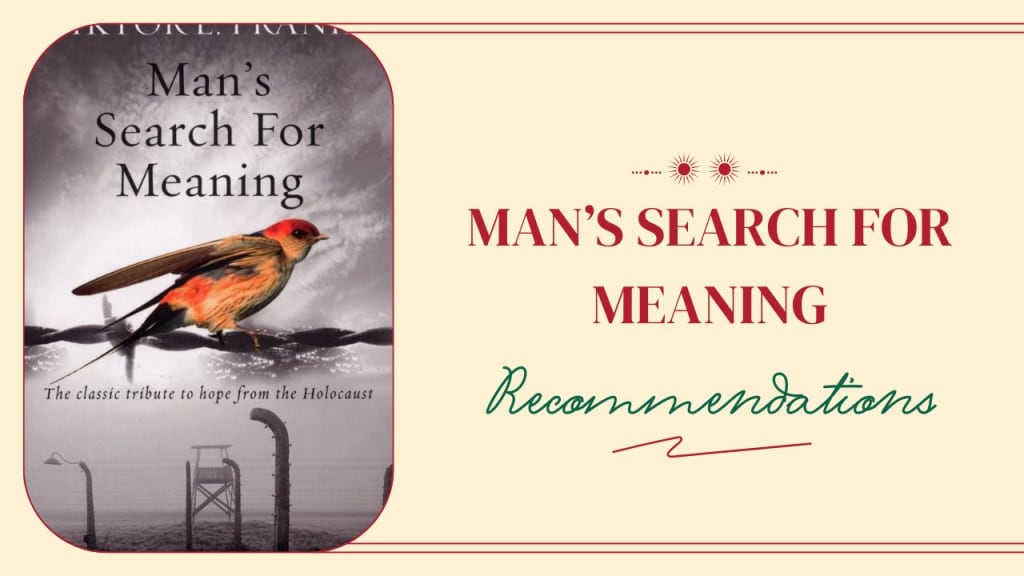
There are books that entertain, books that educate, and books that quietly change your life. But then there are books that unsettle you to your core—books that shake the very foundation of how you see the world. Man’s Search for Meaning by Viktor Frankl is one of those rare, dangerous books. It is not dangerous because of any malicious intent. It is dangerous because of its ability to confront the reader with raw truth—about suffering, responsibility, and the human will to live. Read it, and you may never look at your own life the same way again.
Disclaimer: As an Amazon Associate, I earn from qualifying purchases. This means that if you click on an Amazon link and make a purchase, I may earn a small commission at no additional cost to you.
Who Was Viktor Frankl?
Viktor E. Frankl (1905–1997) was an Austrian neurologist, psychiatrist, and Holocaust survivor. He is best known as the founder of logotherapy, a form of existential analysis that centers the human search for meaning as the primary motivational force in life.
Frankl survived four Nazi concentration camps, including Auschwitz. During those years of horror, he lost his wife, parents, and brother. Yet, instead of becoming bitter, he transformed his suffering into one of the most powerful psychological theories of the 20th century. His personal story and insights are compiled in Man’s Search for Meaning, a book that has sold more than 12 million copies worldwide and is considered one of the most influential books ever written.
What Is Man’s Search for Meaning About?
Published in 1946, Man’s Search for Meaning is part memoir, part psychological treatise. The first half recounts Frankl’s personal experiences as a prisoner in Nazi concentration camps. The second half introduces the core concepts of logotherapy and explores how humans can endure unimaginable suffering by finding purpose in their lives.
Frankl’s core belief is simple yet profound:
“Those who have a ‘why’ to live can bear almost any ‘how’.”
This one sentence encapsulates the dangerous truth this book delivers—dangerous because it asks you to reconsider how you respond to your own pain, your own trauma, your own despair.
Why This Book Is Dangerous
At first glance, Man’s Search for Meaning doesn’t appear dangerous. It’s short, accessible, and filled with wisdom. But here’s what makes it so impactful and unsettling:
1. It Destroys the Victim Mentality
Frankl doesn't deny suffering or injustice. But he insists that we are not defined by what happens to us—we are defined by how we respond. Even in the depths of Auschwitz, he argues, a person can choose their attitude. That’s a terrifying idea because it strips us of excuses. It forces us to ask: What am I doing with my suffering?
2. It Makes You Confront Your Own Life
Most of us float through life without questioning our purpose. Frankl demands that we ask hard questions: Why are you here? What gives your life meaning? Are you living up to it? These aren’t comfortable questions, and they can be emotionally destabilizing—especially if you’ve never considered them before.
3. It Challenges Modern Notions of Happiness
In an age obsessed with comfort and instant gratification, Frankl’s message feels like a slap in the face. He says meaning—not happiness—is the key to fulfillment. Sometimes that meaning comes through pain, through sacrifice, or through responsibility. It’s not what we want to hear, but it might be exactly what we need.
Key Lessons from Man’s Search for Meaning
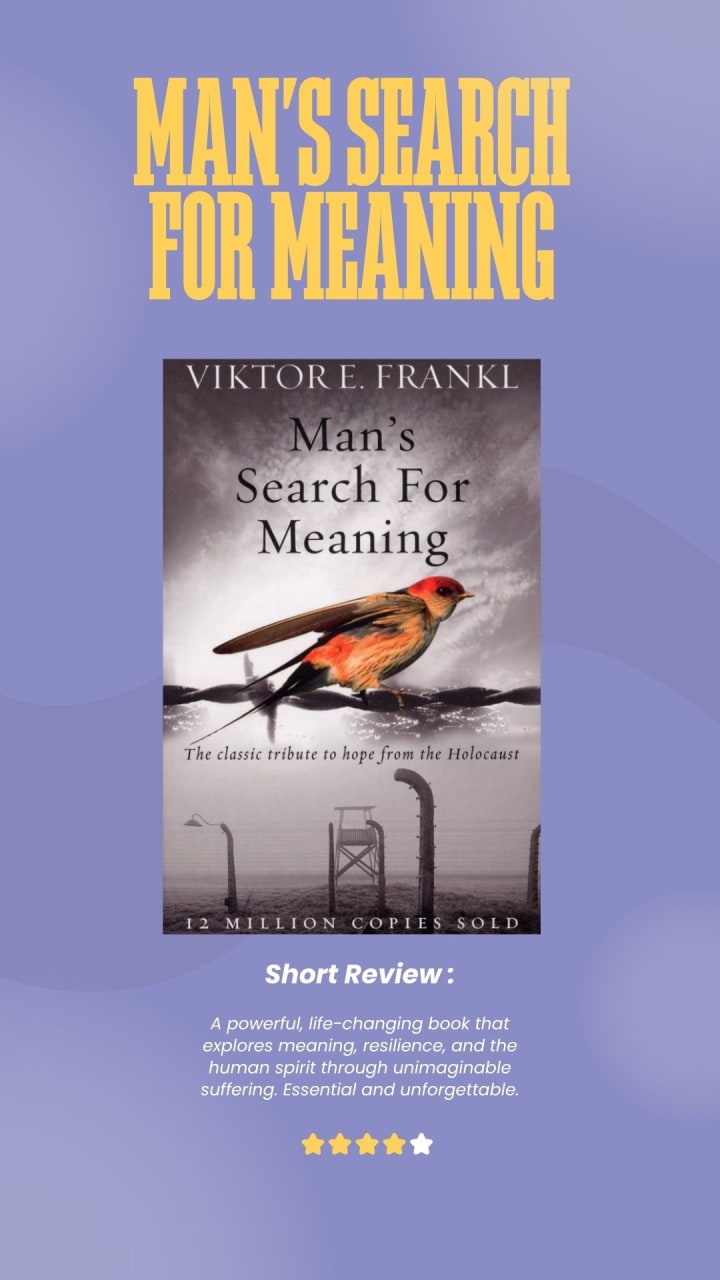
Reading this book may shake you, but it will also offer life-changing insights. Here are some of the most powerful lessons:
1. Suffering is Inevitable—But It Can Be Meaningful
Frankl writes, “If there is meaning in life at all, then there must be meaning in suffering.” He isn’t glorifying pain; he’s reframing it. He believes that suffering gives us an opportunity to grow, to deepen our character, and to transcend ourselves.
2. Freedom Lies in Our Response
You cannot always control your circumstances, but you can control your response. Frankl famously said:
“Everything can be taken from a man but one thing: the last of the human freedoms—to choose one’s attitude in any given set of circumstances.”
This idea empowers and terrifies. It places responsibility directly in your hands.
3. Meaning Is Found Through Three Avenues
According to Frankl, we find meaning in life in three ways:
- By creating work or doing a deed
- By experiencing something or encountering someone (love, beauty, art)
- By the attitude we take toward unavoidable suffering
This tripartite model offers a clear, yet deeply philosophical framework for living.
Who Should Read This Book?
This is not a book for passive readers or those looking for feel-good inspiration. It is for:
- People experiencing grief, depression, or trauma
- Seekers of deeper purpose
- Anyone ready to confront their own beliefs about life, death, and meaning
If you’ve ever felt lost, hopeless, or broken, this book might change the direction of your life.
When Not to Read This Book
While the book is ultimately hopeful, it does take you into some of the darkest corners of human experience. It may not be suitable for readers currently going through acute emotional crises without support. Frankl’s clinical, philosophical tone may not feel comforting to everyone. Read it when you’re ready—not just curious.
Final Thoughts: Read It at Your Own Risk
Man’s Search for Meaning is not dangerous in the traditional sense. It won’t corrupt your mind or manipulate your beliefs. But it is dangerous to your complacency, to your excuses, to your denial. It forces you to confront the uncomfortable truth that even in suffering, you can find meaning—and in meaning, you can find life.
If you're willing to face that truth, then read this book. But read it at your own risk.
FAQs
Is Man’s Search for Meaning depressing?
It’s emotionally heavy, but ultimately uplifting. Frankl's message is one of resilience and hope.
Is this book suitable for young readers?
It’s best for mature teens and adults due to its themes of suffering and the Holocaust.
How long does it take to read?
About 4–6 hours depending on your pace. But its impact lasts a lifetime.
What genre is it?
Memoir, psychology, philosophy, self-help.
Conclusion
Man’s Search for Meaning by Viktor Frankl is a small book with massive impact. It’s one of those rare reads that challenges your worldview, shakes your assumptions, and leaves you permanently changed. That’s why it’s a dangerous book—because the truth it reveals may alter your life forever. Read it when you're ready. And once you do, don't be surprised if you start asking yourself, every day: What is the meaning of my life?
About the Creator
pestosol
Hi.
I am Hmimda 30 years old From Algeria. I am a blogger. I like to share articles about decoration and designs
My New Book is Finally Here
My poetry collection Beautiful and Brutal Things is done. It's actually done and finally published over 270 pages. Over a year of my life went into this book. More than a year, really. Long days at my computer, sometimes seven days a week because I couldn't stop even when I probably should have. Then two months of editing that felt harder than the writing itself. But it's finished, and I'm still standing, and the book is real.
By Tim Carmichael2 days ago in BookClub
Whiskers, Wanderlust & the World’s Street Cats
Welcome back to The Chapter Café, where stories are always on the menu and comfort is served by the chapter. I’m your host, Kristen, and today we’re curling up with a book that’s part travelogue, part love letter, and entirely purr-worthy. On today’s menu? Street Cats & Where to Find Them by Jeff Bogle—a photographic journey through the world’s most feline-friendly cities, told with warmth, wit, and a deep appreciation for the cats who roam them.
By Kristen Barenthaler4 days ago in BookClub



Comments
There are no comments for this story
Be the first to respond and start the conversation.