
Leveraging “The Reciprocity Advantage” for Strategic Innovation
We Can Learn & Grow Together Through Reciprocity!!!

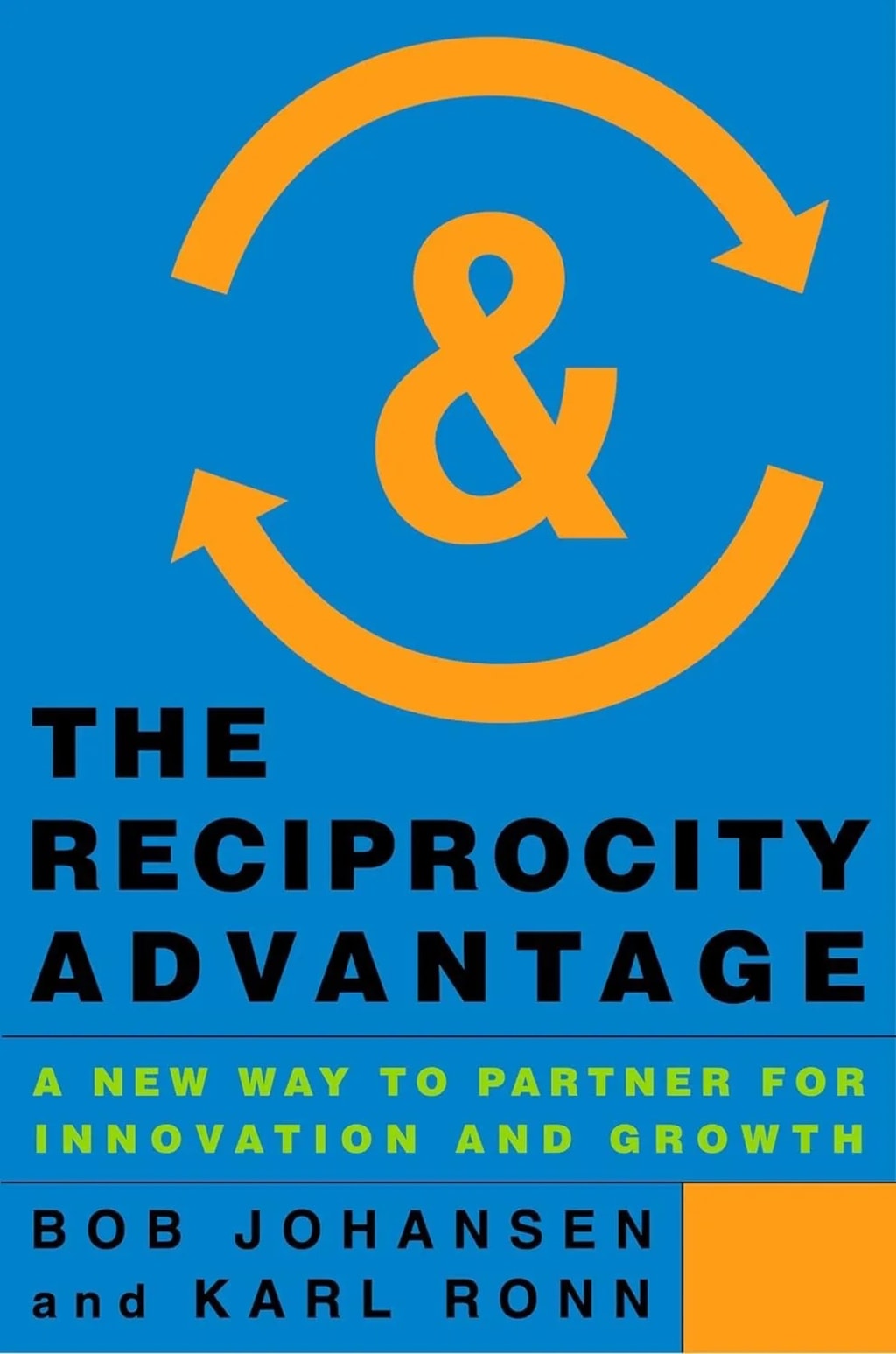
In today’s hyper-competitive business landscape, where disruption is the new norm, companies must constantly innovate to stay ahead. “The Reciprocity Advantage: A New Way to Partner for Innovation and Growth” by Bob Johansen and Karl Ronn offers a compelling framework for fostering innovation through strategic partnerships. Drawing on their extensive experience in business strategy and innovation, Johansen and Ronn present a roadmap for organizations to harness the power of reciprocity to drive growth and create a sustainable competitive advantage.
1. Understanding the Concept of Reciprocity: At the heart of “The Reciprocity Advantage” lies the concept of reciprocity — the idea that mutually beneficial partnerships can drive innovation and growth for all involved parties. Johansen and Ronn argue that traditional competitive strategies are no longer sufficient in today’s interconnected world. Instead, they advocate for a shift towards collaborative approaches that leverage the strengths of multiple organizations. By understanding the principles of reciprocity, companies can identify strategic partners, build trust, and unlock new opportunities for innovation.
2. Identifying Strategic Partnerships: One of the key insights of the book is the importance of strategic partner selection. Johansen and Ronn emphasize the need for companies to align their goals and capabilities with those of potential partners. Whether it’s through complementary technologies, market access, or shared values, successful partnerships are built on a foundation of mutual benefit. The authors provide practical frameworks and case studies to guide organizations in identifying and evaluating potential partners, ensuring that they are well-positioned to leverage The Reciprocity Advantage.
3. Building Trust and Collaboration: Trust is a fundamental component of successful partnerships, and Johansen and Ronn devote significant attention to this topic in their book. They argue that trust is built through transparency, reliability, and a shared commitment to mutual success. By fostering open communication and aligning incentives, companies can create an environment conducive to collaboration and innovation. The authors offer actionable strategies for building trust at both the individual and organizational levels, enabling companies to navigate the complexities of partnership dynamics effectively.
4. Navigating Power Dynamics: In any partnership, power dynamics play a crucial role in shaping outcomes. Johansen and Ronn acknowledge the inherent tensions that can arise between partners, especially when resources, capabilities, and interests are unevenly distributed. However, they argue that these tensions can be managed through effective negotiation, compromise, and a focus on long-term value creation. By adopting a mindset of reciprocity and seeking win-win solutions, companies can overcome power imbalances and build stronger, more resilient partnerships.
5. Driving Innovation and Growth: Ultimately, the goal of strategic partnerships is to drive innovation and growth. Johansen and Ronn outline a range of strategies for achieving this objective, from co-creation and knowledge sharing to joint ventures and ecosystem partnerships. By leveraging the complementary strengths of partner organizations, companies can accelerate the pace of innovation, enter new markets, and create value for customers. The authors provide numerous examples of successful partnership models across various industries, illustrating the potential impact of the reciprocity advantage on business outcomes.
6. Sustaining Competitive Advantage: Finally, Johansen and Ronn address the challenge of sustaining competitive advantage in a rapidly evolving business environment. They argue that The Reciprocity Advantage is not a one-time event but rather a continuous process of adaptation and renewal. Companies must continuously reassess their partnerships, anticipate changes in the market, and innovate to stay ahead of the competition. By embracing a mindset of strategic agility and learning from both successes and failures, organizations can position themselves for long-term success in the age of reciprocity.
In conclusion, “The Reciprocity Advantage” offers a compelling vision for the future of business partnerships. Johansen and Ronn provide a comprehensive framework for leveraging reciprocity to drive innovation, growth, and competitive advantage. By understanding the principles of reciprocity, identifying strategic partners, building trust, navigating power dynamics, driving innovation, and sustaining competitive advantage, companies can unlock new opportunities for success in an increasingly interconnected world. Whether you’re a business leader, entrepreneur, or innovator, this book provides invaluable insights and practical strategies for thriving in the age of reciprocity.
CLICK HERE TO READ IT YOURSELF TODAY!!!
Disclaimer: I am an affiliate with Amazon and may receive commissions on any purchase made from this post or link with NO additional cost to you.
Thank you 🙏
Future of Resilience
About the Creator
Future of Resilience
I enjoy writing book and product review, relationship and parenting blogs. I hope you enjoy my writing. Happy Reading!
Keep reading
More stories from Future of Resilience and writers in BookClub and other communities.
Happy & Strong: A Transformative Journey with Jaime Villalovos
In the pursuit of happiness and strength some times can seem like an elusive journey. Jaime Villalovos, in her groundbreaking book “Happy & Strong,” offers a refreshing perspective on how to navigate life’s challenges with resilience and joy. Drawing from personal experiences, psychological insights, and practical strategies, Villalovos provides readers with a roadmap to cultivate both happiness and strength in their lives. In this review, we’ll delve into the key takeaways and transformative power of “Happy & Strong.”
By Future of Resilience 2 years ago in BookClub
Rachel Reviews: Lakefront Wolves by Joseph Deegan
Meet Finn. He's an 18 year old kid who has potential. He's bright with great school scores and he's also an athlete, a footballer of some prowess. He has it all going for him, it would seem, and yet, he's determined to send what could be a well-planned, stable existence firmly off the rails. He drinks, he smokes, he takes drugs, he has violent tendencies and he's in danger of losing not only his mind but all that he holds dear.
By Rachel Deeming14 days ago in BookClub
7 Best Books That Will Change The Way You Think About Money
Money shapes our lives in more ways than we often realize. Yet, many of us approach it with outdated beliefs, habits, or misconceptions that can hinder financial growth, wealth-building, and even personal fulfillment. The right books don’t just teach you how to manage money—they transform your mindset, influence your decisions, and help you cultivate long-term financial resilience.
By Diana Meresc6 days ago in BookClub


Comments
There are no comments for this story
Be the first to respond and start the conversation.