
How to improve your writing in 2026
Here’s How Beginners Can Still Win

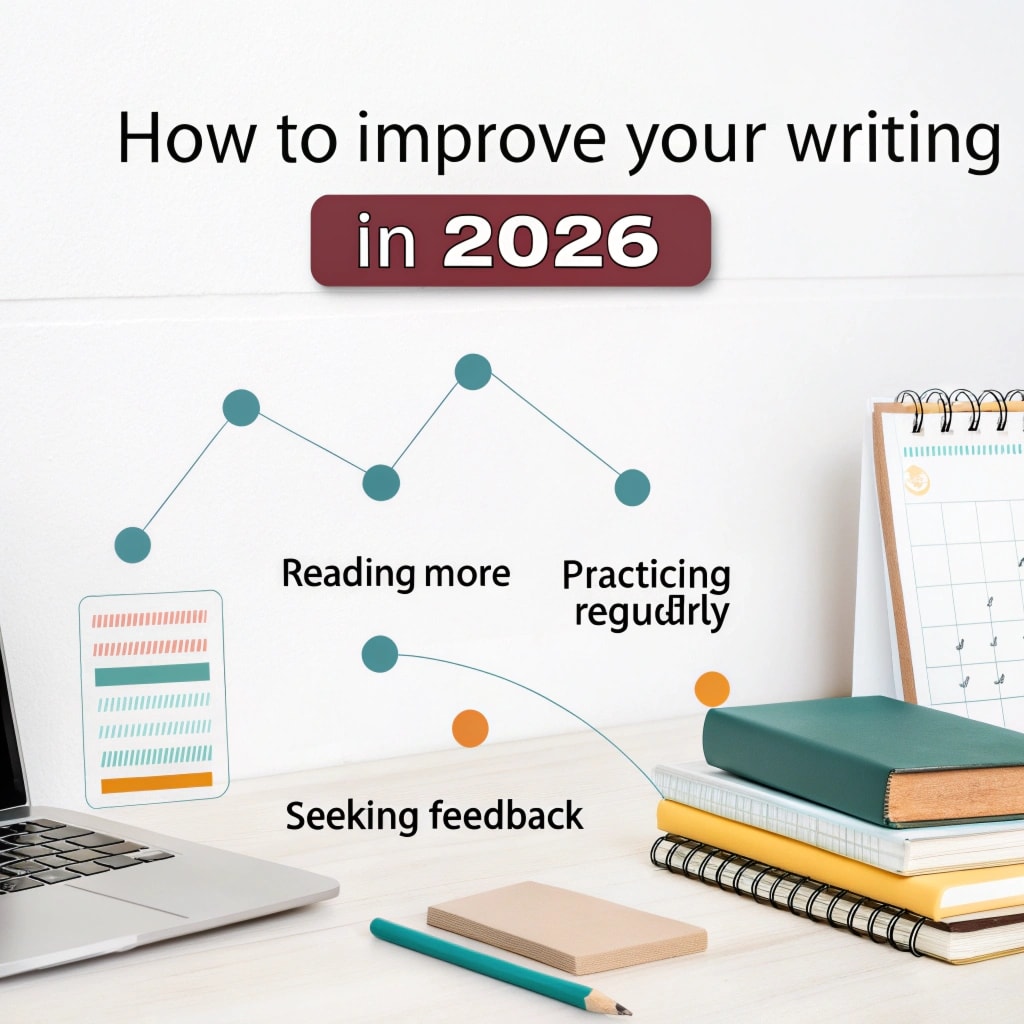
Writing in 2026 is no longer just a creative skill—it is a survival skill in a world driven by ideas, attention, and communication. Whether you are writing articles, blogs, social media posts, scripts, or long-form essays, your ability to express thoughts clearly and persuasively determines how far your message travels. The internet is saturated with content, but strong writing still rises to the top. The difference is not talent alone; it is strategy, discipline, and awareness.
Step By Step Guide
Start by strengthening your thinking before you strengthen your sentences. Writing is a reflection of how clearly you understand a topic. If your thoughts are scattered, your writing will be too. Before you begin, take time to outline your main idea and supporting points. Ask yourself what problem you are solving or what value you are offering the reader. In 2026, readers want direction. They want to know quickly why your writing matters to them.
Clarity should always come before complexity. Many writers believe using advanced vocabulary makes their work impressive, but clarity is what keeps readers engaged. Simple language is powerful when used intentionally. Short sentences create impact. Clear structure builds trust. If a sentence can be misunderstood, rewrite it. If a paragraph feels heavy, break it apart. The best writers in 2026 are not the most complicated ones, but the clearest.
Understanding your audience is more important than ever. Writing without a specific reader in mind leads to generic content. Know who you are talking to, what they care about, and what problems they face. Speak directly to them. When readers feel seen and understood, they stay. High-engaging writing feels personal, even when reaching thousands of people.
Consistency is the foundation of improvement. Waiting for inspiration is a trap. Professional writers write even when they don’t feel ready. Set a realistic writing schedule and protect it. Daily writing, even in small amounts, trains your brain to generate ideas faster and express them more effectively. Over time, writing becomes less effort and more instinct. In 2026, consistency is a competitive advantage.
Reading remains one of the most effective ways to improve your writing. Read high-quality articles, books, and essays across different genres. Pay attention to how writers open their pieces, how they transition between ideas, and how they end with impact. Reading sharpens your instincts and expands your range. The more you read, the more tools you have at your disposal.
Editing is where real growth happens. First drafts are meant to be imperfect. Give yourself permission to write badly at first. Then return with a critical eye. Remove filler words. Tighten your arguments. Strengthen weak transitions. Ask yourself if every paragraph serves a purpose. In 2026, attention is limited, so precision is essential.
Developing a unique voice is another critical step. Your voice is your perspective, shaped by your experiences, beliefs, and observations. It cannot be copied or generated artificially. Avoid sounding like everyone else. Say things the way you would say them. Authentic writing creates emotional connection, and emotional connection drives engagement.
Learning to structure your writing for digital platforms is essential. Strong openings hook readers immediately. Subheadings guide the eye. Short paragraphs improve readability. Visual spacing matters. Even the strongest ideas can be ignored if the presentation feels overwhelming. In 2026, writing is both mental and visual.
Feedback plays a major role in improvement. Share your work with others and observe their reactions. Notice where they stop reading, where they get confused, and what resonates. Feedback is not criticism—it is data. Writers who grow quickly are willing to learn without becoming defensive.
Another often overlooked skill is rewriting. Great writing is rarely written once. Rewriting forces you to think deeper and express ideas more effectively. Each revision sharpens your message. Over time, rewriting becomes faster and more intuitive.
Finally, adopt a long-term mindset. Writing is not about instant success or viral moments. It is about building trust, skill, and confidence over time. Every piece you write improves the next one. In 2026, the most respected writers are not those who chase trends, but those who commit to the craft.
If you focus on clarity, discipline, authenticity, and continuous learning, your writing will not only improve—it will stand out in a crowded digital world. And when your writing stands out, your voice becomes impossible to ignore.
About the Creator
Rachel Reviews: Lakefront Wolves by Joseph Deegan
Meet Finn. He's an 18 year old kid who has potential. He's bright with great school scores and he's also an athlete, a footballer of some prowess. He has it all going for him, it would seem, and yet, he's determined to send what could be a well-planned, stable existence firmly off the rails. He drinks, he smokes, he takes drugs, he has violent tendencies and he's in danger of losing not only his mind but all that he holds dear.
By Rachel Deeming11 days ago in BookClub
7 Books That Will Push You Further Than You Thought Possible
Every so often, we encounter a book that doesn’t merely inform us—it reshapes how we think, act, and approach our limits. These are the books that challenge our comfort zones, ignite ambition, and force us to confront the gap between who we are and who we could become.
By Diana Meresc3 days ago in BookClub
Top tipple tricks
Been thinking a lot about drinking, lately. Not least because of a recent episode of over-indulgence and the inevitable after effects. Some readers may recall the earlier articles I wrote about beating the booze. Here I set out an experiment in techniques for cutting down on my alcohol intake. The experiment was successful, the techniques worked, and I have armed myself with an arsenal of weapons in the war against the demon drink. I have yet to fire the first round however. It's all a question of timing (perhaps procrastination).
By Raymond G. Taylor4 days ago in Psyche



Comments
There are no comments for this story
Be the first to respond and start the conversation.