
"How a Deaf and Blind Girl Found Her Voice and Changed the World"
The Story of Helen Keller: A Journey from Darkness to Light
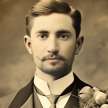

Helen Keller's life is one of the most powerful testaments to the strength of human spirit, perseverance, and the transformative impact of education and compassion. Born in the late 19th century, she overcame extraordinary odds to become one of the most respected authors, activists, and lecturers of the 20th century. Her story continues to inspire people around the world to this day.
Helen Adams Keller was born on June 27, 1880, in Tuscumbia, Alabama, to Captain Arthur H. Keller and Kate Adams Keller. She was a healthy child with normal sight and hearing until a sudden illness struck her when she was just 19 months old. Historians believe it was either scarlet fever or meningitis. The illness left Helen completely blind and deaf. Cut off from the world of sound and sight, she was thrust into a world of darkness and silence before she had even learned to speak.
As a young child, Helen was intelligent and curious, but her inability to communicate left her frustrated. She often threw tantrums and was described by many as wild and unruly. Her family, though loving, was at a loss about how to help her. Desperate for guidance, her parents sought advice from several experts and eventually came across Alexander Graham Bell, the inventor of the telephone, who was working with deaf children at the time. Bell referred them to the Perkins Institute for the Blind in Boston, where they found a young teacher who would change Helen’s life forever: Anne Sullivan.
Anne Sullivan, herself visually impaired, arrived at the Keller household in March 1887 when Helen was almost seven years old. Armed with patience, determination, and empathy born of her own struggles, Anne began the monumental task of teaching Helen how to communicate. At first, Helen resisted, unable to understand the purpose of the strange signs Anne was making into her hand. But everything changed on April 5, 1887.
On that day, Anne took Helen to a water pump in the yard. As she pumped cool water over Helen’s hand, she spelled out W-A-T-E-R with her other hand into Helen’s palm. Suddenly, the connection was made. Helen understood that the movements Anne made with her fingers stood for the water flowing over her hand. It was a breakthrough moment — the light of understanding illuminated her dark world. She quickly wanted to know the names of everything around her.
From that point on, Helen’s hunger for knowledge was insatiable. She learned hundreds of words, then sentences, and eventually how to read Braille and use a typewriter. With Anne by her side, she studied subjects ranging from mathematics and geography to French and Latin. Her extraordinary memory and determination allowed her to achieve what many had thought impossible.
In 1900, Helen began attending Radcliffe College, becoming the first deaf-blind person to attend such an institution. She graduated cum laude in 1904 with a Bachelor of Arts degree. Throughout college, Anne Sullivan translated lectures and texts for her, spelling them into Helen's hand letter by letter. It was an immense task, but the two women’s bond, built on mutual respect and love, made it possible.
Helen Keller's life was not just about personal triumph; it was also about using her voice — metaphorically, since she could not speak clearly — to champion the rights of others. She became a passionate advocate for people with disabilities, helping to found the American Civil Liberties Union (ACLU) in 1920. She worked tirelessly to improve education and living conditions for the blind and deaf, and she gave lectures around the world, despite the challenges of her condition.
Helen also authored more than a dozen books and numerous articles. Her autobiography, The Story of My Life, published in 1903 when she was only 23, remains a classic of inspirational literature. In it, she detailed her early struggles and the pivotal role that Anne Sullivan played in her development. The book was translated into multiple languages and continues to be widely read today.
Over the decades, Helen Keller met many notable figures, including every U.S. president from Grover Cleveland to Lyndon B. Johnson. She also corresponded with prominent thinkers like Mark Twain, who admired her intelligence and wit. In 1964, President Johnson awarded her the Presidential Medal of Freedom, one of the United States' highest civilian honors.
Tragically, Helen outlived Anne Sullivan, who passed away in 1936. Though deeply saddened, Helen continued her work with the help of Polly Thomson, another dedicated companion and interpreter.
Helen Keller passed away in her sleep on June 1, 1968, just a few weeks shy of her 88th birthday. She was buried next to Anne Sullivan in the National Cathedral in Washington, D.C., a fitting resting place for a woman who brought light to so many lives.
Helen’s life remains a profound lesson in courage and the limitless possibilities of the human spirit. She demonstrated that with determination, support, and education, even the most insurmountable obstacles can be overcome. She once wrote, “Although the world is full of suffering, it is full also of the overcoming of it.” Her story is the embodiment of that truth.
About the Creator
Keep reading
More stories from writers in BookClub and other communities.
My New Book is Finally Here
My poetry collection Beautiful and Brutal Things is done. It's actually done and finally published over 270 pages. Over a year of my life went into this book. More than a year, really. Long days at my computer, sometimes seven days a week because I couldn't stop even when I probably should have. Then two months of editing that felt harder than the writing itself. But it's finished, and I'm still standing, and the book is real.
By Tim Carmichael10 days ago in BookClub
7 Adventure Books You Need To Read In 2026
Adventure books do more than entertain—they awaken courage, curiosity, and the deep human desire to explore the unknown. Long before social media and streaming platforms, stories of daring journeys, survival against the odds, and encounters with unfamiliar worlds shaped how we understood ourselves and our place in the world.
By Diana Meresc6 days ago in BookClub
One Hard Thing
Stop me if you’ve heard this one before: You have the number, you know your schedule- you’ve even picked out the perfect day and time to make this appointment. Shoot, you’ve even picked out alternative days and times just in case their schedules can’t accommodate you!
By Taylor Rigsby2 days ago in Motivation



Comments
There are no comments for this story
Be the first to respond and start the conversation.