
Holocaust Nonfiction
Showcasing the dark reality of the time period...
The Zookeeper's Wife by Diane Ackerman
The true story of how the keepers of the Warsaw Zoo saved hundreds of people from Nazi hands. When Germany invaded Poland, Stuka bombers devastated Warsaw--and the city's zoo along with it. With most of their animals dead, zookeepers Jan and Antonina Żabiński began smuggling Jews into empty cages. Another dozen "guests" hid inside the Żabińskis' villa, emerging after dark for dinner, socializing, and, during rare moments of calm, piano concerts. Jan, active in the Polish resistance, kept ammunition buried in the elephant enclosure and stashed explosives in the animal hospital. Meanwhile, Antonina kept her unusual household afloat, caring for both its human and its animal inhabitants--otters, a badger, hyena pups, lynxes--and keeping alive an atmosphere of play and innocence even as Europe crumbled around her.
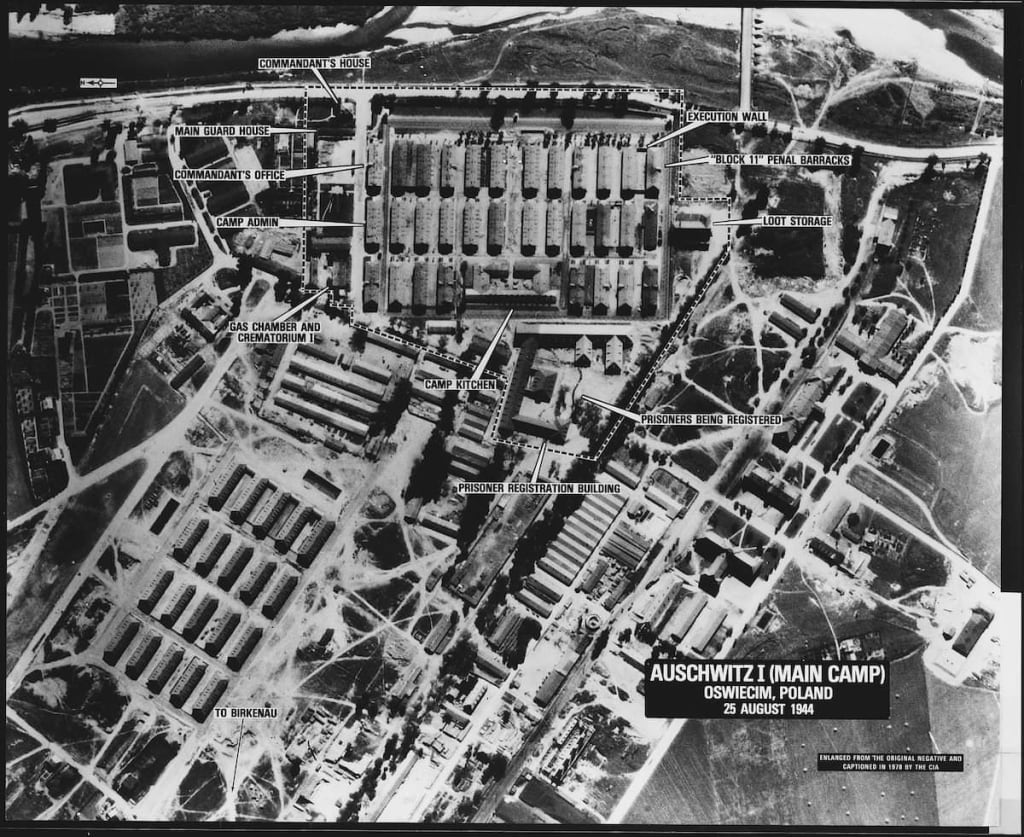
Created by the United States Holocaust Memorial Museum, the Atlas contains some 200 full colour maps and explanatory materials that detail all known aspects of the Holocaust between the years 1933 and 1950.
A Train in Winter by Caroline Moorehead
In January 1943, the Gestapo hunted down 230 women of the French Resistance and sent them to Auschwitz. This is their story, told in full for the first time--a searing and unforgettable chronicle of terror, courage, defiance, survival, and the power of friendship to transcend evil that is an essential addition to the history of World War II.
Contains a selection of transcripts taken from the sound archives of Britain's Imperial War Museum and the United States Holocaust Memorial Museum. Interviews of Holocaust survivors, refugees, families of the murdered and of survivors, aid workers and troops who liberated the camps are included.
The Holocaust by Martin Gilbert
Sets the scene with a brief history of anti-Semitism prior to Hitler, and documents the horrors of the Holocaust from 1933 onward, in an incisive, interpretive account of the genocide of World War II.
The Light of Days by Judy Batalion
One of the most important untold stories of World War II. The light of days is a soaring landmark history that brings to light the extraordinary accomplishments of brave Jewish women who helped weaponize Poland's Jewish youth groups to resist the Nazis. Witnesses to the brutal murder of their families and the violent destruction of their communities, a cadre of Jewish women in Poland--some still in their teens--became the nerves of a wide-ranging resistance network that fought the Nazis.
IBM and the Holocaust by Edwin Black
IBM & the Holocaust tells of IBM's strategic alliance with Nazi Germany--beginning in 1933 in the 1st weeks that Hitler came to power & continuing well into WWII. As the 3rd Reich embarked upon its plan of conquest & genocide, IBM & its subsidiaries helped create enabling technologies, step-by-step, from the identification & cataloging programs of the 30s to the selections of the 40s. Only after Jews were identified--a massively complex task Hitler wanted done immediately--could they be targeted for efficient asset confiscation, ghettoization, deportation, enslaved labor & annihilation. It was a cross-tabulation & organizational challenge so monumental, it called for a computer. Of course, in the 30s no computer existed. But IBM's Hollerith punch card technology did exist. Aided by the company's custom-designed & constantly updated Hollerith systems, Hitler was able to automate the persecution of the Jews.
Into the Forest by Rebecca Frankel
Rebecca Frankel's Into the Forest is a gripping story of love, escape, and survival, from wartime Poland to a wedding in Connecticut. In the summer of 1942, the Rabinowitz family narrowly escaped the Nazi ghetto in their Polish town by fleeing to the forbidding Bialowieza Forest. They miraculously survived two years in the woods-through brutal winters, Typhus outbreaks, and merciless Nazi raids-until they were liberated by the Red Army in 1944. After the war they trekked across the Alps into Italy where they settled as refugees before eventually immigrating to the United States. During the first ghetto massacre, Miriam Rabinowitz rescued a young boy named Philip by pretending he was her son. Nearly a decade later, a chance encounter at a wedding in Brooklyn would lead Philip to find the woman who saved him. And to discover her daughter Ruth was the love of his life. From a little-known chapter of Holocaust history, one family's inspiring true story of love, escape, and survival.
The Escape Artist by Jonathan Freedland
In April 1944, Rudolf Vrba became the first Jew to break out of Auschwitz--one of only four who ever pulled off that near-impossible feat. He did it to reveal the truth of the death camp to the world--and to warn the last Jews of Europe what fate awaited them at the end of the railway line. Against all odds, he and his fellow escapee, Fred Wetzler, climbed mountains, crossed rivers and narrowly missed German bullets until they had smuggled out the first full account of Auschwitz the world had ever seen--a forensically detailed report that would eventually reach Franklin Roosevelt, Winston Churchill and the Pope. And yet too few heeded the warning that Vrba--then just nineteen years old--had risked everything to deliver. Some could not believe it. Others thought it easier to keep quiet. Vrba helped save 200,000 Jewish lives--but he never stopped believing it could have been so many more. This is the story of a brilliant yet troubled man--a gifted "escape artist" who even as a teenager understood that the difference between truth and lies can be the difference between life and death, a man who deserves to take his place alongside Anne Frank, Oskar Schindler and Primo Levi as one of the handful of individuals whose stories define our understanding of the Holocaust.
The Nazis Knew My Name by Magda Hellinger
In March 1942, at the age of 25, kindergarten teacher Magda Hellinger was deported from her hometown in Slovakia along with 998 other young women. They were some of the first Jews to be sent to the Auschwitz concentration camp. Very few would survive the next three years until liberation. The SS soon discovered that by putting prisoners in day-to-day charge of the accommodation blocks and even the camps at large--so called Blockälteste and Lagerälteste respectively--they could both reduce the number of guards required to use these "leaders" to deflect attention away from themselves. Magda was one such Jewish prisoner selected for leadership. Like many others during the war she found herself constantly treading a fine line: how to save lives--if only a few at a time--while avoiding being too "soft" and likely sent to the gas chambers. Through her own inner strength and ingenuity, she was able to rise above the horror and cruelty of the camps and build pivotal relationships with the women under her watch, and some of Auschwitz's most notorious Nazi senior officers. Based on Magda's own personal account and completed by her daughter's extensive research, this awe-inspiring story offers us incredible insight into human nature under the pressure to survive, the power of resilience, and the goodness that can shine through even in the most horrific of conditions.
The Watchmaker's Daughter by Larry Loftis
The inspiring true story of Corrie ten Boom, a Dutch watchmaker whose heroic efforts saved the lives of hundreds of Jews during World War II--at a tremendous cost to herself and her family.
Prisoners of the Castle by Ben Macintyre
In this gripping narrative, Ben Macintyre tackles one of the most famous prison stories in history and makes it utterly his own. During World War II, the German army used the towering Colditz Castle to hold the most defiant Allied prisoners. For four years, these prisoners of the castle tested its walls and its guards with ingenious escape attempts that would become legend. But as Macintyre shows, the story of Colditz was about much more than escape. Its population represented a society in miniature, full of heroes and traitors, class conflicts and secret alliances, and the full range of human joy and despair. In Macintyre's telling, Colditz's most famous names--like the indomitable Pat Reid--share glory with lesser known but equally remarkable characters like Indian doctor Birendranath Mazumdar whose ill treatment, hunger strike, and eventual escape read like fiction; Florimond Duke, America's oldest paratrooper and least successful secret agent; and Christopher Clayton Hutton, the brilliant inventor employed by British intelligence to manufacture covert escape aids for POWs. Prisoners of the Castle traces the war's arc from within Colditz's stone walls, where the stakes rose as Hitler's war machine faltered and the men feared that liberation would not come soon enough to spare them a grisly fate at the hands of the Nazis.
We Band of Angels by Elizabeth Norman
In the fall of 1941, the Philippines was a gardenia-scented paradise for the American Army and Navy nurses stationed there. War was a distant rumor, life a routine of easy shifts and evenings of dinner and dancing under the stars. On December 8 all that changed, as Japanese bombs rained on American bases in Luzon, and the women's paradise became a fiery hell. Caught in the raging battle, the nurses set up field hospitals in the jungles of Bataan and the tunnels of Corregidor, where they saw the most devastating injuries of war, and suffered the terrors of shells and shrapnel. But the worst was yet to come. As Bataan and Corregidor fell, a few nurses escaped, but most were herded into internment camps enduring three years of fear and starvation. Once liberated, they returned to an America that at first celebrated them, but later refused to honor their leaders with the medals they clearly deserved. Here, in letters, diaries, and firsthand accounts, is the story of what really happened during those dark days, woven together in a compelling saga of women in war.
The Complete Maus by Art Spiegelman
A brutally moving work of art—widely hailed as the greatest graphic novel ever written—Maus recounts the chilling experiences of the author’s father during the Holocaust, with Jews drawn as wide-eyed mice and Nazis as menacing cats.
I Want You to Know We're Still Here by Esther Safran Foer
Esther Safran Foer grew up in a family where history was too terrible to speak of. The child of parents who were each the sole survivors of their respective families, for Esther the Holocaust was always felt but never discussed. So when Esther's mother casually mentions an astonishing revelation--that her father had a previous wife and daughter, both killed in the Holocaust--Esther resolves to find the truth. Armed with only a black-and-white photo and hand-drawn map, she travels to Ukraine, determined to find the shtetl where her father hid during the war. What she finds not only reshapes her identity but gives her the long-denied opportunity to mourn the all-but-forgotten dead.
Farewell to Manzanar by Jeanne Houston; James D. Houston
Jeanne Wakatsuki was seven years old in 1942 when her family was uprooted from their home and sent to live at Manzanar internment camp—with 10,000 other Japanese Americans. Along with searchlight towers and armed guards, Manzanar ludicrously featured cheerleaders, Boy Scouts, sock hops, baton twirling lessons and a dance band called the Jive Bombers who would play any popular song except the nation's #1 hit: "Don't Fence Me In."
About the Creator
Kristen Barenthaler
Curious adventurer. Crazed reader. Librarian. Archery instructor. True crime addict.
Instagram: @kristenbarenthaler
Facebook: @kbarenthaler
Keep reading
More stories from Kristen Barenthaler and writers in BookClub and other communities.
WWII Nonfiction Books
The Long Night by Steve Wick When William L. Shirer agreed to start up the Berlin bureau of Edward R. Murrow's CBS News in the 1930s, he quickly became both the most trusted and most determined reporter in all of Europe. He did not fall for the Nazi propaganda, as some of his esteemed colleagues did, and fought against both Nazi censorship and American disdain for his relentless tactics. He warned of the consequences if the Nazis were not stopped, all the while developing close ties to the party's elite and maintaining contacts whose allegiances could not be won by other reporters, thus obtaining a unique perspective of the party's rise to power. From the Night of the Long Knives to his removal at bayonet-point from the broadcast center in Vienna during Anschluss, and from the front lines of Germany's invasion of France to his coverage of the Nuremberg trials and the Nazis' demise, Shirer redefined the importance of journalism.
By Kristen Barenthaler8 months ago in BookClub
My New Book is Finally Here
My poetry collection Beautiful and Brutal Things is done. It's actually done and finally published over 270 pages. Over a year of my life went into this book. More than a year, really. Long days at my computer, sometimes seven days a week because I couldn't stop even when I probably should have. Then two months of editing that felt harder than the writing itself. But it's finished, and I'm still standing, and the book is real.
By Tim Carmichael3 days ago in BookClub
7 Cyberpunk Books You Must Read In 2026
Cyberpunk isn’t just a literary genre—it’s a warning signal, a mirror, and a roadmap. Born at the intersection of rapid technological advancement and social decay, cyberpunk books explore high-tech futures haunted by low-life realities.
By Diana Merescabout 3 hours ago in BookClub



Comments
There are no comments for this story
Be the first to respond and start the conversation.