
From Reader to Doer
Bridging the Gap Between Learning and Applying Book Lessons in Daily Life

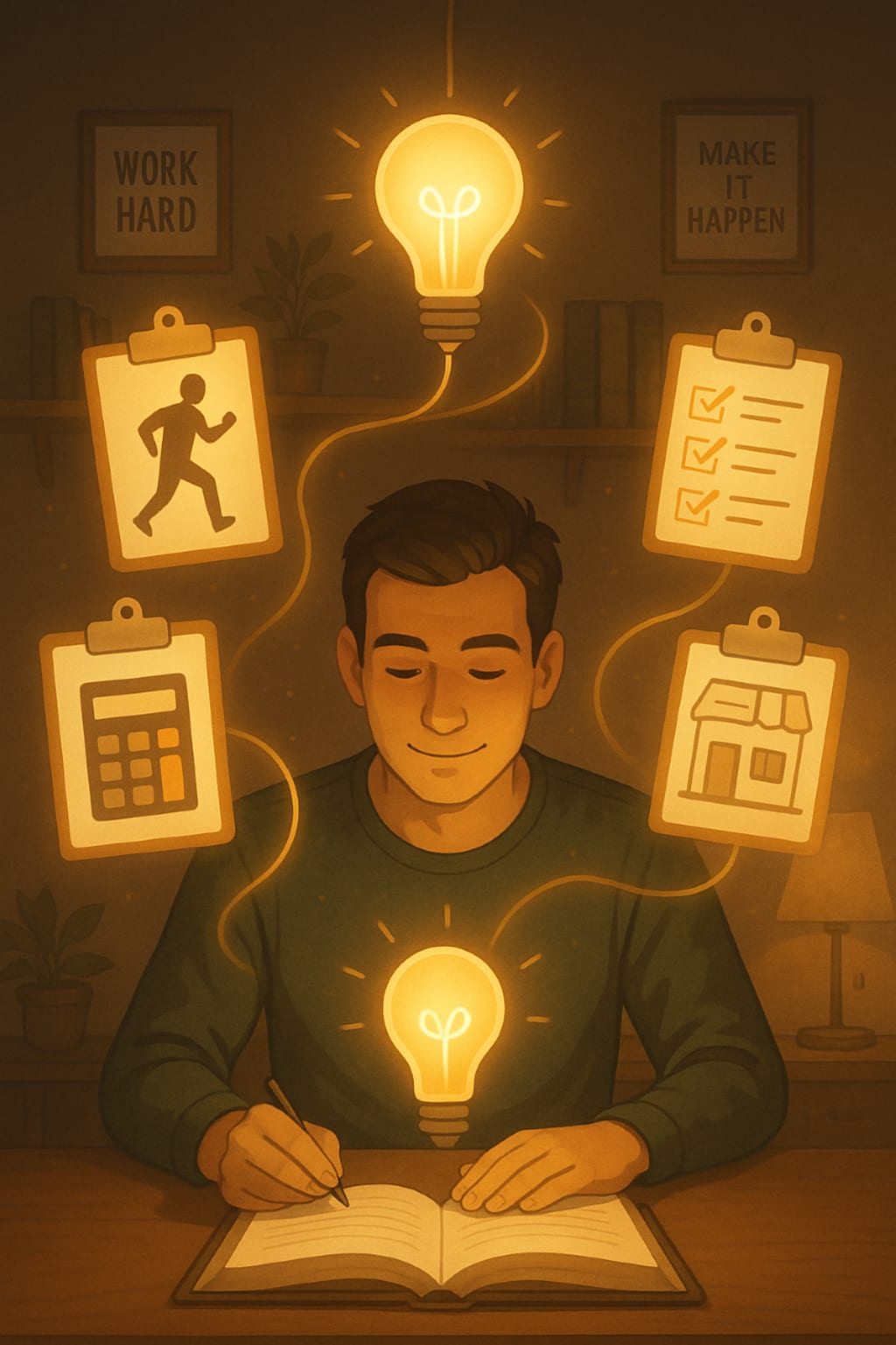
We live in a time where knowledge is more accessible than ever. A single book can offer decades of wisdom, strategies, or inspiration. But how often do we act on what we read? For many, reading has become a passive hobby—an intellectual comfort zone. We finish a book feeling inspired, yet find ourselves unchanged weeks later. The real value of reading lies not in the act itself, but in the transformation it sparks through action.
So, how do you bridge the gap between reading and doing? Let’s explore a practical path that turns passive consumption into active growth.
________________________________________
1. Choose Books with Purpose
Before anything else, be intentional about what you read. If you want to grow your business, improve your mindset, or master time management, pick books that directly address your needs or goals. Reading random titles may be entertaining, but purposeful reading leads to focused action.
📘 Example: Instead of reading five books on motivation, pick one that includes clear strategies, like Atomic Habits by James Clear, and aim to implement a few tools from it.
________________________________________
2. Read Actively, Not Passively
Don’t just turn pages—engage with the content.
• Highlight key ideas
• Write notes in the margins
• Use sticky notes or a reading journal
Active reading builds mental connections and makes it easier to recall and apply ideas. You’re not just observing the knowledge—you’re interacting with it.
________________________________________
3. Summarize in Your Own Words
After each chapter (or book), take five minutes to summarize what you learned in your own words. This not only reinforces understanding but also forces you to internalize key takeaways.
You can write:
• What the author is saying
• Why it matters
• How it applies to your life
This step turns theory into clarity, and clarity is an action shortcut.
________________________________________
4. Extract 1–3 Actionable Steps
Once you finish a book, resist the urge to move on immediately. Pause and ask:
• “What can I do with this?”
• “What small step can I take today based on this?”
Don’t try to apply everything at once. Choose just 1 to 3 actions that are easy to start and measurable.
🎯 Example: From a productivity book, you might decide to wake up 30 minutes earlier, organize your to-do list every night, and use the Pomodoro technique for work blocks.
________________________________________
5. Create a “Do This” List, Not Just a Reading List
Your reading list is important, but even more powerful is your “Do This” list—a set of actions inspired by books you’ve read.
• Keep this list in a notebook, journal, or app.
• Review it weekly.
• Mark actions as “in progress” or “completed.”
This practice transforms your bookshelf into a blueprint for personal change.
________________________________________
6. Build Habits, Not One-Time Wins
Books offer exciting ideas, but real change comes from habits. Use what you read to design consistent routines.
Let’s say a book teaches you about gratitude. Instead of simply agreeing with the idea, build a habit of writing three things you’re grateful for every morning.
Apply systems thinking: focus on what you can do daily or weekly.
________________________________________
7. Share What You Learn
Teaching is the fastest way to learn and act.
• Discuss insights with friends.
• Start a blog or Instagram page for book reviews and life applications.
• Make a short video summarizing what you learned and how you’re applying it.
This public accountability can motivate you to follow through. Plus, you might inspire others to take action too.
________________________________________
8. Reflect & Review Regularly
Every month, set aside time to ask:
• What have I applied?
• What results or changes have I seen?
• What did I plan to do but didn’t follow through on—and why?
Reviewing your reading journey keeps you honest and helps you adjust your action strategy moving forward.
________________________________________
Final Thoughts: The Reader Who Does
It’s not about how many books you read—it’s about what you do with what you read. The most successful people in the world are not necessarily the most well-read, but they are the best at turning ideas into execution.
So, the next time you read a powerful line or a practical tip, don’t just nod in agreement. Pause, reflect, and ask how you can apply it in real life. Because knowledge is potential power, but only action unlocks the results.
About the Creator
Voice of Simplicity
''Voice of Simplicity'' shares thoughtful insights on life, personal growth, and everyday wisdom. Focused on clarity and calmness, this platform explores meaningful ideas through a simple, relatable lens.
Keep reading
More stories from Voice of Simplicity and writers in BookClub and other communities.
From Reader to Doer
We live in a time where knowledge is more accessible than ever. A single book can offer decades of wisdom, strategies, or inspiration. But how often do we act on what we read? For many, reading has become a passive hobby—an intellectual comfort zone. We finish a book feeling inspired, yet find ourselves unchanged weeks later. The real value of reading lies not in the act itself, but in the transformation it sparks through action.
By Voice of Simplicity10 months ago in BookClub
Rachel Reviews: Lakefront Wolves by Joseph Deegan
Meet Finn. He's an 18 year old kid who has potential. He's bright with great school scores and he's also an athlete, a footballer of some prowess. He has it all going for him, it would seem, and yet, he's determined to send what could be a well-planned, stable existence firmly off the rails. He drinks, he smokes, he takes drugs, he has violent tendencies and he's in danger of losing not only his mind but all that he holds dear.
By Rachel Deeming9 days ago in BookClub
Writing To Succeed
If you want to find something that will help readers find your writing, possibly expand your audience, and maybe even get you noticed for other things, then you’re not alone. But how can you get it done in a world full of want-to-be writers? Look less at what you’re writing now, and more at what other writers have used to boost their views and reads.
By Jason Ray Morton 3 days ago in Writers



Comments (1)
I like how you break down the process of getting more out of reading. Picking books with purpose is key. I used to read all sorts of stuff randomly, but when I focused on books related to my work goals, it made a big difference. Active reading is something I need to work on more. Highlighting and taking notes really do help in remembering the important bits. Summarizing in your own words is a great idea too. It makes the concepts clearer. But I'm curious, how do you decide which are the most actionable steps to extract?