
Finding myself on the screen
The moment I saw myself in the media and it’s impact on my identity
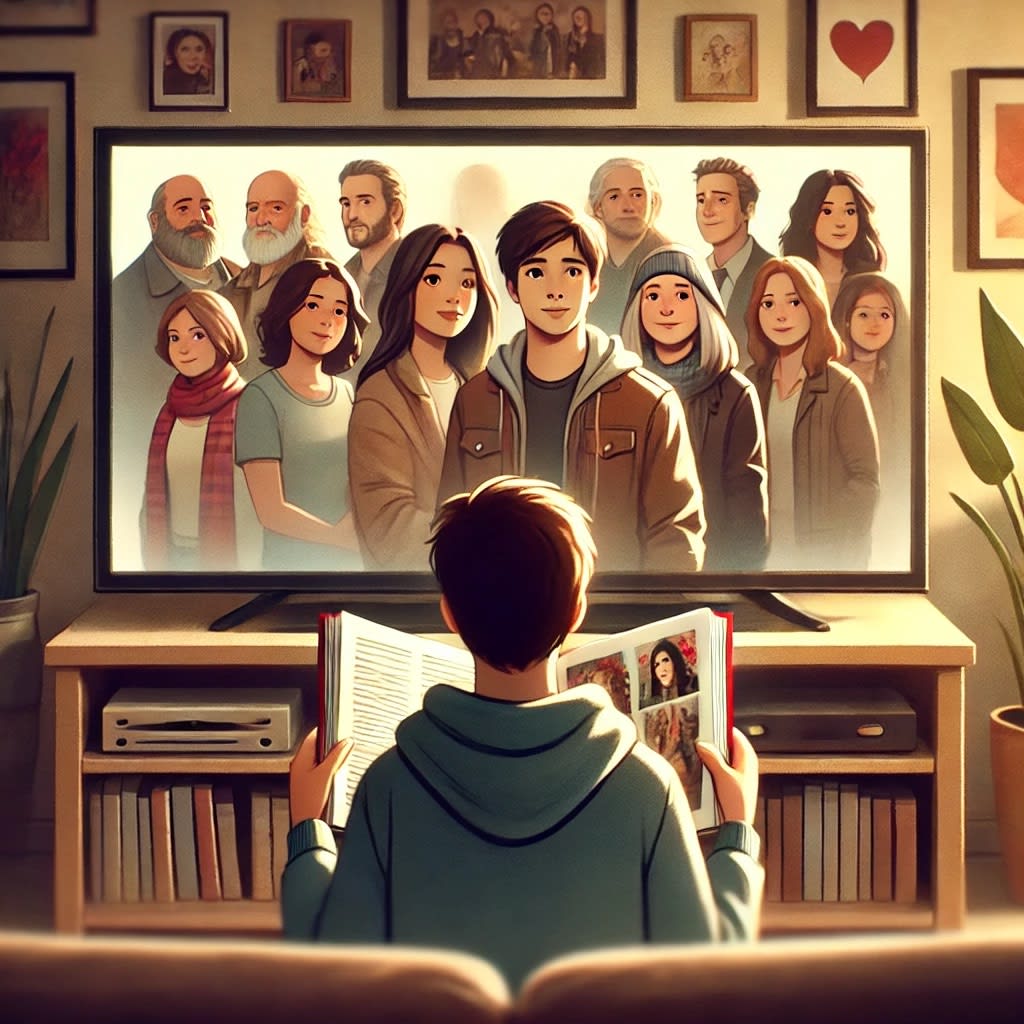
I remember vividly the first time I saw a character on screen who looked like me, sounded like me, and shared a similar background. It was in a television show that revolved around the lives of young adults, dealing with issues like culture clash, familial expectations, and the struggle of balancing multiple identities. There was one character—a second-generation immigrant like me—who wasn't just a sidekick or comic relief but was central to the storyline. She was intelligent, determined, and unapologetically proud of her roots, yet also openly wrestled with the pressure to fit into a world that often felt foreign.
Seeing her navigate her dual identity—trying to be true to her heritage while also adapting to the norms of the country she grew up in—was like watching my own internal struggles play out on screen. It was the first time I felt that my experiences, which I thought were unique and isolating, were being shared by others. This character’s story wasn’t exaggerated for drama or played down for simplicity; it was authentic, layered, and full of nuance.
This moment of recognition was transformative. It helped me realize that my story was worthy of being told and that there was a place for me in the broader narrative of society. It gave me a sense of validation, showing me that I wasn’t alone in feeling torn between cultures. More importantly, it made me proud of my unique background rather than seeing it as something I needed to hide or dilute to belong.
That experience influenced my sense of identity profoundly. I began to embrace my cultural heritage more openly, no longer feeling like I had to choose between two worlds. I found a deeper sense of belonging—not just to my immediate community but to a larger, global one that was finally beginning to recognize and celebrate the diverse stories of people like me.Seeing that character on screen was like looking into a mirror that reflected back not only my appearance but also my deepest thoughts and experiences. It wasn’t just about our shared cultural background; it was the way she struggled with language barriers at home, the pressure to excel academically, and the constant balancing act of trying to honor her family’s traditions while simultaneously wanting to fit into the broader society. It was a complexity I knew intimately but had rarely seen acknowledged or represented with such depth.
Before that moment, I often felt like I was living a double life. At home, I was one person, immersed in my family’s customs, values, and language. Outside, I was another version of myself, more adapted to the norms of the dominant culture, carefully editing my personality to fit in. I would see my friends freely discuss their family dynamics, holidays, and traditions with an ease that I couldn’t relate to. For me, it always felt like there were parts of my life that had to remain hidden or explained away.
But seeing that character gave me a sense of permission to blend these two sides of myself. It wasn’t about compartmentalizing my identity anymore; it was about integrating all parts of who I was. Her story helped me to stop viewing my cultural heritage as something separate or outside of my everyday life, but rather as an intrinsic part of who I am. I realized that my experiences were not fragmented pieces to be stitched together awkwardly—they were threads that wove a richer, more complete tapestry of my identity.
The impact of that moment went beyond personal validation. It also opened my eyes to the importance of representation in media. I started to understand that stories have power—they shape how we see ourselves and how we perceive our place in the world. They can either isolate us or make us feel connected, seen, and understood. Realizing this, I felt inspired to seek out more stories that reflected a diverse range of experiences and to support creators who were pushing for more inclusive narratives in film, television, and literature.
That character became a sort of guiding light, showing me that it was possible to be multifaceted, to be proud of every part of myself without feeling like I needed to edit my identity to fit someone else’s expectations. Over time, this sense of belonging I gained from seeing myself in media translated into a stronger voice and a willingness to share my own story. I became more open about my cultural background, more vocal about issues that mattered to me, and more passionate about advocating for greater diversity and inclusion in all spaces.
This experience fundamentally shaped my sense of identity and belonging. It taught me that my story mattered, that my voice had a place, and that the act of seeing ourselves reflected in the world around us is more than just validation—it’s a form of empowerment. I now know that the stories we tell, and the ones we choose to amplify, have the power to transform not just individual lives, but entire communities, shifting the way we see ourselves and each other.
About the Creator
Keep reading
More stories from writers in BookClub and other communities.
My New Book is Finally Here
My poetry collection Beautiful and Brutal Things is done. It's actually done and finally published over 270 pages. Over a year of my life went into this book. More than a year, really. Long days at my computer, sometimes seven days a week because I couldn't stop even when I probably should have. Then two months of editing that felt harder than the writing itself. But it's finished, and I'm still standing, and the book is real.
By Tim Carmichael4 days ago in BookClub
7 Best Historical Fiction Books In 2026
Historical fiction has a rare power: it transports us across time while illuminating timeless truths about humanity. Through richly imagined characters and meticulously researched settings, the best historical fiction novels allow us not just to learn history, but to feel it. We walk alongside soldiers, queens, rebels, healers, and ordinary people caught in extraordinary moments—discovering how their choices echo into our own lives.
By Diana Meresc7 days ago in BookClub




Comments