
Eternity in a Cigarette End
A Message from Jack Kerouac
Artists are people who look beyond the veil of the ordinary in life to grasp spiritual truths hidden behind physical reality. They then reflect those truths back out into the world in some digestible form such as words, paintings or songs. There is a sentence in Jack Kerouac's "On the Road" which speaks of this to me with particular resonance: "And just for a moment I had reached the point of ecstasy that I always wanted to reach, which was the complete step across chronological time into timeless shadows, and wonderment in the bleakness of the mortal realm, and the sensation of death kicking at my heels to move on, with a phantom dogging its own heels, and myself hurrying to a plank where all the angels dove off and flew into the holy void of uncreated emptiness, the potent and inconceivable radiancies shining in bright Mind Essence, innumerable lotus-lands falling open in the magic mothswarm of heaven."
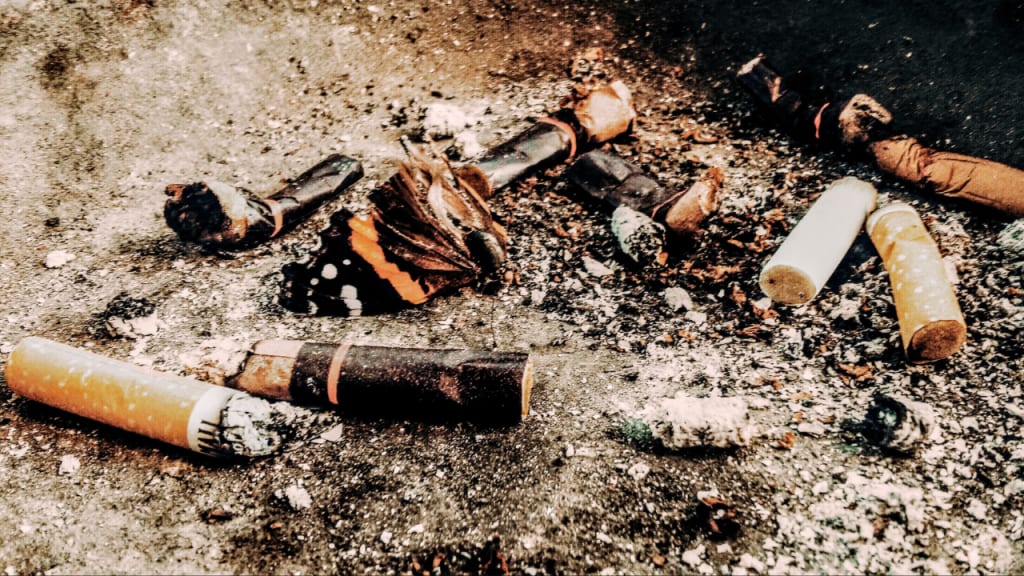
In this sentence, Kerouac encapsulates the core of what artists long to achieve and exemplifies it at the same time. The visual and aural elements of the sentence are suggestive of the narrator's drugged state at that point in the story, but what this most definitely isn't is drugged nonsense. He is picking up cigarette ends from a street in San Francisco so that he can go and smoke them later. Each comma in this sentence is a stop gap where he leans down to pick up a cigarette end before staggering up and onwards with his racing thoughts. His legs are following instinct alone while his mind is seeing and feeling things that aren't there. Is that the definition of madness? Or is it a different form of sanity?
In this sentence, Kerouac steps out of his narrative and comes to the front of the stage to address his audience - he speaks directly to every reader personally. The sentence is exuberant, it revels in its own wordiosity. Beneath that, though, there is something more: every artist ultimately longs to step across chronological time into eternity. We know those landscapes of the soul which exist outside of time and space, but we struggle to reach them. In my experience, it requires a vehicle of some kind to carry a person there. That vehicle might be travel - lengthy travel where the mind and body are held in limbo for long stretches of time and have permission to float free of their constraints, without the trappings of everyday life to hold them down. Prolonged suffering will do it; your mind reaches beyond itself to try and grasp something of the eternal in order to survive or simply to dissociate. Drugs or drink, of course, achieve something similar by chemical means. Whatever the vehicle, you have to reach a state of observation, where you are one step removed from the rest of humanity and it passes before you in river form, undigested and pure. Then you start to see the hidden currents that ebb and flow in the world around us but which are invisible to the physical eye. Only a visionary or a madman would talk about the holy void of uncreated emptiness while his narrator is lurching down a filthy street in the middle of a San Francisco night.
What can that give us in the here and now? How do we relate when we live in a time which would have incomprehensible to Kerouac had he lived to see it? The first thing, I think, is hope. If a man can speak to a future audience he has never met, living in a time he couldn't have imagined, whilst talking through the dirt poor experience of picking up cigarette ends on a street at night, then he has found and communicated something unique, but also something universal. There are an awful lot of people living on the margins of society in one way or another whose stories never make it into the public sphere, largely because they are too burdened by the job of surviving to be able to break out of the cage society has put them in. We live a sanitised life, those who are truly suffering through no fault of their own get very little airtime. Where they do, it is generally derogatory. Kerouac's world is far from sanitised, it captures the essence of survival in all its muddy reality. You can be someone with no job and no home and still have the soul of an artist. In fact, you are more likely to have because you have to. To those of us who have lived at the desperate end of life, or even had a brief brush with it, finding ways to express ourselves as artists transforms our experiences. We all need to see something beyond the sordid physicality of what we have to do to survive. If Kerouac can have that kind of vision through those kinds of experiences then there is hope that those who are surviving hand to mouth in the cost of living crisis and who are subsisting without their basic needs being met do indeed have a message to give to the world, one that will last.
About the Creator
Keep reading
More stories from Sarah Frideswide and writers in BookClub and other communities.
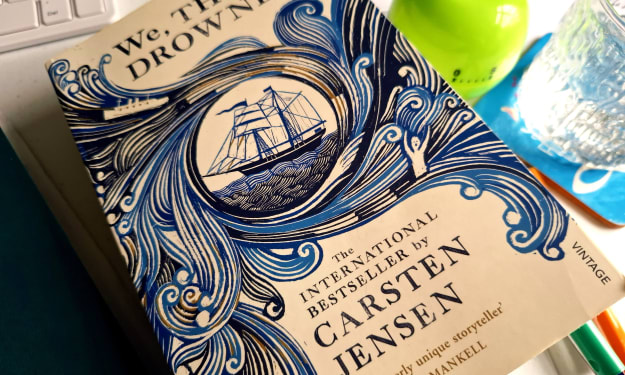
"We, the Drowned" by Carsten Jensen
This is a book that reminds me again why I fell in love with Denmark. It is now vital that I follow through on my aim of learning the Danish language properly so that I can experience this book in its original form, with all of the subtlety and humour that I will have missed from reading it in English.
By Sarah Frideswide8 months ago in BookClub
Rachel Reviews: Lakefront Wolves by Joseph Deegan
Meet Finn. He's an 18 year old kid who has potential. He's bright with great school scores and he's also an athlete, a footballer of some prowess. He has it all going for him, it would seem, and yet, he's determined to send what could be a well-planned, stable existence firmly off the rails. He drinks, he smokes, he takes drugs, he has violent tendencies and he's in danger of losing not only his mind but all that he holds dear.
By Rachel Deeming12 days ago in BookClub
7 Historical Romance Books You Must Read in 2026
Historical romance captivates readers by transporting them to eras filled with passion, intrigue, and societal constraints. These stories blend the allure of history with the timeless appeal of love, offering more than just escapism—they provide a window into past cultures, values, and human emotions.
By Diana Meresc6 days ago in BookClub


Comments