
Earth and Mars
Ever thought about what the similarities are between the home planet earth and Mars....if yes then let's discuss some
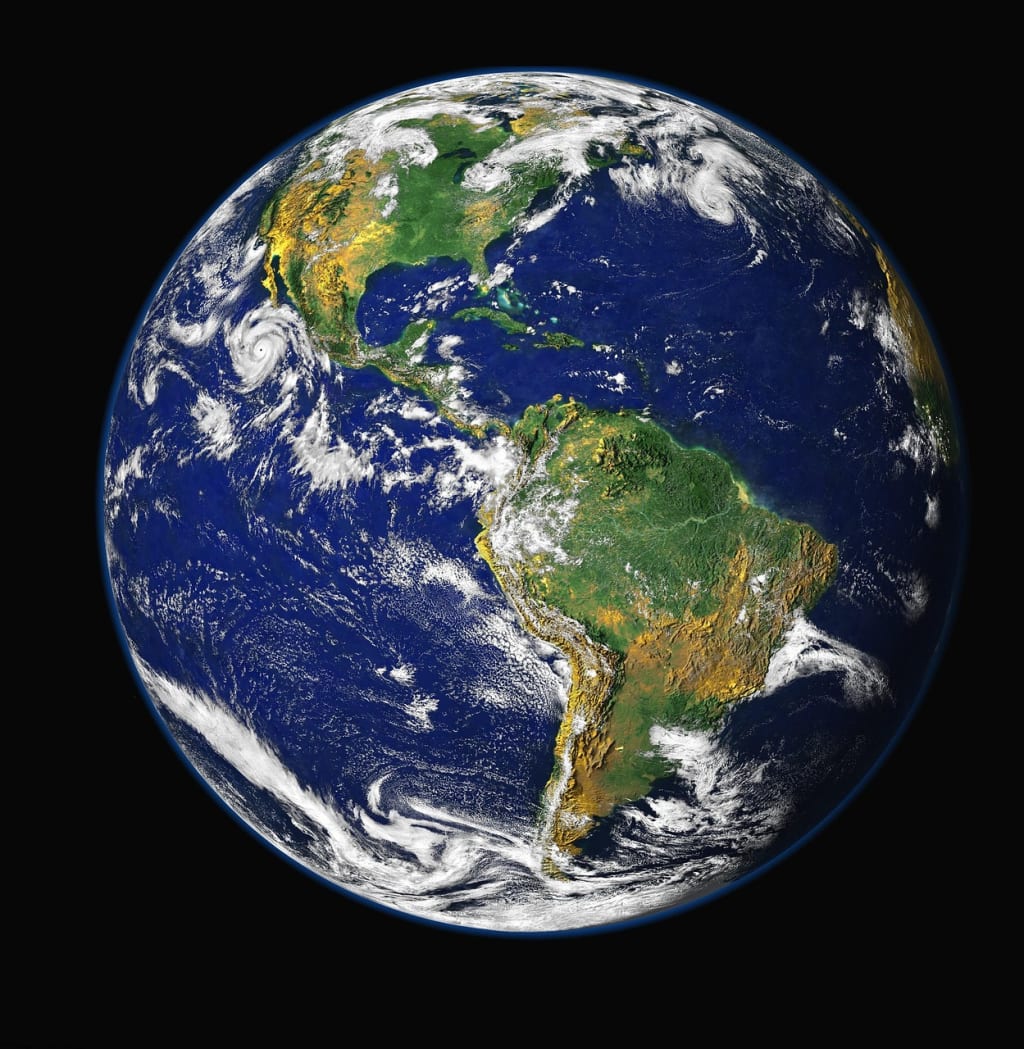
Mars and Earth, as neighboring planets in our solar system, exhibit a fascinating array of similarities and differences. Understanding these aspects not only enhances our knowledge of planetary science but also fuels the quest for potential life beyond Earth.
Geological Similarities
Both Mars and Earth are classified as **terrestrial planets**, meaning they have solid rocky surfaces. They share geological features such as **mountains**, **valleys**, and **canyons**. For instance, Mars boasts Olympus Mons, the tallest volcano in the solar system, and Valles Marineris, an extensive canyon system. Earth similarly features mountain ranges, canyons, and vast plains, showcasing a diverse landscape shaped by geological processes over millions of years.
Atmospheric Composition
While the atmospheres of Mars and Earth differ significantly in composition, they both have layered structures. Earth's atmosphere is rich in nitrogen and oxygen, while Mars' atmosphere is predominantly carbon dioxide with traces of nitrogen and argon. This difference results in a much thinner atmosphere on Mars, leading to extreme temperature variations and less protection from solar radiation[4][6]. However, both planets experience seasonal changes due to their axial tilts—Earth at approximately 23.5 degrees and Mars at about 25 degrees—which results in similar seasonal cycles despite their differences in duration.
Water Presence
Water plays a crucial role in both planets' histories. Evidence suggests that liquid water once flowed on Mars, shaping its surface much like it has on Earth. Today, Mars has polar ice caps composed of water ice and carbon dioxide ice, along with subsurface water detected through radar data. This potential for water raises intriguing questions about past life on Mars and its capacity to support future human exploration.
Size and Gravity
In terms of size, Mars is about half the diameter of Earth (approximately 6,786 kilometers compared to Earth's 12,756 kilometers) but possesses a similar amount of dry land surface area. The gravitational pull on Mars is only about 37.6% that of Earth's gravity, which affects how objects behave on its surface. This lower gravity could have implications for human colonization efforts.
Orbital Characteristics
Mars orbits the Sun at an average distance of approximately 227.9 million kilometers (about 1.52 AU), taking about 687 Earth days to complete one orbit. In contrast, Earth orbits at about 149.6 million kilometers (1 AU) with a year lasting 365 days[3][5]. Consequently, Martian seasons last nearly twice as long as those on Earth due to its longer orbital period.
Conclusion
The similarities between Mars and Earth provide a compelling basis for exploration and understanding planetary evolution. Both planets share geological features, atmospheric structures, and histories involving water—elements that are crucial for the potential for life. As we continue to study Mars through missions like NASA's Perseverance rover and future manned missions, our understanding of these two planets will deepen, possibly revealing more about our own planet's past and future as well as the prospects for life beyond Earth.
About the Creator
7 Books You’ll Finish Faster Than You Expect
In a world overflowing with content, time has become our most precious currency. We all want books that inform us, move us, and stay with us—but without demanding weeks of slow progress or mental exhaustion. That’s where this carefully curated list comes in.
By Diana Meresc7 days ago in BookClub




Comments (1)
Good work. Keep it up.